Hyundai Vehicles Guide: Find Your Best-Fit Model
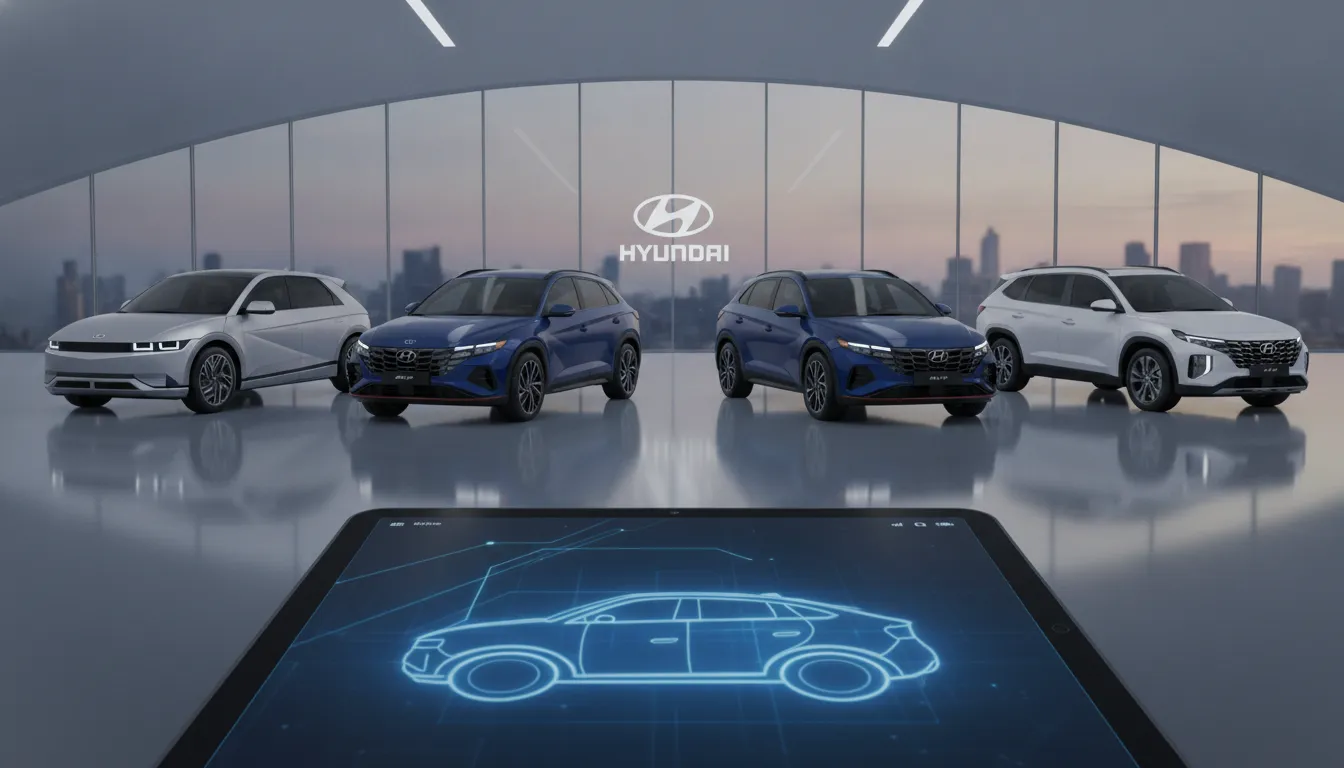
Compare Hyundai vehicles by model, features, and pricing to find the best fit for your needs. Get tips on trims, powertrains, and ownership costs.
Shopping for Hyundai vehicles should involve more than checking the lowest advertised price. The same model can vary significantly by trim, model year, powertrain, drivetrain, mileage, and available features. A Tucson Hybrid may offer a different ownership experience from a gas-powered Tucson, while a pre-owned Palisade may provide more equipment for your budget than a new entry-level SUV. You also need to account for taxes, fees, financing, trade-in value, maintenance, and delivery. Automated Brokers helps buyers compare these details across a broad inventory, with support for prime, near-prime, and credit-rebuilding customers.
Key Takeaways
- Match the Hyundai to your lifestyle: Consider passenger space, cargo needs, daily mileage, weather, towing requirements, and access to home or public charging.
- Compare the complete ownership picture: Review the exact VIN, trim, powertrain, features, warranty, recalls, service history, taxes, fees, financing, insurance, and delivery costs.
- Simplify your vehicle search: Automated Brokers compares more than 1,300 new and pre-owned vehicles across nine dealerships, with remote buying support, Maryland pickup, and nationwide delivery.
Which Hyundai Vehicles Are Available?
Hyundai’s lineup includes much more than compact sedans. You can choose from efficient cars, small and midsize SUVs, three-row family vehicles, electric models, a compact pickup, a hydrogen fuel-cell SUV, and performance-focused trims. That variety makes it easier to find a vehicle that fits your passengers, budget, driving routine, and preferred powertrain.
Start by identifying how you will use the vehicle. A daily commuter may prefer the Elantra or Kona, while a growing family may need the Tucson, Santa Fe, Palisade, or IONIQ 9. If you want an electric vehicle, Hyundai offers several body styles with different ranges, charging needs, and interior layouts.
Availability changes by model year, trim, location, and dealership inventory. Automated Brokers searches more than 1,300 vehicles across nine dealerships, helping you compare Hyundai options without visiting multiple lots. You can review available Hyundai inventory and share your preferred model, budget, color, features, or payment range.
Before choosing a vehicle, compare the exact trim and powertrain rather than relying only on the model name. Two vehicles with the same name may have different features, prices, drivetrain options, and warranty details.
Elantra and Sonata Sedans
The Elantra is Hyundai’s compact sedan and a practical option for commuting, city driving, and budget-conscious buyers. Its smaller footprint can make parking easier, while certain configurations offer fuel economy of up to 40 mpg on the highway. Hyundai lists the Elantra with a starting price around $22,825, although destination charges, options, taxes, dealer fees, and model year can change the final price. Check the official Hyundai lineup for current specifications.
The Sonata is a midsize sedan with a roomier cabin and a more substantial road presence. Its starting price is around $27,450, and it may appeal to drivers who want extra passenger comfort without moving to an SUV. Both sedans provide straightforward fueling and efficient daily transportation. When comparing them, consider rear-seat space, trunk capacity, fuel economy, safety equipment, and available technology.
Venue and Kona Small SUVs
The Venue is Hyundai’s smallest SUV. Its compact dimensions suit urban drivers who want a higher seating position without the size of a larger crossover. It can work well for commuting, errands, and easy parking, especially for buyers who do not need a large cargo area or third row.
The Kona sits above the Venue and offers a roomier small-SUV experience. Depending on the model year and market, it is available with gas or electric powertrains. The Kona may suit buyers who want flexible cargo space, modern technology, and a choice between traditional fueling and battery-electric driving.
Hyundai places the Venue and Kona among its smaller SUV choices, while the Tucson, Santa Fe, and Palisade offer more space. You can compare Hyundai models by body style and powertrain before requesting a specific vehicle.
Tucson and Santa Fe Family SUVs
The Tucson is a compact SUV that gives families more passenger and cargo space than a sedan or small crossover. It works well for commuting, school runs, weekend trips, and everyday errands while remaining manageable in crowded areas. Depending on the model year and trim, Tucson buyers may choose gasoline, hybrid, or plug-in hybrid powertrains.
The Santa Fe is larger and better suited to buyers who want a more spacious cabin and additional cargo room. It offers gasoline and hybrid options, so shoppers can choose between familiar fueling and improved efficiency. Compare the rear-seat layout, cargo access, drivetrain, towing specifications, and standard safety equipment by trim.
A useful comparison should include the vehicle’s total price, not just its advertised starting price. Consumer Reports’ Hyundai coverage can provide additional model information as you compare ownership considerations.
Palisade and IONIQ 9 Three-Row SUVs
The Palisade is Hyundai’s large SUV for families that regularly carry several passengers. Its three-row cabin provides seating flexibility, and available HTRAC all-wheel drive can provide additional traction in rain, snow, and other difficult conditions. Seating configurations vary, so check whether a trim includes second-row captain’s chairs or a bench seat.
The IONIQ 9 adds a three-row electric SUV to Hyundai’s lineup. It may suit households that want substantial passenger space without choosing a gas-powered vehicle. As with any EV, consider more than the purchase price. Review driving range, charging access, road-trip requirements, cold-weather performance, and home-charging costs.
Large SUVs can differ considerably in equipment and price, even within the same model. Ask for a side-by-side comparison of VINs, trims, options, warranties, and fees. Automated Brokers can search for a three-row Hyundai based on your seating and powertrain requirements.
Santa Cruz Compact Pickup
The Santa Cruz combines a crossover-style cabin with a compact truck bed. It can carry bicycles, home-improvement supplies, outdoor equipment, and other items without requiring a full-size pickup. Hyundai lists the Santa Cruz with a starting price around $28,750, though the final price depends on trim, drivetrain, destination charges, options, taxes, and dealer fees.
Its unibody construction gives it a more car-like driving experience than many traditional trucks. That can make it comfortable as a daily vehicle, particularly for buyers who spend most of their time on paved roads. Before buying, verify the engine, bed features, payload rating, towing capacity, and all-wheel-drive availability.
The Santa Cruz is intended for light hauling, not heavy-duty work. Make a list of what you expect to tow or carry, then confirm that the selected configuration can handle those demands. The Hyundai Santa Cruz page can help you review current equipment and specifications.
Kona Electric, IONIQ 5, and IONIQ 6 EVs
Hyundai offers several battery-electric vehicles with different body styles and driving purposes. The Kona Electric provides small-SUV practicality, making it a natural fit for drivers who want an efficient commuter with a higher seating position and useful cargo space.
The IONIQ 5 is an electric crossover with a roomy cabin and flexible interior. Its fast-charging capability can help on longer trips when paired with a compatible charging station. The IONIQ 6 is a streamlined electric sedan designed around efficiency, range, and highway comfort. Buyers who need three rows can also consider the IONIQ 9.
Range, charging speed, equipment, and pricing vary by model year and trim. Use Hyundai’s electric vehicle information to check current specifications, then consider your weekly mileage and charging access. Home charging can simplify daily ownership, while apartment residents may need reliable public charging nearby.
NEXO Fuel-Cell Vehicles and Regional Availability
The NEXO is Hyundai’s hydrogen fuel-cell SUV. It uses hydrogen to generate electricity for its electric motor rather than relying on a conventional gasoline engine or a plug-in battery. Refueling can be relatively quick at a compatible station, but ownership depends heavily on local hydrogen infrastructure.
The NEXO is not available in every market. Certain dealers sell and service the vehicle, while hydrogen stations are concentrated in select regions. Before considering one, confirm station locations, service availability, warranty terms, and any regional purchase requirements. Hyundai’s NEXO information provides current details.
For many shoppers, a battery-electric Hyundai will be simpler to own because public charging is more widely available than hydrogen fueling. The NEXO may still suit a buyer who lives near dependable hydrogen stations and prefers a fuel-cell SUV.
N Line and N Performance Models
Hyundai’s N Line trims add sportier styling and selected performance features to certain models. Depending on the vehicle, changes may include distinctive exterior details, larger wheels, interior accents, and suspension or steering adjustments. N Line models can suit drivers who want a more athletic appearance and driving feel without choosing the highest-performance version.
N models take performance further. The Elantra N is designed for enthusiastic driving, with stronger performance and handling than the standard Elantra. The IONIQ 5 N brings high-output electric performance to Hyundai’s EV range, along with driving modes and hardware intended for spirited use. You can review Hyundai’s current performance lineup for model-specific details.
Performance trims may have higher insurance, tire, and maintenance costs. They can also ride more firmly and consume more fuel or energy during aggressive driving. Compare the complete equipment list and take a test drive before paying extra for appearance or performance upgrades.
Model-Year, Trim, and Regional Differences
A Hyundai’s model name does not tell you everything about the vehicle. Equipment, powertrains, safety features, colors, pricing, and drivetrain choices can change by model year and trim. For example, a Tucson Hybrid from one year may include different standard technology or interior materials than a similarly named vehicle from another year.
Regional availability matters, too. Some powertrains and models are sold only in select markets, while certain features may be limited by emissions rules, supply, or dealer allocation. Trim names may also include different equipment in different regions. The broader Hyundai vehicle list illustrates how model names and offerings can vary internationally, but confirm specifications with Hyundai or the selling dealer.
When comparing vehicles, request the VIN, window sticker, trim, drivetrain, mileage, options, and warranty information. Automated Brokers can help compare those details across new and pre-owned Hyundai vehicles, so you are evaluating the exact vehicle rather than relying on a model name alone.
Which Hyundai Powertrain Fits Your Needs?
Hyundai offers several powertrain options, and the best fit depends on how and where you drive. Think about your average daily mileage, access to charging, winter weather, passenger and cargo needs, and how often you take long trips. A gas-powered Elantra may suit someone who wants quick, familiar refueling, while a Tucson Hybrid or IONIQ 5 may be a better match for a driver focused on reducing everyday fuel use.
Powertrain availability can vary by model year, trim, drivetrain, and region. Before comparing prices, review the current Hyundai vehicle lineup and confirm the specifications for the exact vehicle you are considering. Pay close attention to battery size, electric range, towing capacity, fuel economy, charging equipment, and warranty coverage.
Gas Engines and Simple Fueling
Gas-powered Hyundai vehicles remain a practical choice for drivers who want familiar ownership and quick refueling. Depending on the model year and configuration, gasoline engines may be available in vehicles such as the Elantra, Sonata, Kona, Tucson, Santa Fe, and Palisade.
A gas vehicle can make sense if you regularly take long trips, live in an area with limited charging, or park on the street. Fueling usually takes only a few minutes, and gas stations are easy to find along major roads. You also do not need to plan your routine around charging stops or install equipment at home.
Gas engines may also offer the widest selection in the pre-owned market. When comparing used Hyundai vehicles, review mileage, service records, accident history, tire condition, and open recalls. A well-maintained vehicle with the right features may provide better value than a newer model that does not fit your driving needs.
Hybrids for Efficient Daily Driving
A Hyundai hybrid combines a gasoline engine with an electric motor and battery. The system can use electric power during some low-speed driving, assist the engine during acceleration, and recover energy during braking. Unlike a plug-in hybrid, a standard hybrid does not need to connect to a charger.
Hybrids can work well for commuters who spend time in city traffic or drive a mix of local roads and highways. Stop-and-go driving gives the system more opportunities to recapture energy through regenerative braking. Many drivers also appreciate the smooth response from the electric motor during low-speed acceleration.
The driving experience may feel different from a traditional gas vehicle. The engine can sound louder during hard acceleration, and the brake pedal may feel different as the vehicle blends regenerative and friction braking. Take a test drive on roads similar to your normal commute, then compare the hybrid and gas versions of the same model.
Plug-In Hybrids for Short Electric Commutes
A plug-in hybrid, or PHEV, has a larger battery than a standard hybrid. You can charge it at home or at a public station, then drive on electric power for shorter trips before the gasoline engine takes over. The Hyundai Tucson Plug-in Hybrid, for example, has been listed with up to 32 miles of all-electric range, although the exact figure depends on the model year and testing information.
This arrangement may suit drivers whose daily commute fits within the vehicle’s electric range but who still want gasoline flexibility for longer trips. You can complete many errands with little or no gasoline when the battery is charged, then continue driving after the battery is depleted.
A PHEV delivers its best efficiency when you charge it regularly. If home, workplace, or public charging is inconvenient, a standard hybrid may be easier to own. Before buying, ask about charging time, cable requirements, available incentives, and battery coverage. Compare the vehicle’s electric range with your actual weekday mileage rather than relying on the label alone.
Battery-Electric Hyundai Vehicles
A battery-electric vehicle, or EV, uses electricity instead of gasoline. Hyundai’s electric lineup includes models such as the Kona Electric, IONIQ 5, and IONIQ 6. These vehicles produce no tailpipe emissions and typically offer quiet operation with immediate acceleration.
Actual range varies according to the model, battery, wheel size, drivetrain, temperature, speed, terrain, and use of heating or air conditioning. The IONIQ 5 is also known for its fast public DC charging capability when connected to a compatible high-power station. Charging time still depends on the station, battery temperature, current charge level, and vehicle configuration.
An EV may be a strong fit if you have dependable overnight charging and most of your driving falls within its practical range. Review Hyundai’s electric vehicle charging information before purchasing, and check whether your regular routes include compatible public chargers. If you live in an apartment or rely on street parking, confirm your charging plan first.
Fuel-Cell Power in Select Hydrogen Markets
Hyundai’s NEXO uses a hydrogen fuel-cell system to generate electricity for its electric motor. Instead of charging from a plug, the vehicle stores hydrogen in onboard tanks. The system produces water vapor from the tailpipe, and refueling can be relatively quick when a suitable station is available.
The main consideration is access to hydrogen. Stations are concentrated in select markets, so a fuel-cell vehicle may not suit buyers who travel widely or live outside an established hydrogen network. Check station locations, operating hours, fuel availability, and pricing before considering this option.
A NEXO makes the most sense for someone who lives and drives near dependable hydrogen stations. Make sure your home, workplace, and frequent destinations are connected by practical routes. Review current Hyundai fuel-cell vehicle information, since regional availability and infrastructure can change.
Front-Wheel Drive or All-Wheel Drive
Front-wheel drive, or FWD, sends power to the front wheels. It is common among sedans and smaller SUVs and can provide predictable handling, lower weight, and strong fuel efficiency. FWD may be enough if you mostly drive on paved roads in a moderate climate and rarely encounter steep, unpaved, or snow-covered roads.
All-wheel drive, or AWD, can send power to more than one axle when extra traction is needed. It may help on wet roads, snow, gravel, steep driveways, and other low-traction surfaces. AWD does not replace winter tires, careful driving, or safe following distances.
AWD can add cost, weight, and mechanical complexity. It may also use more fuel than a comparable FWD configuration. Compare fuel economy for the exact trim, and confirm whether AWD is available with your preferred engine, hybrid system, or equipment package. For Maryland buyers, consider your usual roads rather than choosing AWD solely for occasional snow.
Performance, Towing, and Payload by Powertrain
Powertrain choice affects acceleration, towing, payload, and driving feel. A larger gas engine may provide the sustained output required for heavier trailers, while an electric motor can deliver quick response at low speeds. Hybrid and plug-in hybrid systems can offer a balance of efficiency and performance, but their towing ratings vary by model and configuration.
Do not assume every version of the same Hyundai has the same capability. Towing capacity may depend on the engine, drivetrain, cooling equipment, hitch equipment, and trim. The Palisade has been offered with towing capacity of up to 5,000 pounds when properly equipped, but verify the rating for the specific vehicle and equipment package through Hyundai’s vehicle specifications.
Payload matters as much as trailer capacity. Passengers, luggage, accessories, and trailer tongue weight all count toward the vehicle’s limits. Review the owner’s manual, door-jamb label, and manufacturer specifications before towing. If you need a particular rating, compare the VIN, trim, drivetrain, and factory equipment before committing to a vehicle.
Home Charging, Public Charging, and Road Trips
Charging access should be part of your vehicle comparison from the beginning. A plug-in hybrid or EV is easiest to own when you can charge at home overnight. A standard household outlet may work for low daily mileage, while a professionally installed Level 2 charger can shorten charging time for drivers who cover more miles.
Public charging can help apartment residents, workplace commuters, and road trippers. Before buying an EV, check stations near your home, workplace, shopping areas, and regular travel routes. Confirm connector compatibility, charging speeds, payment requirements, and station availability during busy travel periods.
Long-distance trips require more planning than gas-powered travel. You may need to stop at specific chargers, allow extra time during busy periods, and leave a range buffer for weather, traffic, and detours. Ask an electrician to evaluate your home setup if you plan to install a charger. You can also review Hyundai’s charging resources when planning ownership.
Match the Powertrain to Your Mileage, Weather, and Routine
Start with your actual driving pattern rather than the powertrain that seems most appealing. Estimate your weekday mileage, monthly road-trip distance, parking situation, and access to charging. If you drive long distances with little planning, gas may offer the simplest routine. If you commute through traffic and want to reduce fuel use without plugging in, a hybrid may be a better fit.
A plug-in hybrid can work well when your regular trips are short and charging is convenient. An EV may suit you when you can charge consistently and your longer trips are easy to plan around available stations. Drivers in colder climates should account for reduced winter range and slower charging, especially during very low temperatures.
Create a shortlist based on your actual needs. Include seating capacity, cargo space, weather conditions, monthly budget, towing requirements, and expected ownership period. Automated Brokers can help compare available Hyundai vehicles, trims, powertrains, and financing options, with support by phone, text, or email.
How Much Do Hyundai Vehicles Cost?
Hyundai offers vehicles across a broad range of budgets, from compact sedans and small SUVs to three-row family vehicles and electric models. The advertised price is usually the starting MSRP, or manufacturer’s suggested retail price. It is not the same as the amount you will pay after destination charges, taxes, registration, dealer fees, accessories, financing, and optional equipment.
The estimates below can help you compare models, but pricing changes by model year, trim, location, inventory, and available offers. Before choosing a vehicle, request an itemized quote that shows the selling price, discounts, taxes, fees, trade-in value, financing terms, and delivery costs.
Automated Brokers searches more than 1,300 vehicles across nine dealerships, giving buyers a simpler way to compare availability and pricing. You can review current options through Automated Brokers’ Hyundai inventory and complete the process by phone, text, or email.
Starting MSRP, Destination Charges, Taxes, and Fees
MSRP provides a useful starting point when comparing Hyundai vehicles. It usually reflects the base trim with standard equipment, but it may not include the destination charge. This charge covers transportation from the factory and can vary by model.
Your final price may also include sales tax, title and registration costs, documentation fees, dealer-installed accessories, and optional protection products. Some vehicles may also carry a market adjustment when inventory is limited. If you finance the purchase, interest increases the total amount paid over the life of the loan.
Ask for the out-the-door price in writing before agreeing to a purchase. This number should show the vehicle price, destination charge, taxes, registration, fees, accessories, discounts, trade-in credit, and financing details when applicable. You can review current models and standard equipment through Hyundai’s vehicle listings, then compare that information with your personalized quote.
Popular Hyundai Prices and Standard Features
Hyundai’s lineup covers several common budgets. The Venue and Elantra generally offer lower starting prices, while the Tucson, Santa Fe, Palisade, and IONIQ 9 provide more space and equipment at higher price points. Electric vehicles may cost more upfront, although they can reduce fuel and routine maintenance expenses over time.
Standard equipment can make one vehicle a better value than another with a similar MSRP. Depending on the model and trim, Hyundai vehicles may include a touchscreen, smartphone connectivity, USB ports, a rearview camera, and driver-assistance features. Higher trims can add heated seats, a panoramic roof, premium audio, all-wheel drive, and expanded parking assistance.
Compare each vehicle by trim, mileage, drivetrain, equipment, and total cost. A slightly more expensive trim may include features that would otherwise require an option package. Automated Brokers’ available vehicles can be compared based on the features that matter most to you.
Elantra, Sonata, Venue, and Kona Pricing
The 2026 Elantra starts at approximately $22,825, while the Sonata begins near $27,450. These sedans can suit commuters who want manageable purchase prices, comfortable passenger space, and efficient engines. Higher trims may add upgraded infotainment, improved interior materials, stronger engines, and additional driver-assistance features.
The 2026 Venue ranges from about $20,550 to $22,825, making it one of Hyundai’s most accessible SUVs. The 2026 Kona ranges from approximately $25,500 to $34,150, depending on trim and equipment. It offers more cabin and cargo space than the Venue, while the Kona Electric is sold as a separate battery-electric model.
The lowest price is only one part of the decision. Compare rear-seat room, cargo capacity, highway comfort, fuel economy, and available all-wheel drive. Review current equipment and pricing through Hyundai’s official model information before selecting a trim.
Tucson and Santa Fe Pricing and Hybrid Availability
The 2026 Tucson starts near $29,700 and reaches approximately $41,175 in higher trims. Its compact SUV design provides useful cargo space without the size of a three-row vehicle. The 2026 Tucson Hybrid starts around $31,300 and can appeal to drivers who want lower fuel consumption without installing a home charger.
The 2026 Santa Fe ranges from about $35,050 to $49,400. It provides more passenger and cargo room than the Tucson, along with hybrid availability in select configurations. Higher trims may include upscale materials, larger displays, advanced driver assistance, and all-wheel drive.
A hybrid usually costs more than a similar gas model, so compare the extra purchase cost with your expected fuel savings. Your annual mileage, fuel prices, loan term, and ownership period all affect the calculation. Automated Brokers can help compare new and pre-owned Hyundai SUVs across trims and dealerships.
Palisade, IONIQ 9, and Santa Cruz Pricing
The 2026 Palisade starts near $39,435 and reaches approximately $56,560 in higher trims. It is designed for families who need three rows, generous passenger space, and a comfortable layout for longer trips. Captain’s chairs, premium audio, leather upholstery, and advanced parking technology may increase the price.
The 2026 Santa Cruz starts around $29,750. It combines a compact SUV cabin with a small pickup bed, making it useful for light hauling without the size of a full-size truck. Engine choice, drivetrain, trim, and utility features affect the final cost.
The IONIQ 9 is Hyundai’s larger electric SUV. Its price can vary by trim, equipment, incentives, and market availability, so verify the current figure before budgeting. Compare seating capacity, cargo space, charging access, towing needs, and expected use, not just the starting MSRP.
Kona Electric, IONIQ 5, and IONIQ 6 Pricing
The 2026 IONIQ 5 starts around $35,000 and reaches approximately $48,975, while the 2026 IONIQ 6 ranges from about $37,850 to $54,600. The two models serve different needs. The IONIQ 5 has a taller body and flexible cargo area, while the IONIQ 6 uses a sleek sedan shape designed with efficiency in mind.
The Kona Electric provides another entry point into Hyundai’s EV lineup. Its price depends on trim, battery equipment, destination charges, and available incentives. When comparing electric vehicles, consider purchase price alongside charging costs, insurance, expected range, and eligibility for federal, state, or utility programs.
Before buying, confirm the battery size, estimated range, charging speed, included equipment, and warranty coverage. Hyundai’s official electric vehicle lineup provides current model information, while a personalized quote can show the actual price available in your market.
Incentives and Model-Year Price Differences
Hyundai incentives may include customer cash, low-interest financing, lease offers, college-graduate programs, military discounts, loyalty offers, and electric-vehicle credits. Eligibility can depend on credit approval, location, income, vehicle configuration, lease terms, and the purchase date.
Model-year changes can also affect pricing. A newer model may cost more because it includes updated styling, technology, or standard equipment. An outgoing model may receive stronger incentives, but inventory may be limited to certain trims, colors, and drivetrain combinations.
Ask whether an offer reduces the vehicle price, changes the financing rate, or applies only to a lease. These options are not always combined. For example, a low-rate loan may not be available with customer cash. Automated Brokers can help review current offers through its concierge buying process and explain how each offer affects your total cost.
New Versus Pre-Owned Hyundai Pricing
A new Hyundai generally costs more upfront, but it provides the latest design, current technology, a new-vehicle warranty, and the ability to select specific colors and equipment. New vehicles may also qualify for current financing offers or manufacturer incentives. The tradeoff can include higher insurance costs and faster depreciation during the first years of ownership.
A pre-owned Hyundai may provide more equipment for your budget. You might find a higher trim with leather seating, all-wheel drive, or premium audio at a lower price than a comparable new model. You will need to review condition, mileage, maintenance history, remaining warranty, and previous use more carefully.
Compare vehicles with similar model years, mileage, trims, drivetrains, and histories. Automated Brokers searches more than 1,300 vehicles across nine dealerships, making it easier to compare new and pre-owned Hyundai inventory without contacting multiple dealerships yourself.
Certified Pre-Owned Coverage, Mileage, and Condition
A certified pre-owned Hyundai has passed a manufacturer-defined inspection and may include additional warranty protection. Hyundai’s certified program has specific age, mileage, title, and condition requirements. Confirm that the vehicle qualifies before assuming certified coverage applies.
Certification does not make every used vehicle identical. Ask for the inspection results, vehicle history report, maintenance records, tire measurements, brake condition, and remaining factory warranty. Check whether the vehicle has been in an accident, used commercially, or modified by a previous owner.
Mileage matters, but it should not be the only measure of value. A well-maintained vehicle with higher mileage may be a better purchase than a lower-mileage vehicle with incomplete records. Review the terms of Hyundai’s certified pre-owned program, including coverage limits, transfer rules, and exclusions, before signing.
Financing, Leasing, Down Payments, and Monthly Payments
Your monthly payment depends on the vehicle price, down payment, trade-in value, interest rate, loan term, taxes, fees, and credit profile. A larger down payment lowers the amount financed, but avoid using so much cash that you lose your emergency savings.
Financing gives you ownership after the loan is paid off. Leasing can provide a lower monthly payment and a newer vehicle, but it usually includes mileage limits, condition requirements, and a scheduled return or purchase decision. Compare the total amount paid, not only the monthly figure.
Prime, near-prime, and credit-rebuilding buyers may receive different rates and approval terms. Request scenarios with different down payments and loan lengths. Automated Brokers provides financing support and can help you review payment options before committing to a specific Hyundai.
Trade-Ins and the Out-the-Door Price
A trade-in can reduce the amount you need to finance. In some locations, it may also reduce the portion of the transaction subject to sales tax. The value depends on the vehicle’s year, mileage, condition, equipment, title history, demand, and current market pricing.
Gather the title or loan information, registration, service records, keys, and payoff amount before requesting an appraisal. Remove personal items and compare the trade-in offer with independent purchase offers. The highest trade-in figure is not always the best deal if it comes with a higher vehicle price or additional fees.
Before signing, review the out-the-door price, trade-in allowance, loan payoff, taxes, fees, interest rate, loan term, and optional products. Ask whether accessories or protection plans are included. A clear breakdown from the Automated Brokers team can help you understand the complete cost before arranging Maryland pickup or nationwide delivery.
What Features and Technology Do Hyundai Vehicles Offer?
Hyundai vehicles offer a broad mix of safety, connectivity, comfort, and convenience features across sedans, SUVs, pickups, hybrids, and electric vehicles. Even an entry-level model may include smartphone integration and driver-assistance technology, while higher trims can add surround-view cameras, premium audio, heated and ventilated seats, and advanced highway-driving assistance.
Feature availability depends on the model, model year, trim, drivetrain, and optional packages. Two Hyundai vehicles with similar trim names may have very different equipment, so review the original window sticker and Hyundai’s official vehicle specifications before comparing prices.
This matters even more when shopping for a pre-owned Hyundai. A used vehicle may have the right model, mileage, and price but lack the safety or comfort features you want. Automated Brokers can compare Hyundai vehicles by VIN, trim, options, mileage, and condition. The team can also help arrange Maryland pickup or nationwide vehicle delivery, so you can complete more of the buying process remotely.
Hyundai SmartSense Safety Technology
Hyundai SmartSense is the brand’s name for a group of driver-assistance and safety technologies. Depending on the vehicle, the system may include Forward Collision-Avoidance Assist, Lane Keeping Assist, Blind-Spot Collision Warning, Rear Cross-Traffic Collision-Avoidance Assist, and Adaptive Cruise Control.
These features monitor traffic, detect potential hazards, and provide warnings or braking and steering assistance when appropriate. They support the driver rather than replace attentive driving. Weather, road markings, traffic, visibility, and sensor condition can affect how the systems operate.
When comparing trims, look beyond the SmartSense name and identify the individual features included. Hyundai’s vehicle lineup is a useful starting point, but the window sticker and owner’s manual provide more precise information for a specific vehicle. A pre-owned vehicle inspection can also help confirm that cameras, radar sensors, and warning systems function properly.
Automatic Emergency Braking and Forward Collision Warnings
Forward Collision Warning uses cameras, radar, or both to monitor the road ahead. If the system detects a possible collision with a vehicle, pedestrian, or another object, it can alert the driver. Automatic Emergency Braking may apply the brakes if the driver does not respond quickly enough.
The detection range and supported objects vary by Hyundai model and model year. Some vehicles may also provide assistance when turning across traffic or approaching a vehicle in an adjacent lane. These features can help in everyday traffic, but drivers should still maintain a safe following distance and watch the road.
If you are considering a pre-owned Hyundai, confirm whether Forward Collision Warning and Automatic Emergency Braking were standard on that year and trim. The original equipment list, vehicle history report, and inspection can help verify that the system is present and operating correctly.
Blind-Spot Monitoring, Lane Assistance, and Rear Cross-Traffic Alerts
Blind-Spot Collision Warning monitors areas beside and behind the vehicle that may be difficult to see in the mirrors. If another vehicle is detected, the system may display a warning in the side mirror or instrument panel. Certain Hyundai models can also provide steering or braking assistance if the driver attempts to change lanes into an occupied space.
Lane Keeping Assist and Lane Following Assist can help the vehicle remain within marked lanes. Rear Cross-Traffic Collision-Avoidance Assist watches for approaching vehicles while you back out of a parking space or driveway.
These features are useful for commuters, families, and drivers who regularly park in crowded areas. However, lane systems depend on visible markings, and blind-spot alerts cannot detect every object. Review Hyundai’s safety feature descriptions for model-specific capabilities and limitations.
Adaptive Cruise Control and Highway Driving Assist
Adaptive Cruise Control maintains a selected speed while adjusting the vehicle’s distance from traffic ahead. If traffic slows, the system can reduce speed and, on some models, bring the vehicle to a stop. It may resume when traffic moves again, depending on the system and driving conditions.
Highway Driving Assist combines adaptive cruise control with lane-centering support on compatible roads. It can help position the vehicle within its lane while the driver supervises the system. The driver remains responsible for steering, speed, and awareness at all times.
This technology can make long commutes and road trips less tiring, but it is not a self-driving system. Before choosing a Hyundai, confirm whether the trim includes Highway Driving Assist or only conventional cruise control. That distinction can matter when comparing similarly named vehicles.
Apple CarPlay, Android Auto, Navigation, and Wireless Connectivity
Hyundai infotainment systems commonly support Apple CarPlay and Android Auto. These features let drivers access compatible navigation, music, messages, and phone functions through the vehicle’s display. Depending on the model and year, the connection may be wired or wireless.
Selected trims may also include built-in navigation, Bluetooth, satellite radio, USB connections, and voice commands. Built-in navigation can be useful when cellular service is limited or when you want directions displayed through the instrument cluster.
Infotainment equipment can change significantly between model years. If wireless CarPlay, Android Auto, or a larger screen is important to you, confirm the equipment on the exact vehicle instead of relying on the trim name. Automated Brokers can help compare available Hyundai inventory by model, trim, and features.
Blue Link, Remote Start, and Digital Keys
Hyundai connected services may let owners start the vehicle remotely, lock or unlock the doors, locate the vehicle, review diagnostic information, and receive maintenance reminders through a smartphone app. Available functions depend on the vehicle’s equipment, model year, subscription status, and cellular coverage.
Some Hyundai vehicles also offer Digital Key technology, which can let a compatible smartphone function as a vehicle key. Certain models may allow approved users to share access, although device compatibility and available functions vary.
When buying a used Hyundai, ask whether connected services are transferable and whether a subscription is required after an introductory period. Remote start may be available through the key fob, the app, or both. Confirming this detail before purchase can prevent surprises after delivery.
Touchscreens, USB Ports, Wireless Charging, and Voice Controls
Hyundai interiors often include a touchscreen, USB ports, Bluetooth, and steering-wheel controls. Higher trims may add a larger display, a digital instrument cluster, wireless smartphone charging, extra charging ports, and a premium audio system.
Voice controls can help drivers place calls, select navigation destinations, adjust settings, or choose media without reaching for a phone. Wireless charging is convenient, although some phone cases or devices may not work with the charging pad. Port types also vary, with newer models increasingly using USB-C connections.
Count the available ports if you regularly carry passengers or use several devices. Families may want rear-seat charging access, while commuters may prioritize wireless smartphone integration. Hyundai specifications can clarify the equipment, but photos or an inspection can help you evaluate the layout and ease of use.
Panoramic Roofs, Premium Materials, and Comfort Features
A panoramic sunroof can make the cabin feel brighter and more open. Premium upholstery, contrast stitching, ambient lighting, and upgraded interior trim can create a more polished appearance. Heated front seats and a heated steering wheel are particularly useful during cold Maryland winters.
Higher trims may also offer ventilated front seats, memory settings, power-adjustable seats, and leather or leather-like upholstery. Some models include heated rear seats, which can make a noticeable difference for families who regularly carry passengers.
These features can improve daily comfort, but they may also increase the purchase price and future repair costs. Focus on the upgrades you will use regularly. For one buyer, heated seats may matter more than a panoramic roof. For another, a power passenger seat or ventilated seat may be worth the additional cost.
Seating, Cargo Space, Climate Control, and Hands-Free Liftgates
Hyundai offers vehicles for many households, from compact sedans to three-row SUVs. Before choosing a model, consider the space required for child seats, passengers, strollers, sports equipment, luggage, or pets. Cargo volume is only one factor, since opening width, floor height, and seat-folding flexibility also affect how easy a vehicle is to load.
Dual-zone or tri-zone automatic climate control lets occupants choose separate temperature settings. Rear vents can help passengers stay comfortable, particularly in larger SUVs. A power liftgate may be available on mid-level and upper trims, while a hands-free liftgate can open when the key is nearby and the driver stands in the designated area.
Test second- and third-row seating when possible. If you are comparing vehicles remotely, ask Automated Brokers for specific measurements, photos, and equipment details before selecting from available inventory.
Trim Levels, Standard Equipment, and Worthwhile Upgrades
Hyundai trims typically build on one another, adding equipment as the price increases. An entry trim may include a touchscreen, smartphone integration, and core safety features. Mid-level trims often add heated seats, upgraded wheels, blind-spot monitoring, or dual-zone climate control. Upper trims may include leather upholstery, premium audio, a surround-view camera, and advanced driver assistance.
A higher trim is not automatically the best value. Compare the features you will use with the difference in purchase price. A mid-level trim may provide the safety and comfort equipment you want without requiring you to pay for a premium sound system or appearance package.
For a pre-owned Hyundai, compare original MSRP, mileage, condition, service history, and remaining warranty coverage. Automated Brokers can help you review available Hyundai vehicles and focus on the equipment that fits your budget and routine.
N Line and N Performance Features
Hyundai N Line models add sport-oriented styling and selected performance upgrades without reaching the full capability of an N model. Depending on the vehicle, N Line equipment may include unique wheels, exterior details, sport seats, a revised suspension tune, larger brakes, or more responsive steering.
N performance vehicles place greater emphasis on acceleration, handling, braking, and track-inspired driving. They may include more powerful engines, firmer suspension settings, performance tires, and additional drive modes. These changes can make driving more engaging, but they may also create a firmer ride and higher tire or maintenance costs.
When comparing N Line and N models, examine the actual mechanical equipment instead of relying on exterior appearance. A test drive can reveal whether the ride, seating, and handling suit you. Hyundai’s model information can help separate styling upgrades from performance hardware.
Separate Useful Features From Appearance Packages
When comparing Hyundai vehicles, divide the equipment into three groups: safety features, everyday convenience features, and appearance upgrades. Safety equipment may include blind-spot monitoring, adaptive cruise control, or a surround-view camera. Convenience features may include heated seats, remote start, a power liftgate, and extra charging ports. Appearance packages may change the wheels, grille, upholstery, or exterior accents without adding much practical capability.
This approach keeps your budget focused. A vehicle with smaller wheels may ride more comfortably and cost less to maintain than one with large performance wheels. Similarly, a mid-level trim with the safety technology you need may be a better choice than an upper trim selected mainly for cosmetic details.
Ask for the original window sticker and confirm each must-have feature by VIN. Automated Brokers can compare new and pre-owned Hyundai vehicles across multiple dealerships, helping you focus on equipment, pricing, financing, and delivery instead of spending hours visiting dealerships.
What Do Hyundai Vehicles Cost to Own?
The purchase price is only one part of a Hyundai’s total ownership cost. Fuel or electricity, insurance, maintenance, tires, registration, financing, depreciation, and unexpected repairs can all affect your budget. The best choice depends on how far you drive, where you live, whether you can charge at home, and how long you plan to keep the vehicle.
A gas-powered Hyundai may have a lower purchase price, while a hybrid or EV may reduce daily energy costs. Still, higher insurance premiums, charging equipment, battery coverage, and resale value can change the overall calculation. For a pre-owned Hyundai, mileage, maintenance records, open recalls, accident history, and remaining warranty coverage deserve close attention.
When comparing vehicles, estimate your likely yearly fuel or charging expenses and add routine service costs. Then consider how the vehicle fits your driving routine. A high-mileage commuter may benefit from a hybrid, while a buyer with home charging and predictable daily trips may prefer an EV. Someone who frequently travels long distances or lacks charging access may find a gas model easier to own.
EPA Ratings for Gas, Hybrid, Plug-In Hybrid, and EV Models
EPA ratings provide a consistent way to compare fuel economy among gas-powered, hybrid, and plug-in hybrid vehicles. Hyundai’s efficient models include the Elantra Hybrid, which achieves up to 58 MPG on the highway, and the Sonata Hybrid, which reaches up to 56 MPG on the highway. Your actual results can vary based on trim, drivetrain, traffic, weather, and driving habits.
Electric vehicles use estimated driving range instead of miles per gallon. Hyundai lists the IONIQ 5 with up to 318 miles of range for the 2027 rear-wheel-drive version and the IONIQ 6 with up to 342 miles for the 2025 SE rear-wheel-drive version. Check the official Hyundai vehicle lineup for ratings by model, trim, and configuration.
EPA figures are useful for comparing vehicles, but they are not a promise of real-world performance. Review the exact version you are considering because wheel size, all-wheel drive, battery size, and equipment can affect efficiency.
Hybrid Fuel Economy and Regenerative Braking
A Hyundai hybrid combines a gasoline engine with an electric motor and battery. During braking and deceleration, the system captures some energy that would otherwise become heat and stores it in the battery. This regenerative braking can help a hybrid use less fuel, especially in stop-and-go traffic.
Hybrids may also provide smooth acceleration and electric assistance when pulling away from a stop. Consumer Reports notes that Hyundai hybrids generally offer better fuel economy, added power, and smoother operation than comparable gas-only versions. Those benefits can be useful for commuters who spend time in traffic or drive frequently around town.
The higher purchase price is an important part of the calculation. Estimate your annual mileage, local fuel prices, and expected ownership period before deciding whether the fuel savings justify the difference. A hybrid may make more financial sense for a high-mileage driver than for someone who takes occasional short trips.
Electric Range, DC Fast Charging, and Home-Charging Needs
An EV’s ownership cost depends partly on how you charge it. Home charging is often the most convenient option, particularly if you can install a Level 2 charger and begin each day with a full battery. Installation costs vary based on your electrical panel, parking arrangement, and distance from the charger to the vehicle.
Public charging may be necessary for apartment residents, longer commutes, and road trips. The IONIQ 5 and IONIQ 6 support DC fast charging, which can add meaningful range during a planned stop. Charging speed depends on the station, battery temperature, state of charge, and vehicle configuration.
Hyundai’s published range estimates offer a useful starting point, but actual EV range can change with temperature, driving conditions, battery condition, cargo, and climate control use. Before buying, identify reliable chargers near home, work, and common travel destinations.
How Weather, Speed, Cargo, and Climate Control Affect Efficiency
EPA ratings come from standardized testing, so your results may differ. Cold temperatures can reduce EV range and increase energy use for cabin heating. Hot weather can also affect efficiency when the air conditioner runs frequently. Gas and hybrid vehicles may experience similar changes when climate control operates heavily or roads become difficult.
Speed has a noticeable effect on efficiency because the vehicle must overcome more aerodynamic resistance at higher speeds. Heavy cargo, roof racks, steep hills, and stop-and-go traffic also require more energy. For better results, remove items you do not need, keep tires properly inflated, and use climate settings thoughtfully.
Your driving routine matters as much as the vehicle’s rating. Short trips may be less efficient because the engine or battery does not reach its most efficient operating conditions. Test-driving the vehicle on roads similar to your daily commute can give you a more realistic sense of energy use.
Front-Wheel-Drive and All-Wheel-Drive Efficiency
Front-wheel drive often weighs less and may use less fuel or electricity than all-wheel drive. It can suit drivers who spend most of their time on paved roads and do not regularly face deep snow, steep grades, or rough terrain. Front-wheel drive can also reduce the purchase price on some Hyundai models.
All-wheel drive sends power to more than two wheels when additional traction is needed. That can be useful for Maryland winters, mountain travel, unpaved roads, and steep driveways. The tradeoff may include a higher price, additional mechanical components, and slightly higher energy use.
Compare the exact drivetrain, tire setup, wheel size, and EPA rating rather than assuming every version of a model performs the same way. If you choose all-wheel drive, budget for four matching tires and replace them according to the manufacturer’s recommendations.
Fuel, Electricity, Maintenance, Tires, and Battery Costs
Your ownership budget should include fuel or electricity, oil changes for gas and hybrid models, inspections, filters, brake service, tires, alignment checks, and unexpected repairs. EVs do not need engine oil, but they still require tire rotations, cabin filters, brake inspections, and other scheduled care.
Regenerative braking may reduce brake wear in a hybrid or EV, although brake components still need regular inspection. EV tires may wear faster if the vehicle is heavy or driven aggressively, so tire type and replacement cost deserve attention when comparing models.
Battery replacement is not a routine expense for most owners, but battery age and warranty coverage matter when buying used. Hyundai is recognized for its 10-year/100,000-mile powertrain limited warranty, although coverage terms and exclusions apply. Review the official Hyundai warranty information before comparing a new vehicle with a pre-owned one.
Insurance, Depreciation, and Long-Term Ownership Costs
Insurance premiums vary by driver, location, coverage level, repair costs, safety equipment, and vehicle value. Request quotes for the exact year, trim, and VIN when possible. Two vehicles with similar prices can have different premiums because insurers evaluate claims data, replacement costs, theft risk, and repair complexity.
Depreciation also affects your long-term cost. A discounted new vehicle may still lose value quickly, while a well-maintained pre-owned model may have already absorbed much of its early depreciation. Compare purchase price, expected resale value, financing costs, and ownership length instead of focusing only on the monthly payment.
Consumer Reports places Hyundai’s overall reliability and owner satisfaction around the middle of the industry. That makes model-specific research important. Check the vehicle’s history, warranty status, service costs, and resale outlook before deciding whether a particular Hyundai fits your budget.
Reliability by Model, Year, Powertrain, and Maintenance History
Reliability can differ between Hyundai models, model years, engines, transmissions, and powertrains. A gas Elantra, hybrid Tucson, and electric IONIQ 5 use different systems and have different maintenance requirements. Even two vehicles with the same model name can have different ownership experiences based on year, mileage, and service history.
Before buying, review the exact model year in Consumer Reports’ Hyundai coverage, then compare that information with maintenance records and an independent inspection. Ask whether required service was completed on schedule and whether warning lights, software issues, or repeated repairs were addressed.
For a pre-owned vehicle, look for consistent oil changes, tire rotations, brake service, and inspection records. Missing documentation does not prove neglect, but it creates uncertainty. A lower purchase price may not be a good value if the vehicle needs immediate tires, brakes, fluids, or major repairs.
Recalls, Technical Service Information, and Open Campaigns
A recall means the manufacturer or a government agency has identified a safety or emissions-related issue that requires a remedy. Qualifying recall repairs are generally completed by an authorized dealer at no charge. Even so, confirm that the work has been completed before purchasing a pre-owned Hyundai.
Technical service bulletins are different. They provide technicians with guidance about known symptoms, diagnostic steps, or repairs. A bulletin does not automatically mean the repair is free or that every vehicle needs the work. Warranty status and the specific problem determine who pays.
Search the vehicle identification number through the NHTSA recall lookup tool, then ask the seller or Hyundai dealer to check for open campaigns and completed service actions. If a recall remains open, find out whether parts are available and when the repair can be scheduled before completing the purchase.
Check VINs on Pre-Owned Hyundai Vehicles
The VIN connects a specific Hyundai to its equipment, ownership history, recalls, warranty status, and reported events. Use it to confirm that the advertised trim, engine, drivetrain, mileage, and features match the actual vehicle. A VIN check may also reveal title problems, accident reports, odometer concerns, or previous rental and commercial use.
Do not rely on a single history report. Ask for service invoices, compare the VIN on the vehicle with the paperwork, and arrange a pre-purchase inspection with an independent technician. Look closely at panel gaps, paint differences, tire wear, warning lights, fluid leaks, and signs of water damage.
Hyundai’s vehicle information resources can help identify the correct model details. A Hyundai dealer can also verify campaign completion and remaining warranty coverage. For an out-of-state purchase, confirm that the vehicle history, title, taxes, registration requirements, and delivery paperwork are all in order.
Maintenance Records and Driving Habits That Affect Ownership
Maintenance records show whether the previous owner changed fluids, replaced filters, rotated tires, serviced the brakes, and followed the manufacturer’s schedule. For a hybrid or EV, ask about battery-related inspections, software updates, tire wear, and charging equipment. Missing records do not prove neglect, but they add uncertainty to the purchase.
Driving habits affect both efficiency and repair needs. Gentle acceleration, steady speeds, proper tire pressure, and avoiding unnecessary idling can reduce fuel or energy use. Carrying excess cargo, towing beyond the vehicle’s rating, and making frequent short trips can increase wear and operating costs.
Regular oil changes, air filter replacements, and engine tune-ups may also improve mileage, with some estimates placing the gain at up to 4%, according to Yahoo Finance. Follow the maintenance schedule for the exact Hyundai model and powertrain, and keep receipts so future buyers can verify the vehicle’s care.
Which Hyundai Fits Your Family and Routine?
The best Hyundai is not always the largest, newest, or most powerful model. It is the one that fits the way you actually drive. A daily commuter may care most about fuel costs, easy parking, and a comfortable seat. A growing family may prioritize rear-seat access, cargo space, and available all-wheel drive. Someone who carries bicycles, home-improvement supplies, or outdoor gear may find the Santa Cruz more useful than an SUV.
Start by listing your regular trips, passenger count, parking situation, cargo needs, and typical weather. Then compare models by size, powertrain, seating, and ownership costs. Hyundai offers sedans, small SUVs, family SUVs, pickups, hybrids, plug-in hybrids, and EVs, so focusing on your routine first can make the shopping process much simpler. Consumer Reports’ Hyundai coverage can help you compare model-specific space, performance, and reliability information.
Your budget and buying preferences matter, too. A pre-owned Elantra may fit your needs better than a new Kona, while a new Tucson Hybrid may make more sense than a larger gasoline SUV if you drive frequently. Automated Brokers can search more than 1,300 vehicles across nine dealerships, helping you compare new and pre-owned Hyundai models without visiting multiple lots. You can review available Hyundai inventory, complete the purchase by phone, text, or email, and choose Maryland pickup or nationwide delivery.
Elantra and Kona for Commuters and Budget-Focused Buyers
The Elantra is a sensible choice for drivers who spend most of their time commuting, running errands, and traveling on paved roads. Its sedan design typically provides good efficiency, a comfortable cabin, and a trunk that keeps everyday cargo separate from the passenger area. It can also be easier to fit into tight parking spaces than a larger SUV.
The Kona is a strong alternative if you prefer a higher seating position, a more upright cabin, and a liftgate for flexible cargo loading. Its compact size works well for commuting, while the SUV shape makes it easier to carry taller or bulkier items. Both models offer modern technology and available driver-assistance features.
Compare the Elantra and Kona based on seating height, rear-seat needs, cargo shape, fuel economy, and driving position. Hyundai’s broad market appeal includes buyers seeking affordable cars with modern safety and technology.
Venue and Kona for City Driving and Easy Parking
The Venue is one of the simplest Hyundai choices for urban driving. Its small footprint can make parallel parking, narrow garages, and crowded streets less stressful. The upright cabin also gives the driver a clear view around the vehicle, which helps when making frequent stops or maneuvering through busy areas.
The Kona is slightly larger and generally offers more room for passengers and cargo, making it a better choice if your city vehicle also handles weekend trips. Both models suit drivers who want fuel-conscious transportation without giving up useful technology and contemporary styling.
Before choosing, measure your parking space and test rear visibility, turning feel, seat comfort, and cargo access. If you regularly carry passengers or larger items, the Kona may offer the flexibility you need. A comparison of Venue and Kona city-driving strengths can help frame the differences, but a test drive remains important.
Sedan Versus SUV Space, Access, and Cargo Room
A sedan and an SUV can have similar passenger capacity, but they use space differently. The Elantra’s trunk can protect groceries, luggage, and work equipment from view, while the Kona’s liftgate makes taller or bulkier items easier to load. An SUV’s raised seating position may also make entering and exiting more comfortable for some drivers and passengers.
Sedans often have a lower step-in height, a smaller exterior footprint, and a more traditional driving feel. SUVs usually offer more flexible cargo space, increased ground clearance, and easier access to the rear storage area. Think about what you carry most often, not only the maximum cargo figure.
The EPA’s automotive trends report notes the long-term shift from sedans and wagons toward SUVs, but that does not make an SUV the right choice for every driver. Choose the body style that matches your parking space, passenger needs, and weekly errands.
Tucson for Flexible Everyday Family Use
The Tucson is a practical middle ground for families who need more room than a small SUV but do not want a large three-row vehicle. Its cabin can accommodate everyday passengers, school bags, groceries, and recreational equipment without making the vehicle feel oversized for normal commuting. The rear opening also makes loading strollers, luggage, and larger shopping items easier.
Powertrain choice is one of the Tucson’s main advantages. It is available with gasoline, hybrid, and plug-in hybrid systems, giving buyers several ways to balance purchase price, fuel use, and driving habits. A gasoline model may suit longer-distance drivers who want simple fueling, while a hybrid can make sense for frequent urban or suburban driving.
If you are considering a plug-in hybrid, check whether you can charge at home and whether your regular trips fit within its electric range. Compare the exact model year and trim because equipment can vary. Consumer Reports includes Tucson powertrain information to help you review the available versions.
Santa Fe for Growing Families and Longer Trips
The Santa Fe suits families who want a roomier SUV for daily life and road trips. Compared with smaller SUVs, it can provide additional passenger space, more usable cargo room, and a more relaxed cabin for longer drives. Its larger dimensions may also make it easier to carry sports equipment, luggage, and several child-related items at once.
Consider the Santa Fe if your household is growing but you are not ready for a full-size SUV. Pay attention to second-row comfort, cargo access, visibility, parking ease, and the amount of storage behind the rear seats. If you occasionally need additional seating, review the exact layout and third-row access for the model year you are considering.
A hybrid version may appeal to families seeking lower fuel consumption without moving fully to an EV. Compare the purchase price, fuel savings, and available equipment rather than assuming the hybrid is automatically the best value. The Santa Fe addresses common family-vehicle priorities, including space, comfort, and everyday versatility.
Palisade and IONIQ 9 for Three-Row Needs
The Palisade is designed for families who regularly carry more passengers. Its three rows can provide room for children, teens, or additional adults, while the larger body offers useful space for family gear. It is a logical choice for carpools, multi-child households, and buyers who want a comfortable road-trip vehicle.
The IONIQ 9 brings a three-row layout to Hyundai’s electric SUV range. It may suit families who want passenger capacity, quiet electric driving, and the ability to charge at home. Before choosing between the two, compare access to charging, expected travel distances, road-trip habits, and comfort with driving a larger vehicle.
A three-row SUV is most useful when the third row is genuinely comfortable and the cargo area remains practical with all seats occupied. Check the space behind the third row in person, especially if you regularly carry a stroller, sports equipment, or luggage. Consumer Reports identifies the Palisade as a three-row family option.
Child-Seat Fit, Rear-Seat Access, and Passenger Comfort
Families with young children should evaluate a Hyundai from the back seat forward. Bring the child seats you use, if possible, and check whether the anchors are easy to reach. Confirm that rear-facing seats leave enough room for the front passenger, and check how easily you can buckle a child without twisting around the seat.
Rear doors, seat height, and second-row movement matter just as much as the published seating capacity. A three-row Santa Fe, Palisade, or IONIQ 9 may help larger families, but access to the third row can vary by configuration. Test the vehicle with the entire household, including older children or adults who may sit in back.
Also look for air vents, cupholders, charging ports, storage pockets, and enough shoulder room for the people who will use the seats most often. A model that looks spacious on paper may feel less comfortable once child seats and passengers are in place.
Road-Trip Cargo Space, USB Ports, and Climate Control
Road-trip comfort depends on more than the number of seats. Check whether the cargo area can hold luggage for everyone, whether the rear seats fold in a useful way, and whether the liftgate opening accommodates coolers, strollers, or large bags. A vehicle can have generous total cargo capacity but still feel difficult to pack if the floor is narrow or the seat configuration is awkward.
Rear passengers will also notice climate control, USB ports, cupholders, and comfortable seat cushions during long drives. A multi-zone system can help when passengers prefer different temperatures, while extra charging ports reduce arguments over devices. Check whether these features are standard or available only on a higher trim.
Hyundai vehicles are known for combining spacious interiors with modern technology features, according to this overview of Hyundai’s cabin and technology strategy. During a test drive, sit in every row, open the cargo area, and test the controls from each passenger position.
Santa Cruz for Light Hauling and Daily Utility
The Santa Cruz is a useful option for drivers who want pickup-bed flexibility without moving to a traditional full-size truck. Its compact dimensions and crossover-based design can make it easier to use for commuting, errands, and city driving. The bed can handle items that are dirty, wet, long, or too awkward for an enclosed cargo area.
It is a good fit for light hauling, home projects, camping gear, bicycles, and weekend activities. It may not replace a heavy-duty truck for commercial work, frequent towing, or large payloads. Check the specific engine, drivetrain, bed features, payload rating, and towing equipment before buying.
Also consider whether the rear seating and enclosed cabin meet your family’s needs. If you regularly carry passengers and cargo at the same time, inspect the bed dimensions and interior storage carefully. Consumer Reports describes the Santa Cruz as combining truck utility with crossover comfort, which captures its role within Hyundai’s lineup.
AWD, Ground Clearance, Payload, and Towing Needs
All-wheel drive can help with traction on wet roads, snow, and loose surfaces, but it does not replace appropriate tires or careful driving. It may also add weight, cost, and fuel consumption. If you regularly travel on unpaved roads, deal with winter weather, or visit steep and uneven areas, compare AWD availability and ground clearance by exact trim.
Payload and towing require closer attention than a model’s general size. Payload includes passengers, luggage, accessories, and cargo inside the vehicle, so a fully loaded family can reduce the weight available for a trailer or bed cargo. Towing capacity can differ by engine, drivetrain, cooling equipment, and factory package.
Check the vehicle’s owner documentation and official specifications rather than relying on a broad model name. When reviewing Hyundai SUVs and pickups, compare engine, drivetrain, and towing details for the specific VIN and trim. If you plan to tow regularly, include the trailer, passengers, equipment, and tongue weight in your calculations.
Choose a Hybrid or EV for Family Travel
A hybrid can be a practical choice for families who want to reduce fuel use without planning every trip around charging. It can work well for mixed driving, including school runs, commuting, errands, and longer journeys. A plug-in hybrid may suit drivers with short daily commutes who can charge at home while still providing an engine for longer trips.
An EV can make sense when your household has convenient home charging, predictable daily mileage, and access to reliable public charging on longer routes. Compare driving range, charging speed, cold-weather performance, cargo needs, and road-trip stops before making a decision.
Hyundai offers a wide range of electrified vehicles, including hybrids, plug-in hybrids, battery-electric vehicles, and a hydrogen fuel-cell model, as outlined in Consumer Reports’ Hyundai coverage. Match the powertrain to your routine rather than choosing based only on its advertised efficiency. Consider your annual mileage, utility costs, charging setup, and the number of long-distance trips you make each year.
What Warranty and Ownership Benefits Does Hyundai Offer?
Hyundai warranty coverage is one of the brand’s most notable ownership benefits, particularly for buyers comparing new vehicles. Long-term powertrain protection can help reduce the financial risk of major engine or transmission repairs, while complimentary maintenance and roadside assistance add practical value during the early years of ownership.
The exact coverage depends on the vehicle, model year, powertrain, ownership status, and use. A new Hyundai, a certified pre-owned Hyundai, and a privately sold used Hyundai may not receive identical protection. Coverage can also differ for gas, hybrid, plug-in hybrid, and electric models.
Before buying, review the vehicle’s warranty booklet and confirm the current status by VIN. Hyundai provides detailed information through its official warranty and owner resources. It is also important to compare warranty coverage with maintenance costs, insurance, fuel or charging expenses, financing, and depreciation. A comprehensive warranty is valuable, but it should be considered alongside the vehicle’s overall ownership cost.
10-Year/100,000-Mile Powertrain Limited Warranty
Hyundai’s 10-year/100,000-mile powertrain limited warranty applies to eligible new vehicles sold to the original owner. It generally covers major components such as the engine, transmission, transaxle, and related internal parts. Since these systems can be expensive to repair, extended coverage may provide meaningful financial protection.
The warranty does not cover every powertrain concern. Routine maintenance, normal wear, collision damage, improper repairs, neglect, racing, and certain modifications may be excluded. Coverage also depends on meeting the requirements in the warranty booklet and maintaining the vehicle according to Hyundai’s recommended schedule.
Used-car buyers should not assume that the full 10-year/100,000-mile benefit transfers automatically. Coverage for later owners may be shorter or subject to different terms. Ask for the vehicle’s original in-service date, warranty history, and remaining coverage before signing paperwork. Hyundai’s warranty documentation provides additional model-specific details.
5-Year/60,000-Mile New-Vehicle Limited Warranty
Hyundai’s new-vehicle limited warranty generally lasts five years or 60,000 miles, whichever comes first. It covers many vehicle components that fall outside the powertrain warranty, including qualifying mechanical, electrical, and other systems. The exact list of covered parts and exclusions appears in the warranty materials for the specific vehicle.
Coverage begins on the vehicle’s original in-service date, not necessarily the day a second owner purchases it. A used Hyundai with low mileage may still have limited coverage if it has already been in service for several years. Always confirm both the time and mileage remaining.
This warranty addresses defects in materials or workmanship. It does not replace collision insurance, tire protection, or routine maintenance coverage. Brake pads, wiper blades, filters, and other wear items generally follow separate rules. Ask the seller for service records and consider an independent inspection before purchasing a used Hyundai.
Hybrid, Plug-In Hybrid, and EV Battery Coverage
Hybrid, plug-in hybrid, and electric Hyundai vehicles use high-voltage battery systems that differ from a conventional 12-volt battery. Hyundai provides separate coverage for qualifying battery systems, with terms that vary by model and model year. Many eligible vehicles include coverage for up to 10 years or 100,000 miles, but buyers should verify the exact terms.
Battery coverage may address defects, certain capacity-related conditions, and specific battery components. It may not cover damage caused by a collision, flooding, improper charging equipment, unauthorized modifications, or other excluded conditions. Battery warranties can also use different standards from the general vehicle warranty.
When shopping for a used electrified Hyundai, request its warranty status and service history. Ask whether the battery has been inspected, repaired, or replaced, and confirm whether charging equipment remains covered. Hyundai’s electric vehicle warranty information can help you prepare questions before buying.
Electrical Component and High-Voltage System Coverage
Hybrid and electric Hyundai vehicles include high-voltage motors, inverters, onboard chargers, control modules, and other specialized components. These systems support propulsion, charging, energy storage, and regenerative braking. Their coverage may be listed separately from the standard new-vehicle and powertrain warranties.
Not every electrical problem qualifies for warranty service. A defect in a covered component may be eligible, while damage from an accident, incorrect installation, water intrusion, or aftermarket equipment may not be. A charging issue can also involve the home electrical system or public charging network rather than the vehicle.
If you are considering a used hybrid or EV, ask whether the service records show warning lights, charging faults, or high-voltage repairs. An authorized Hyundai service center can check for open campaigns and diagnose specialized concerns. Do not attempt high-voltage repairs yourself, since these systems require trained technicians and specific safety procedures.
Roadside Assistance and Complimentary Scheduled Maintenance
Hyundai includes roadside assistance with eligible new vehicles. Services may include towing, jump-starts, flat-tire assistance, lockout support, and fuel delivery, subject to time, mileage, and service limits. Roadside assistance can be helpful during a long trip, but it does not replace an insurance policy or cover every transportation expense.
Many new Hyundai vehicles also include complimentary scheduled maintenance for a limited period or mileage, often three years or 36,000 miles, whichever comes first. The program generally covers certain factory-recommended services, not every repair or wear item. Confirm the included services for the model and model year you are considering.
You still need to follow the recommended maintenance schedule after receiving complimentary service. Keep appointments and ask the service department to document completed work. Hyundai provides model-specific guidance through its maintenance schedules.
Original-Owner Coverage and Second-Owner Transfer Rules
Hyundai warranty benefits can differ significantly between the original owner and a later owner. The original owner may receive the full 10-year/100,000-mile powertrain limited warranty on an eligible new vehicle. When the vehicle changes hands, remaining coverage may transfer under different conditions, and some benefits may have shorter limits.
The five-year/60,000-mile new-vehicle limited warranty generally remains with the vehicle for its remaining term, but the powertrain warranty may not provide the same full benefit to a second owner. Rules can also vary depending on whether the Hyundai is sold privately, purchased through a dealer, or enrolled in a certified pre-owned program.
Before buying, provide the VIN to Hyundai or an authorized dealer and request a current warranty review. Confirm the original in-service date, remaining mileage, previous warranty claims, and any commercial use or modifications. A seller’s description alone is not enough to establish coverage.
Certified Pre-Owned Hyundai Warranty Terms
A Hyundai Certified Pre-Owned vehicle receives additional inspection and warranty benefits, but exact coverage depends on the program rules, vehicle eligibility, and remaining original warranty. Certified vehicles typically must meet age and mileage requirements and pass a detailed inspection before sale.
Some certified Hyundai vehicles may include limited powertrain coverage beyond the original warranty for qualifying owners. Other program benefits can include roadside assistance, rental-car support, or travel assistance. Each benefit has specific conditions and limits, so review the CPO paperwork instead of assuming all certified vehicles have identical protection.
Ask for the inspection report, warranty certificate, vehicle history, and service records. Confirm whether the CPO coverage begins on the purchase date or continues from the original in-service date. Hyundai’s Certified Pre-Owned program provides information to help compare certified coverage with a regular used-vehicle purchase.
Maintenance Requirements, Exclusions, and Commercial-Use Limits
Warranty protection requires more than owning a Hyundai. You are responsible for following the recommended maintenance schedule, using appropriate fluids and parts, and addressing warning lights or mechanical problems promptly. Missed service does not automatically cancel every warranty benefit, but a claim may be denied if neglected maintenance caused the failure.
Common exclusions may include normal wear, cosmetic damage, collision damage, environmental damage, improper repairs, racing, misuse, and unauthorized modifications. Tires, accessories, and emissions components may have separate coverage terms. Commercial use, rideshare driving, delivery work, rental use, or fleet operation can also affect warranty duration.
Read the warranty booklet for the specific vehicle and keep maintenance records. If a claim is denied, ask the service department to explain the reason in writing. A second opinion from another authorized Hyundai service center may help clarify whether the issue falls within the warranty.
Keep Documents for Warranty Service
Keep every document related to the Hyundai, including purchase paperwork, maintenance invoices, repair orders, recall notices, inspection reports, and parts receipts. Digital copies are useful if paper records are lost or damaged. A folder organized by date can make warranty conversations much easier.
Service records show when work was completed and what parts or fluids were used. They can also support the vehicle’s resale value and help a future owner understand its condition. If you perform maintenance yourself, record the date, mileage, work completed, and part numbers, then save receipts for the materials.
You generally do not have to complete every service at the selling dealership to preserve warranty rights, but the work should meet Hyundai’s requirements. Ask each service provider to include the VIN and mileage on the invoice. When requesting a repair, bring the relevant records and describe the symptoms clearly.
Compare Warranty Protection With Total Ownership Costs
A strong warranty can reduce the risk of a large repair bill, but it does not eliminate the cost of ownership. Compare warranty coverage with fuel economy, charging costs, insurance, tires, maintenance, registration, financing, and expected depreciation. A lower purchase price may not remain the less expensive option if the vehicle has higher insurance rates or costly replacement tires.
For a hybrid or EV, include home-charging equipment, electricity rates, public charging, and battery coverage in your comparison. For a gas-powered Hyundai, estimate fuel costs based on annual mileage and local prices. Families should also consider child-seat access, cargo space, passenger comfort, and scheduled service costs.
When comparing new and pre-owned vehicles, verify remaining warranty coverage by VIN and request the full out-the-door price in writing. Automated Brokers can help shoppers compare Hyundai models, pricing, financing, trade-ins, and delivery options across available inventory. You can review available Hyundai vehicles and discuss ownership details before choosing a model.
Which Hyundai Buying Facts Should You Verify?
A Hyundai can look like a strong value on paper, but the right choice depends on the exact model, model year, trim, powertrain, and vehicle history. Two vehicles with the same name can differ in fuel economy, standard equipment, warranty eligibility, towing capacity, and available safety features. Those differences matter even more when you compare a new Hyundai with a pre-owned one.
Start with the vehicle identification number, window sticker, build sheet, service records, and a current vehicle-history report. Hyundai’s official vehicle lineup is a helpful starting point, but it does not replace a close review of the specific vehicle you plan to buy.
Pricing also requires a careful look. The advertised price may exclude destination charges, taxes, registration, documentation fees, accessories, financing costs, or delivery. Ask for an itemized out-the-door quote, especially when buying from another state. Automated Brokers can help compare Hyundai inventory, pricing, financing, and delivery through its vehicle inventory.
Value Pricing and Standard Equipment
Hyundai often appeals to buyers who want competitive pricing and a useful list of standard features. Depending on the model, an entry-level vehicle may include a touchscreen, smartphone integration, a rearview camera, driver-assistance technology, and USB ports. Equipment can change by trim and model year, though, so never assume two similarly named Hyundais have the same features.
Compare the base trim with the next available trim before making a decision. A modest price difference may add heated seats, blind-spot monitoring, a larger touchscreen, improved climate controls, or all-wheel drive. Some packages mainly add styling features, so focus on the equipment you will use every day.
Use the Consumer Reports Hyundai overview to review pricing, test results, reliability information, and owner feedback. Then confirm the exact equipment on the vehicle’s window sticker, including any port-installed accessories that may affect the final price.
Reliability by Model Year and Vehicle History
Reliability can vary by model year and powertrain, not just by brand. When shopping for a used Hyundai, research the specific year and engine rather than relying only on reviews of the newest version. Look for recurring concerns involving the engine, transmission, electrical system, infotainment, hybrid components, or charging equipment.
A vehicle-history report may show accidents, title problems, mileage entries, ownership changes, and reported service. It cannot identify every issue, however. A clean report does not prove that the vehicle was maintained correctly or that it has no hidden damage.
Ask for maintenance records and compare the mileage with the recommended service schedule. Pay attention to oil changes, tire replacement, brake work, recalls, and major repairs. You can review Consumer Reports Hyundai ratings and then arrange an independent inspection before purchase.
Resale Value, Depreciation, and Ownership Expectations
The purchase price is only one part of the cost of owning a vehicle. Depreciation, insurance, fuel, maintenance, tires, registration, and financing interest also affect your budget. Resale value can vary according to the Hyundai model, mileage, drivetrain, condition, equipment, accident history, location, and local demand.
Popular SUVs and well-equipped hybrids may attract strong interest in some markets, while electric vehicles can follow different depreciation patterns. Do not assume a higher trim will always retain more value. Optional features may make a vehicle nicer to own without returning their full cost when you sell or trade it.
Estimate resale value with local listings and trade-in tools. Compare vehicles with similar model years, mileage, drivetrains, and condition. For a pre-owned Hyundai, a clean title and documented service history can make the vehicle easier to sell later.
Hyundai Vehicles Beyond the Economy-Car Category
Hyundai offers more than compact sedans and commuter cars. Its lineup includes small SUVs, midsize family SUVs, three-row vehicles, hybrids, electric vehicles, and the Santa Cruz compact pickup. That range lets you choose based on space, comfort, utility, and powertrain preferences rather than price alone.
The Tucson and Santa Fe may suit families that need flexible cargo space, while the Palisade provides three-row seating and a larger cabin. The Santa Cruz adds an open bed for light hauling without the size of a traditional full-size pickup. Electric models such as the IONIQ 5 and IONIQ 6 focus on quiet driving, modern interiors, and reduced tailpipe emissions.
Review Hyundai’s current model lineup, then focus on practical questions. Will the second row fit your child seats? Can the cargo area hold your regular gear? Does the vehicle suit your parking space, commute, and travel routine?
Hybrid Performance, Regenerative Braking, and Driving Feel
Hyundai hybrids pair a gasoline engine with an electric motor and battery pack. The system may use electric power at lower speeds, assist the engine during acceleration, and recover energy during deceleration. This can reduce fuel use in stop-and-go traffic while providing smooth, responsive performance.
Regenerative braking may feel different from the brakes in a conventional gas vehicle. When you release the accelerator, the vehicle can slow more noticeably as it sends energy back to the battery. Many Hyundai hybrids allow drivers to adjust regenerative braking, although the controls and driving feel vary by model.
A hybrid is not automatically the right choice for every routine. Highway-heavy driving may produce smaller fuel savings than city driving, while cold weather, towing, heavy cargo, and quick acceleration can reduce efficiency. Take a test drive on local roads and highways, then check the exact model’s EPA fuel economy information.
EV Range, Charging Speed, and Seasonal Performance
When evaluating an electric Hyundai, verify the EPA-estimated range for the exact battery, drivetrain, wheel size, and trim. All-wheel drive, larger wheels, heavy cargo, high speeds, heating, and air conditioning can reduce real-world range. Cold weather can have an especially noticeable effect because the battery and cabin require more energy.
Charging speed matters as much as range. Confirm the vehicle’s maximum DC fast-charging rate, connector type, home-charging requirements, and estimated charging time. A vehicle that charges quickly at a compatible public station may work well for road trips, while another model may suit drivers who charge overnight at home.
Before buying, check whether your electrical panel, parking space, and charging setup can support home charging. Review Hyundai’s electric vehicle resources for model and charging details. For a used EV, ask about battery warranty coverage and whether the necessary charging cable is included.
Towing and Payload by Engine, Trim, and Drivetrain
Towing capacity does not always apply to every version of a Hyundai model. It can change according to the engine, transmission, drivetrain, cooling equipment, factory tow package, trim, and trailer-braking requirements. Payload also includes passengers, luggage, accessories, and trailer tongue weight.
If you plan to tow a boat, camper, utility trailer, or landscaping equipment, start with the loaded trailer weight rather than the empty weight. Confirm the vehicle’s gross vehicle weight rating, maximum tongue weight, and hitch requirements. Do not rely only on a general estimate for the model line.
Hyundai’s vehicle specifications can help you identify published limits. Ask for specifications tied to the exact VIN and drivetrain. If towing is part of your regular routine, also consider braking, cooling, cargo space, and stability.
Safety, Connectivity, and Convenience Features by Trim
Hyundai SmartSense features may include automatic emergency braking, forward collision warnings, lane-keeping assistance, blind-spot monitoring, rear cross-traffic alerts, adaptive cruise control, and surround-view cameras. Availability depends on the model, trim, package, and model year, so confirm each feature separately.
Connectivity can vary as well. Some vehicles offer wireless smartphone integration, while others require a cable. Higher trims may add navigation, wireless charging, digital-key functions, remote climate control, or a larger touchscreen. Check whether connected services require a subscription after a trial period.
Use the National Highway Traffic Safety Administration recall search and the vehicle’s window sticker to verify safety equipment. During a test drive, make sure the screen layout, camera views, steering-wheel controls, and alerts are easy to use without distracting you.
Warranty Coverage by Ownership Status
Hyundai’s warranty is an important ownership benefit, but coverage depends on the vehicle, component, mileage, time in service, and owner status. Hyundai advertises a 10-year/100,000-mile powertrain limited warranty for eligible original owners, along with a five-year/60,000-mile new-vehicle limited warranty. Coverage may change when the vehicle transfers to a later owner.
Hybrid, plug-in hybrid, and electric vehicles may have separate coverage for high-voltage batteries and related components. Roadside assistance and complimentary maintenance also have their own limits and eligibility requirements. Read the warranty booklet instead of relying on a general advertisement.
For a used Hyundai, ask when the original warranty began, how much coverage remains, and whether the vehicle qualifies for a certified pre-owned program. Review Hyundai’s warranty information for current terms, exclusions, maintenance requirements, and transfer rules.
Open Recalls, Campaign Completion, and Service Records
A recall means the manufacturer has identified a safety-related defect and provided a repair or remedy. Recall repairs are generally completed at no charge through authorized service centers, but verify that the work has been performed before buying. If it remains open, ask how and when you can have it completed.
Search the VIN through NHTSA’s recall lookup tool. You can also ask a Hyundai service department to check for open recalls, service campaigns, and software updates. A service campaign may address a known issue without meeting the formal definition of a safety recall, so ask about both.
Service records provide a wider view of ownership. Look for oil changes, fluid services, tire rotations, brake inspections, hybrid maintenance, and repairs that match the mileage. Missing records do not automatically disqualify a vehicle, but they should lead to more questions and a careful inspection.
Inventory, Incentives, Financing Terms, and Local Availability
The Hyundai shown in an advertisement may not be available in the trim, color, drivetrain, or equipment combination you want. Confirm that the vehicle is physically available, verify its VIN, and ask whether it is reserved, in transit, or located at another dealership. Inventory can also differ between Maryland and other states.
Incentives may include manufacturer offers, dealer discounts, loyalty programs, military programs, college-graduate offers, financing promotions, or lease incentives. Each offer can have eligibility requirements and expiration terms. Compare the incentive price with the financing rate, since a promotional rate may not be available with every cash rebate.
Request a written out-the-door quote that includes taxes, registration, documentation fees, accessories, trade-in credit, financing charges, and delivery. Automated Brokers can search more than 1,300 vehicles across nine dealerships through its brokerage service, which may help when local inventory is limited.
Pre-Purchase Inspection and Hyundai Vehicle Checklist
A pre-purchase inspection is valuable for any pre-owned Hyundai, even when the vehicle looks clean and has a favorable history report. An independent mechanic can check for accident repairs, fluid leaks, uneven tire wear, brake concerns, suspension problems, diagnostic codes, and neglected maintenance. For a hybrid or EV, ask whether the shop can inspect the high-voltage system.
Bring a checklist to keep the review focused. Confirm the VIN, title status, mileage, trim, drivetrain, warranty status, recall completion, service records, tire condition, spare tire or repair kit, keys, charging equipment, and included accessories. Test every window, lock, camera, screen, speaker, seat adjustment, climate control, and driver-assistance feature.
Before signing, compare the final paperwork with the agreed quote. Verify the purchase price, fees, trade-in value, interest rate, loan term, down payment, and delivery charge. Automated Brokers’ how-it-works process allows buyers to review details remotely by phone, text, or email, with Maryland pickup and nationwide delivery options.
How Do Hyundai Vehicles Compare With Toyota, Honda, and Ford?
Hyundai competes with Toyota, Honda, and Ford in many of the categories buyers care about, including compact sedans, family SUVs, hybrids, electric vehicles, and light-duty pickups. The best option depends on how a vehicle fits your budget, driving habits, passenger needs, and ownership plans.
Hyundai often appeals to shoppers who want generous standard equipment, modern cabin technology, a broad selection of powertrains, and a long powertrain warranty. Toyota has a particularly extensive hybrid lineup and is often associated with strong resale value. Honda is known for practical interiors, efficient vehicles, and family-friendly design. Ford offers a broad range of SUVs and trucks, along with electric models such as the Mustang Mach-E and F-150 Lightning.
Start by comparing similar vehicles. A Hyundai Tucson makes more sense alongside a Toyota RAV4, Honda CR-V, or Ford Escape than alongside a full-size pickup. Review the exact model year, trim, engine, drivetrain, options, destination charge, financing terms, and out-the-door price. Hyundai’s current vehicle lineup can help you identify comparable models before requesting quotes.
Hyundai Versus Toyota for Hybrids, SUVs, and Warranty Coverage
Toyota offers hybrid versions of several popular models, including the Corolla, Camry, RAV4, Highlander, and Grand Highlander. Hyundai also provides hybrid choices in models such as the Elantra, Sonata, Tucson, and Santa Fe. If fuel economy is important, compare the EPA rating for the exact trim and drivetrain instead of relying on the model name alone.
Hyundai’s warranty is one of its most notable advantages. The automaker advertises a 10-year/100,000-mile powertrain limited warranty, subject to eligibility, exclusions, and transfer rules. Toyota offers its own warranty coverage, so read the applicable warranty documents carefully before choosing a vehicle.
For SUVs, compare rear-seat room, cargo capacity, child-seat access, towing equipment, and available all-wheel drive. Toyota may appeal to buyers who place a high priority on hybrid availability and resale value. Hyundai may offer more standard features or longer original-owner powertrain coverage at a similar purchase price.
Hyundai Versus Honda for Cabin Space, Efficiency, and Technology
Hyundai and Honda both offer practical options for commuters and families. The Elantra and Sonata compete with the Civic and Accord, while the Tucson and Santa Fe give shoppers alternatives to the CR-V and Passport. Compare rear legroom, seat width, cargo access, storage space, and child-seat fit in person because published dimensions do not show how a cabin feels to every passenger.
Hyundai vehicles often attract technology-focused buyers with large displays, smartphone integration, USB ports, connected services, and driver-assistance features. Honda offers many comparable features, though availability can differ by trim and package. Consumer Reports provides Hyundai model evaluations that can help you review reliability, owner satisfaction, and test results alongside manufacturer specifications.
Efficiency depends on the powertrain you choose. A gas-powered Honda CR-V should be compared with a gas-powered Tucson, while a Tucson Hybrid belongs in a separate comparison. Consider purchase price, fuel savings, maintenance needs, and annual mileage together.
Hyundai Versus Ford for SUVs, EVs, Trucks, and Towing
Ford offers a wide selection of trucks and SUVs, including the F-150, Ranger, Maverick, Explorer, Bronco, and Expedition. Hyundai competes most directly in the crossover and SUV categories with the Tucson, Santa Fe, Palisade, and IONIQ 9. The Santa Cruz gives Hyundai a compact pickup for commuting, light hauling, and recreational use.
For towing, check the maximum rating for the exact engine, drivetrain, trim, and factory equipment. The highest capacity in a model family may require a specific tow package, hitch, cooling system, or configuration. Hyundai’s vehicle specifications can help you compare available powertrains, dimensions, and capability details.
Ford may be the better fit for buyers who regularly tow heavy trailers or need a traditional truck bed. Hyundai may suit drivers who want a comfortable daily vehicle with occasional hauling ability. When comparing EVs, review driving range, charging speed, cargo room, winter performance, and access to public charging instead of focusing only on the advertised range.
Compare Pricing and Standard Equipment by Segment
Compare Hyundai, Toyota, Honda, and Ford within the same vehicle segment and price range. A compact sedan should be compared with other compact sedans, while a two-row crossover should be compared with similar crossovers. Starting MSRP provides a useful reference, but it does not show the equipment included at each trim.
Review standard features line by line. One vehicle may include adaptive cruise control, heated seats, wireless smartphone connectivity, or blind-spot monitoring at a lower trim. Another may reserve those features for a more expensive package. Check the official Hyundai model and trim information before comparing dealer listings.
Include destination charges, documentation fees, taxes, registration, accessories, and financing costs. A lower MSRP does not always produce the lower final price if the vehicle includes fewer features or requires costly add-ons. Automated Brokers can help you compare available Hyundai vehicles with similar Toyota, Honda, and Ford models by trim, equipment, mileage, and total cost.
Compare Fuel Economy and Powertrain Choices
Powertrain choice can affect your vehicle comparison as much as the brand. Hyundai offers gas, hybrid, plug-in hybrid, battery-electric, and, in select markets, hydrogen fuel-cell vehicles. Toyota has a particularly broad hybrid selection. Honda offers efficient gas and hybrid models, while Ford provides gas, hybrid, plug-in hybrid, and electric choices across cars, SUVs, and trucks.
Use the EPA fuel economy database to compare official ratings for specific vehicles. Review city, highway, and combined figures, then consider how you drive. Cold weather, high speeds, heavy cargo, all-wheel drive, and frequent climate-control use can reduce real-world efficiency.
For EVs, compare usable range, charging speed, battery coverage, home-charging access, and public charging availability. For hybrids, consider whether the higher purchase price fits your annual mileage. A gas model may cost less for a low-mileage driver, while a hybrid may make more financial sense for someone with a long commute or frequent stop-and-go driving.
Compare Safety Technology and Connected Features
Hyundai, Toyota, Honda, and Ford offer advanced driver-assistance systems, although feature names and availability vary by brand and trim. Look for automatic emergency braking, forward collision warnings, lane-keeping assistance, blind-spot monitoring, rear cross-traffic alerts, and adaptive cruise control. Confirm whether each feature is standard, optional, or limited to a higher trim.
Hyundai SmartSense, Toyota Safety Sense, Honda Sensing, and Ford Co-Pilot360 include comparable technologies across their respective lineups. The Insurance Institute for Highway Safety safety ratings can add independent crash-test and prevention information to your comparison.
Connected features also deserve attention. Check for remote start, vehicle location, maintenance alerts, digital keys, wireless Apple CarPlay or Android Auto, built-in navigation, and subscription requirements. Test the touchscreen and driver display before buying. Technology may look impressive in a specification sheet but still feel difficult to use during everyday driving.
Compare Reliability, Maintenance, and Resale Value
Reliability can vary by model, model year, engine, transmission, and maintenance history. No brand performs exactly the same across every vehicle it sells. Review independent reliability data, recall information, owner reports, and repair costs for the specific models you are considering.
Consumer Reports places overall Hyundai reliability and owner satisfaction around the middle of the industry, with differences between individual models. Its Hyundai reliability research can help you compare a Hyundai with similar Toyota, Honda, and Ford vehicles.
Toyota may appeal to buyers focused on resale value, while Honda is often considered for practical ownership costs. Ford ownership expenses can vary substantially between a compact SUV, hybrid, and full-size truck. Hyundai’s warranty may reduce certain powertrain risks for eligible owners, but you should still estimate insurance, tires, scheduled maintenance, fuel, depreciation, and potential repairs.
Compare New and Pre-Owned Vehicles in the Same Category
Compare a new Hyundai Tucson with new Toyota RAV4, Honda CR-V, and Ford Escape models. A pre-owned Tucson should be compared with used vehicles of a similar age, mileage, condition, equipment level, and ownership history. Comparing a new Hyundai with an older competitor can make the Hyundai appear expensive without accounting for the difference in condition and warranty coverage.
For a used vehicle, request the VIN, vehicle history report, service records, title status, recall completion, and inspection results. Confirm whether the remaining warranty applies to the current owner and whether the vehicle was used as a rental, commercial vehicle, or rideshare car. Hyundai’s certified pre-owned program may provide additional inspection and warranty benefits, depending on the vehicle’s eligibility.
A pre-owned vehicle can offer a lower purchase price and slower depreciation, but it may also have higher mileage and less remaining warranty coverage. Automated Brokers can help compare new and pre-owned Hyundai inventory with competing vehicles based on price, mileage, trim, features, and ownership costs.
Compare Incentives, Financing, Inventory, and Out-the-Door Costs
Manufacturer incentives can change the comparison between similar vehicles. Review cash offers, finance rates, lease programs, loyalty discounts, college graduate programs, military offers, and regional promotions. Eligibility rules vary, and a low promotional interest rate may not be combined with every cash incentive.
Get financing quotes before focusing on the monthly payment. A longer loan term can reduce the monthly amount while increasing total interest and extending the time you owe more than the vehicle is worth. Ask for the amount financed, annual percentage rate, loan term, total interest, and total payments.
Inventory also affects pricing. A vehicle with limited availability may cost more than a similarly equipped model that is easier to locate. Automated Brokers searches more than 1,300 vehicles across nine dealerships, helping customers compare Hyundai inventory and other options without visiting multiple lots. Request a complete out-the-door price that includes taxes, fees, registration, trade-in credit, financing, and delivery.
Use a Buyer Scorecard for Budget, Space, Features, and Efficiency
A buyer scorecard can keep brand familiarity from controlling the decision. Give each vehicle a rating from one to five for purchase price, monthly payment, passenger space, cargo capacity, fuel economy, safety equipment, technology, warranty coverage, towing ability, and expected ownership costs.
Write down your must-have features before comparing vehicles. You may need all-wheel drive, space for two child seats, a specific cargo height, a hybrid powertrain, or enough towing capacity for a small trailer. Separate these requirements from preferences such as a panoramic roof, premium audio, or larger wheels.
Record the exact VIN, trim, mileage, options, selling price, fees, financing terms, and delivery cost for each vehicle. You can review available vehicles through Automated Brokers’ inventory search and request alternatives if your first choice misses an important requirement. This approach makes it easier to choose the vehicle that fits your routine, rather than simply choosing the most familiar brand.
How Can You Buy a Hyundai Through Automated Brokers?
Buying a Hyundai through Automated Brokers is designed for shoppers who want more selection without spending hours at multiple dealerships. Instead of visiting different lots, comparing prices on your own, and handling every step in person, you can work with a broker who searches available inventory and helps coordinate the purchase.
The process can work whether you are looking for an efficient sedan, a family SUV, a hybrid, an electric vehicle, or another Hyundai model. Automated Brokers also supports buyers with different credit backgrounds, including prime, near-prime, and credit-rebuilding customers. Start by sharing your budget, preferred model, must-have features, and financing needs.
Automated Brokers searches more than 1,300 vehicles across nine dealerships. You can review available Hyundai inventory, compare new and pre-owned options, and complete much of the process by phone, text, or email. Maryland customers may arrange local pickup, while buyers in other states can request nationwide door-to-door delivery.
Before finalizing any vehicle purchase, review the VIN, pricing, vehicle history, financing terms, taxes, fees, trade-in value, and delivery arrangements. Getting these details in writing helps you understand the complete cost and compare vehicles with confidence.
Set Your Budget, Vehicle Type, and Must-Have Features
Start with a realistic budget that includes more than the Hyundai’s advertised price. Account for your down payment, preferred monthly payment, insurance, fuel or charging costs, registration, taxes, financing charges, and delivery fees. If you have a trade-in, estimate how its value may affect the amount you need to finance.
Next, identify the Hyundai type that fits your routine. An Elantra may work well for an efficient daily commute, while a Tucson or Santa Fe can offer more passenger and cargo space. If you prefer electric driving, consider models such as the Kona Electric, IONIQ 5, or IONIQ 6.
Create a short list of must-have features before reviewing vehicles. Include items such as all-wheel drive, a third row, heated seats, a hybrid powertrain, a specific color, or advanced safety technology. Sharing these details through the Automated Brokers buying process gives the vehicle search a clear direction.
Search More Than 1,300 Vehicles Across Nine Dealerships
Automated Brokers searches more than 1,300 vehicles across nine dealerships, giving you access to a broader selection than one dealership lot may offer. This can be helpful when you want a specific Hyundai trim, color, powertrain, equipment package, mileage range, or price.
A vehicle that is unavailable at one location may be offered through another dealership in the network. A larger search area can also make it easier to compare a new Hyundai with a similar pre-owned model. You may find that a different trim or model year offers the features you want at a more comfortable price.
Send the broker your preferred model, budget, mileage range, and required equipment. The team can help identify matching vehicles and explain the differences between them. Review the current vehicle inventory, then confirm that each vehicle is still available before making a decision.
Ask for the VIN, mileage, trim, exterior color, location, and current condition of every Hyundai you are considering. Inventory can change, so verify these details shortly before moving forward.
Compare New Hyundai Vehicles at Invoice or Below When Available
Automated Brokers works to provide new vehicles at invoice pricing or below when available. Invoice pricing generally refers to an amount associated with the dealership’s cost from the manufacturer. The final transaction can still vary based on incentives, dealer arrangements, fees, accessories, and financing.
A price listed at invoice or below is not necessarily the complete amount you will pay. Request an itemized quote that includes destination charges, documentation fees, taxes, registration, optional products, financing costs, and delivery. Comparing the out-the-door price gives you a clearer picture than comparing advertised prices alone.
Confirm the exact Hyundai configuration, too. Two vehicles from the same model line may have different prices because of their trim levels, drivetrain, packages, accessories, or model year. Ask which discounts and incentives apply to the specific vehicle by reviewing the Automated Brokers service information.
Get the agreed price in writing before signing paperwork or sending funds. Pricing and availability may change, so confirm that the quote applies to the exact VIN you plan to purchase.
Review Pre-Owned Hyundai Vehicles at Market Pricing
A pre-owned Hyundai may offer a lower purchase price than a comparable new model, especially if you are open to an older model year or higher mileage. Automated Brokers offers used vehicles at market pricing, which means the vehicle’s value should be considered alongside its age, condition, equipment, service history, and mileage.
Look beyond the monthly payment when comparing used Hyundais. Review the VIN, title status, accident history, number of previous owners, maintenance records, remaining warranty coverage, and reported mileage. A lower-priced vehicle may require more maintenance, while a higher-priced Hyundai with complete records may provide greater peace of mind.
Ask whether the vehicle has passed a dealership inspection and request a condition report if one is available. You may also arrange an independent pre-purchase inspection, particularly when buying remotely. An inspection can identify concerns involving tires, brakes, fluids, suspension, warning lights, or previous repairs.
Use the available inventory to compare similar Hyundai vehicles before choosing one. Verify the details of the specific vehicle rather than relying only on stock photos or a general model description.
Compare VINs, Trims, Options, Mileage, and Vehicle History
The vehicle identification number, or VIN, identifies the specific Hyundai you are considering. It can connect the vehicle to equipment information, title records, service details, ownership history, and recall information. Request the VIN for every vehicle that remains on your short list.
Compare trim levels carefully. A Tucson SEL, XRT, and Limited may differ in safety technology, drivetrain, seating materials, infotainment features, heated seats, roof equipment, and other options. Confirm that the listed features are installed on the vehicle, not simply available elsewhere in the model range.
Mileage is important, but it should not be the only factor. A well-maintained Hyundai with documented service may be a stronger choice than a lower-mileage vehicle with an unclear history. Check available reports for collisions, title concerns, odometer issues, repeated auction listings, and gaps in ownership.
Use the NHTSA VIN recall lookup to check for open safety recalls. Before committing, ask the broker or selling dealership to verify the VIN, mileage, equipment, condition, and service records.
Get Financing Support for Prime, Near-Prime, and Credit-Rebuilding Buyers
Automated Brokers provides financing support for buyers with various credit backgrounds, including prime, near-prime, and credit-rebuilding customers. Your credit profile, income, debt, down payment, loan term, vehicle age, and lender requirements can all affect your available terms.
Before applying, decide what monthly payment fits your budget. A longer loan term may reduce the monthly payment, but it can increase the total interest paid. Compare the annual percentage rate, loan length, amount financed, finance charges, and total payments rather than focusing only on the monthly figure.
A pre-approval from your bank or credit union can give you a useful point of comparison. If you are rebuilding credit, ask which documents the lender requires and whether a larger down payment or qualified co-buyer could affect the approval terms.
Automated Brokers can help organize the financing process, but the lender determines the final terms. Review the Automated Brokers process and request written financing details before signing any agreement.
Review Taxes, Fees, Financing, Trade-In, and Delivery Costs
The Hyundai’s advertised price represents only part of the purchase. Request an itemized buyer’s order showing the vehicle price, destination charge, documentation fee, taxes, title and registration costs, financing products, trade-in credit, and delivery charge.
If you are trading in a vehicle, ask how the offer was determined. Compare it with independent valuation estimates, and confirm whether an existing loan payoff is greater than the trade-in value. If you have negative equity, the remaining balance may be added to your new loan, increasing the amount financed.
Delivery costs may vary based on the vehicle’s location, your address, and the transport method. Ask whether the quote includes door-to-door delivery, temporary tags, registration assistance, and pickup arrangements. Maryland buyers should confirm local taxes and registration requirements, while out-of-state customers should ask how their state paperwork will be handled.
Before approving the deal, review the Automated Brokers service details and request the final out-the-door figure in writing.
Complete the Purchase by Phone, Text, or Email
Automated Brokers allows customers to handle much of the Hyundai buying process by phone, text, or email. This can be helpful if you have a busy schedule, live far from the vehicle, or prefer to review documents from home.
You can discuss your budget, preferred model, financing needs, trade-in, and delivery address remotely. The broker can share vehicle details, photos, pricing information, documents, and next steps as the purchase progresses. Keep your questions organized so you can compare each Hyundai and quote consistently.
Before sending personal information, confirm who will receive it and how it will be used. Use secure document links when available, and do not send payment until you have verified the seller, vehicle, purchase agreement, and delivery arrangements.
Ask for written confirmation of the VIN, purchase price, fees, financing terms, warranty details, trade-in value, and cancellation policies. The How It Works page offers a helpful overview of the remote buying process.
Choose Maryland Pickup or Nationwide Door-to-Door Delivery
After selecting a Hyundai, you can choose Maryland pickup or nationwide door-to-door delivery. Maryland customers who prefer to collect the vehicle can arrange pickup with the selling dealership. Confirm the pickup address, date, identification requirements, temporary tag process, and documents you need to bring.
If you live outside Maryland, delivery may allow you to purchase from the broker’s dealership network without arranging a long-distance trip. Ask whether a carrier will transport the Hyundai, how the vehicle will be inspected before shipment, and whether the quote covers residential delivery or a nearby commercial location.
Before the vehicle leaves the dealership, request current photos or a condition report. At delivery, inspect the exterior, interior, mileage, accessories, warning lights, and included keys. Compare the Hyundai with your purchase documents and record any concerns before signing the delivery paperwork.
Confirm the delivery schedule, contact information, and insurance requirements in advance. Automated Brokers can explain the pickup and delivery options available for your location.
Complete the Paperwork, Inspection, Approval, and Delivery
The final stage includes reviewing the purchase agreement, completing financing documents, confirming insurance, and arranging any required inspection. Read each document before signing, including the buyer’s order, retail installment contract or lease agreement, warranty information, title paperwork, trade-in documents, and delivery forms.
For a pre-owned Hyundai, consider an independent inspection before the purchase becomes final, when the terms allow one. The inspection may identify tire wear, brake concerns, fluid leaks, warning lights, previous repairs, or other issues that are difficult to spot in photos.
If you are financing, the lender may require proof of income, insurance, residence, or identity before issuing final approval. A preliminary approval is not always the same as a completed loan, so confirm the annual percentage rate, term, amount financed, and first payment date.
Once the documents and approval are complete, Automated Brokers coordinates pickup or delivery. Keep copies of every document, payment receipt, inspection report, and message. After receiving the Hyundai, follow the manufacturer’s maintenance schedule and confirm that your registration and title documents arrive as expected.
Related Articles
- Hyundai Model Lineup: SUVs, Sedans, and EVs Compared
- How to Choose the Right Hyundai for Your Family
- Hyundai Hybrid and Electric Vehicle Guide
- Hyundai vs Toyota, Honda, and Ford: Which Brand Fits You?
- Understanding Hyundai’s Warranty and Ownership Benefits
Frequently Asked Questions
Which Hyundai is best for everyday commuting?\ The Elantra suits drivers who prioritize efficiency, easy parking, and a lower purchase price. The Kona or Venue may be better if you prefer SUV seating and a liftgate. Compare your commute, cargo needs, parking space, and preferred fuel type before choosing.
Should I choose a Hyundai hybrid, plug-in hybrid, or EV?\ A standard hybrid works well if you want better fuel economy without charging. A plug-in hybrid may fit short daily trips when home charging is available. An EV can be a strong option if you have reliable charging and predictable mileage. Consider winter conditions, road trips, charging access, and total ownership costs.
Is a pre-owned Hyundai a good value?\ It can be, especially when the vehicle has complete service records, a clean title, confirmed recall repairs, and remaining warranty coverage. Request the VIN, vehicle history report, inspection results, mileage, and maintenance documents. An independent inspection is also helpful before completing a remote purchase.
What should I include when comparing Hyundai prices?\ Look beyond the advertised price. Request an out-the-door quote that includes destination charges, taxes, registration, documentation fees, accessories, financing costs, trade-in credit, and delivery. Comparing the complete figure makes it easier to evaluate new and pre-owned vehicles accurately.
How can Automated Brokers help me buy a Hyundai?\ Automated Brokers searches more than 1,300 vehicles across nine dealerships and can help compare models, trims, features, pricing, financing, and vehicle history. You can communicate by phone, text, or email, then arrange Maryland pickup or nationwide door-to-door delivery.