Toyota 4Runner for Sale: What to Check Before You Buy
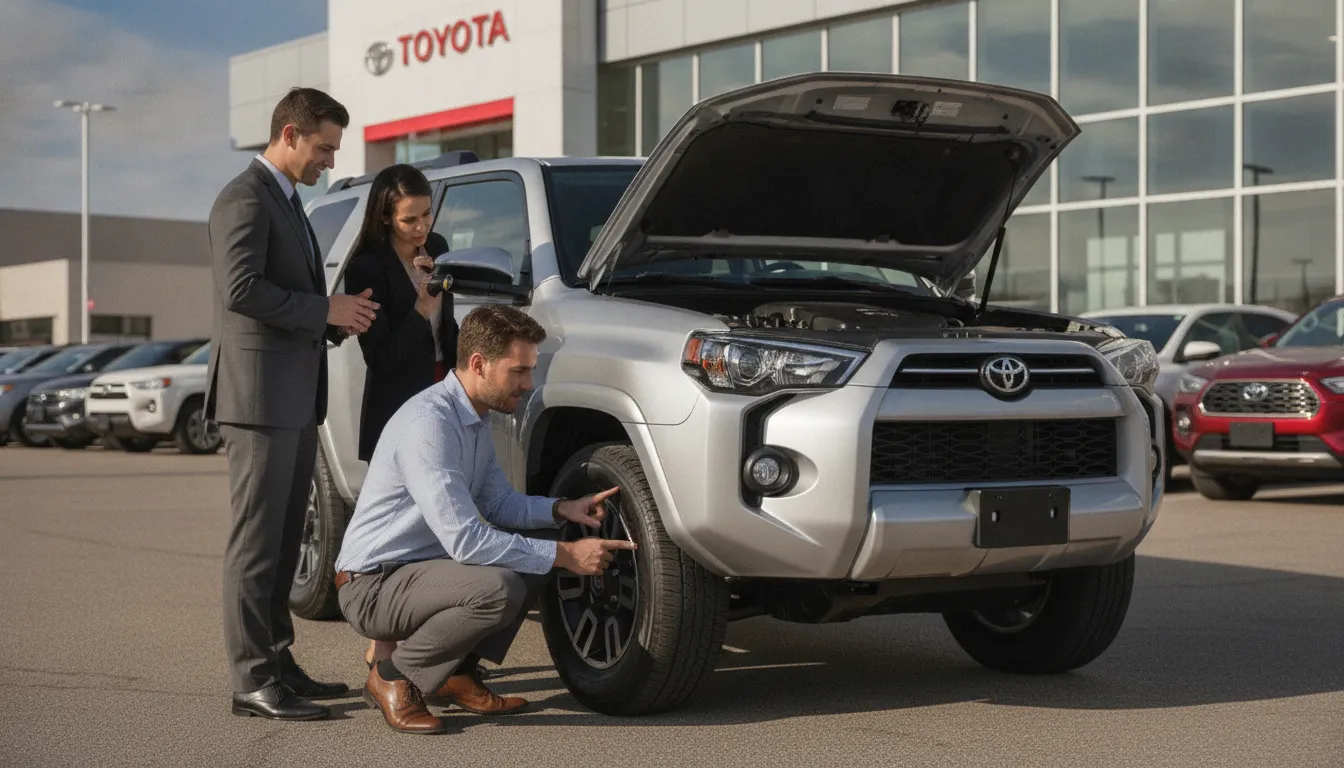
Find out what to check before buying a Toyota 4Runner for sale, from model years and trims to features, pricing, and inspection tips for buyers.
You don’t have to spend your weekends visiting dealerships to find a Toyota 4Runner that fits your needs. Start by deciding which model years, features, and price range make sense for your driving, then compare listings that match those priorities. When searching for a toyota 4runner for sale, look beyond the photos and advertised price: confirm the trim, drivetrain, mileage, history, fees, and delivery details. This guide lays out what to check, how to compare new and used options, and how a vehicle-brokerage service can help you search across dealerships and arrange Maryland pickup or nationwide delivery.
Key Takeaways
- Match the 4Runner to your needs: Compare model years, trims, powertrains, and equipment, then confirm the details for the specific vehicle.
- Compare total value, not just price: Review condition, mileage, service history, ownership costs, fees, financing, and delivery charges.
- Verify before you buy: Check the VIN, vehicle history, title, recalls, and service records, and arrange an independent inspection. Automated Brokers can help compare options and discuss Maryland pickup or nationwide delivery.
What Should You Know About the Toyota 4Runner?
The Toyota 4Runner is a midsize SUV built for drivers who value rugged construction and off-road ability. But its features, powertrain, comfort, and technology can differ substantially by model year and trim. A 2024 4Runner, for example, belongs to a different generation than a 2025 model, so comparing vehicles by price alone can leave out important differences.
Start by deciding how you’ll use the SUV. Regular trail driving, towing, family trips, and commuting can call for different equipment and features. Then check each listing’s model year, trim, drivetrain, packages, mileage, and condition. Ask for the VIN and confirm the vehicle’s specifications against its window sticker or manufacturer information. That extra step helps ensure the 4Runner you’re considering has the engine, seating, safety features, and equipment you expect.
A careful comparison also helps you weigh capability against daily comfort and running costs. The right choice may be an older model with a V6, or a newer version with updated technology and an available hybrid powertrain. Use the details below to focus your search.
Compare the previous-generation 4.0-liter V6 with newer turbocharged and available hybrid powertrains
Many previous-generation 4Runners use a 4.0-liter V6. The 2025 and 2026 models move to a turbocharged 2.4-liter four-cylinder, with a hybrid powertrain available on select versions. Since engine availability varies by year and trim, confirm the details for each vehicle rather than relying on a general description of the 4Runner lineup.
The powertrain you prefer may depend on what matters most to you, from choosing an older-generation model to considering newer equipment and hybrid availability. Compare the vehicle’s year and trim with its listing details, and check the used 4Runner listings on CarGurus alongside Toyota’s current 4Runner specifications. This can help you confirm which engine a specific model offers before you compare price, mileage, or features.
Review body-on-frame construction, four-wheel-drive options, towing capacity, and off-road equipment
The 4Runner’s body-on-frame construction is designed for demanding use, and some trims offer equipment aimed at off-road driving. Depending on the year and configuration, features may include all-terrain tires, Bilstein or FOX shocks, Multi-Terrain Select with Crawl Control, and a Stabilizer Disconnect Mechanism. Four-wheel-drive systems and equipment vary, so check the details of the specific listing.
If towing is part of your plan, verify the rating for the exact model year, trim, drivetrain, and package. Don’t assume every 4Runner has the same towing capacity. Toyota’s model specifications can help you check current configurations, but confirm the information for the vehicle you’re considering. For a used SUV, also ask whether any towing or off-road equipment is included and review its condition, since past use can affect what needs attention.
Weigh capability and resale value against fuel economy, ride comfort, and everyday practicality
The 4Runner may suit drivers who want rugged construction, off-road capability, or an SUV with equipment for rougher routes. Its resale value can also be a consideration, but it depends on factors such as model year, mileage, condition, service history, and local demand. Compare similar listings to understand how those details affect asking prices.
There are trade-offs to weigh, especially with older models. Fuel economy may be lower than that of some other SUVs, the ride can feel firm, and rear-seat comfort and technology may not meet every buyer’s preferences. Think about your usual driving, passenger needs, and fuel budget before deciding. If most of your trips involve commuting and errands, a test drive can help you judge ride comfort and visibility. If you expect to carry passengers or gear often, check the seating and cargo layout in person.
Check each model year’s safety features, infotainment, seating, and cargo space
Safety and convenience features vary by model year, trim, and package. Newer 4Runners may offer a 14-inch touchscreen, wireless Apple CarPlay and Android Auto, a Multi-Terrain Monitor, or a Tow Technology Package. Older models may have different infotainment systems and safety equipment, so check the listing and confirm which features are actually installed.
Seating and cargo capacity also depend on configuration. Some versions offer an optional third row and room for up to seven. Toyota lists up to 90.2 cubic feet of cargo space with the seats folded for the 2026 model, though figures and layouts can vary. Review Toyota’s 4Runner features and specifications, then check the vehicle’s VIN, listing, and window sticker. If possible, sit in each row and test the cargo area with the seats arranged as you’d use them.
How Do 4Runner Model Years and Trims Compare?
A 4Runner’s year and trim affect its powertrain, comfort features, and off-road equipment, so compare more than age and asking price. The major dividing line is the redesign for 2025. Models from 2024 and earlier belong to the previous generation, while 2025 and newer models have a redesigned cabin, updated technology, and new powertrain choices.
First, decide which generation better fits your needs. If you want the previous generation’s 4.0-liter V6, look at 2024 and earlier models from that generation. If you prefer the redesigned model, compare its turbocharged engine and available hybrid powertrain. Toyota’s 4Runner specifications are a helpful reference, but check the individual vehicle’s VIN, window sticker, and listing details to confirm its equipment.
Trim names can help narrow your search, but features may vary by year, package, and drivetrain. Keep those details in view as you compare listings. Automated Brokers can search inventory across multiple dealerships, giving you another way to compare available 4Runners without contacting each store on your own.
Compare 2024 and Earlier Models with the Redesigned 2025 Generation
The previous-generation 4Runner uses a 4.0-liter V6, while the redesigned 2025 model offers a turbocharged 2.4-liter four-cylinder engine and an available hybrid powertrain on select trims. The newer generation also brings a redesigned interior and updated technology. Toyota’s overview of the 2025 4Runner outlines its powertrain options and features.
Neither generation is the right choice for every buyer. An earlier model may suit you if you prefer the V6 or want to compare vehicles from the outgoing generation. A 2025 or newer model may be a better match if you value its updated cabin and newer powertrain options. Compare specific years, trims, and drivetrains, then consider how you’ll use the vehicle, whether for daily commuting, family trips, towing, or trail driving.
Match Trims, Including SR5, TRD Sport, TRD Off-Road, Limited, and TRD Pro, to Your Needs
Trim names offer a starting point, but included equipment can change by model year and package. The SR5 is a practical option for everyday driving. The TRD Sport has a more road-focused setup, while the TRD Off-Road is geared toward trail use and may include features such as crawl control or a locking rear differential, depending on its configuration. The Limited typically emphasizes comfort, and the TRD Pro comes with equipment intended for more demanding off-road driving.
Consider where you’ll spend most of your time behind the wheel before paying for specialized features. For commuting and family use, you may care more about comfort, seating, and safety technology. For regular trail driving, check the specific off-road systems, tires, and drivetrain. Toyota’s 4Runner model information can help you compare available trims, but confirm the equipment on the exact vehicle you’re considering.
Consider 2020–2022 Models for the Previous-Generation V6, and Check Year-Specific Equipment
If you want a previous-generation 4Runner with the 4.0-liter V6, include 2020–2022 models in your search. These years share the same general powertrain, but trim availability and features can differ. The TRD Sport, for example, joined the lineup for 2022. Packages and drivetrain choices can also affect what a particular vehicle includes.
Compare maintenance records and condition alongside mileage. A higher-mileage 4Runner with consistent service documentation may be worth a closer look than a lower-mileage example with limited records or signs of heavy use. Check each listing for the features that matter to you, such as a specific safety system, seating configuration, or infotainment option. Use the VIN and window sticker to verify original equipment, and ask the seller about any changes made since the vehicle left the factory.
Verify Each Listing’s Trim, Packages, and Features
A listing title or exterior badge may not tell you everything about a 4Runner’s equipment. Ask for the VIN and use it to confirm the model year and configuration. Request a window sticker or equipment list, then compare it with the seller’s description. This is particularly helpful when a listing mentions a package, four-wheel drive, or a feature that may not come standard on every trim.
Confirm the mileage, condition, and any modifications, too. Lift kits, replacement wheels, and other aftermarket parts may affect how the vehicle drives and what you’ll want inspected. As you compare options, note each 4Runner’s year, trim, drivetrain, packages, mileage, and asking price. This makes it easier to identify the differences that matter and ask the seller focused questions before arranging an inspection or discussing price.
What Do New and Used Toyota 4Runners Cost?
A 4Runner’s price depends on its generation, trim, mileage, condition, and location. Compare similar vehicles, then account for ownership expenses and fees to understand what you’ll actually pay.
Compare asking prices by generation, year, trim, mileage, and condition
New 4Runner prices vary by trim and equipment. Recent estimates put base SR5 models around $42,270, while higher trims such as the TRD Pro and Trailhunter can range from about $68,000 to more than $75,000. Check the Toyota 4Runner lineup for current trims and pricing, since available configurations can change.
Used prices vary just as widely. Fifth-generation models from 2014 to 2024 average roughly $36,680, but individual listings may be well above or below that figure. Compare vehicles with similar model years, trims, mileage, and condition. A lower asking price may reflect higher mileage, wear, or upcoming maintenance, so check the vehicle details before deciding it’s a good value.
Factor in local demand, vehicle history, and equipment
Location can affect what sellers ask for a used 4Runner. Nationwide estimates range from about $20,000 for a 2014 model to around $49,500 for a 2025 model, though mileage, trim, and condition influence each vehicle’s price. Use used 4Runner listings on CarGurus to compare similar vehicles, keeping in mind that listing prices may differ from final sale prices.
Review the vehicle’s history and equipment, too. A clean title, regular service records, and sought-after features may support a higher asking price. Accident history, rust, heavy off-road use, or missing maintenance records call for closer attention. Confirm that the trim and options match the listing, and check the VIN and vehicle history before moving forward.
Budget for fuel, insurance, maintenance, repairs, taxes, and registration
The purchase price is only one part of your budget. Include fuel, insurance, routine maintenance, repairs, taxes, and registration when estimating what a 4Runner will cost to own. Fuel and insurance expenses can differ from those of a smaller SUV, so request an insurance quote using the vehicle’s VIN and estimate fuel spending based on how much you drive.
For a used 4Runner, leave room in your budget for maintenance and repairs, particularly if service records are incomplete or the vehicle has had demanding use. Ask a mechanic to review inspection results and identify near-term needs, such as new tires, brake work, or fluid service. These costs can make two similarly priced vehicles very different in value.
Treat the asking price as a starting point and confirm the total out-the-door cost
Before you commit, request an itemized out-the-door price. It should list the vehicle price, dealer fees, taxes, title, registration, and any delivery or transfer charges. Some listings include dealer fees, while others add charges to move a vehicle between locations or deliver it to your home. Ask which costs apply to your purchase, rather than assuming the advertised price is the final amount.
Check whether the price depends on financing, a trade-in, or other conditions. Compare the total cost of similar vehicles, not just the monthly payment. If you plan to finance, review the interest rate, loan term, down payment, and total amount repaid. Automated Brokers can help compare available vehicles and clarify pricing and delivery details before you make a decision.
Is a Toyota 4Runner the Right Fit?
Consider its off-road capability, durable construction, and resale appeal
A Toyota 4Runner may be a good match if you regularly drive dirt roads, visit campsites, or want an SUV equipped for challenging conditions. Its body-on-frame construction and available four-wheel-drive systems support off-road use, though capability varies by model year, trim, and equipment. Owners often praise the 4Runner’s durability, reliability, off-road performance, and resale value, according to CarGurus’ overview of used 4Runners.
Consider how often you’ll use those strengths. If most of your driving is on paved roads, a less rugged SUV may better suit your needs and budget. For a used 4Runner, look beyond its reputation: check maintenance records and inspect for signs of hard off-road use, including underbody damage. A well-kept vehicle’s condition matters more than the model’s general reputation.
Weigh older models’ fuel economy, firmer ride, rear-seat comfort, and limited technology
Older 4Runners can appeal to buyers who want a rugged SUV, particularly if they prefer the previous-generation V6. Still, consider the day-to-day trade-offs. Owners commonly report modest fuel economy, a firm ride, less rear-seat comfort, and fewer modern features in older models. The experience can differ by year, trim, condition, and tire choice, so take a test drive before making a decision. CarGurus’ owner feedback offers a useful starting point for questions to ask.
During your drive, check whether the seats feel comfortable, the infotainment system has the features you rely on, and the ride suits your usual routes. If you often carry adult passengers or spend hours on the highway, compare the 4Runner with other SUVs to see which feels better for your routine.
Compare your seating, cargo, and daily-driving needs with the 4Runner’s strengths
Think about how many passengers you carry and what you bring along. Some 4Runner configurations offer a third row and seating for up to seven, while available cargo space depends on the seating layout. For the 2026 model, Toyota lists up to 90.2 cubic feet of cargo capacity with the seats folded. Check the specific year and trim you’re considering, as seating and storage vary. Toyota’s 4Runner specifications can help you compare current configurations.
Also factor in parking, fuel costs, and comfort during everyday drives. If you’ll use the third row often, confirm that it works for your passengers and leaves enough room for their belongings. Compare the vehicle’s features and condition with similar listings, then arrange a test drive to see whether the 4Runner fits your needs.
Where Can You Find a Toyota 4Runner for Sale?
Search dealership inventory and reputable online listings
Start with local Toyota dealers and established automotive marketplaces. The official Toyota 4Runner site lets you explore the model and search for nearby inventory. Online listings can help you compare options across a wider area, with filters for price, year, mileage, trim, drivetrain, and features.
Before you search, write down your must-haves, such as a particular model year, four-wheel drive, or a maximum price. Save listings that fit, then compare similar 4Runners side by side. A lower asking price may reflect higher mileage, fewer features, or a different condition. Confirm the vehicle’s details and availability with the seller before planning a visit or making a purchase decision.
Ask Automated Brokers to search more than 1,300 vehicles across nine dealerships
If checking multiple dealer websites takes more time than you have, Automated Brokers can search on your behalf. Its concierge team looks across more than 1,300 vehicles at nine dealerships, helping customers find options that match their preferred model, budget, and features. You can work with the team by phone, text, or email, without spending hours at a dealership.
Be clear about what matters most, whether that’s a specific trim, mileage range, four-wheel drive, or price limit. The team can help identify options and discuss financing support. Read more about how the brokerage process works, or view available inventory to begin your search.
Confirm each 4Runner’s availability, location, condition, and listing details
Before taking the next step, confirm that the 4Runner is still available and ask where it is located. Check that the model year, trim, drivetrain, mileage, and advertised features match the vehicle identification number, or VIN, and window sticker. Ask about its condition, title status, service records, and any known damage or recent repairs.
For a used model, request a vehicle history report and review it alongside maintenance records. A report can identify past events worth asking about, but it cannot tell you everything about a vehicle’s current condition. Use Toyota 4Runner listings on CarGurus to compare options, then verify the details with the seller before making a decision.
Compare Maryland pickup with nationwide delivery
Once you’ve found a 4Runner that fits, ask how you can receive it. Buyers in Maryland may be able to arrange local pickup, while buyers in other states can ask about delivery to their location. Delivery availability, timing, and charges depend on the vehicle and destination, so get the details in writing before you commit.
Ask who will handle the paperwork, when payment is due, and whether the quoted price includes delivery, taxes, registration, and dealer fees. If the vehicle is at another dealership, confirm whether a transfer is needed and how it could affect cost or timing. Automated Brokers offers nationwide delivery and Maryland pickup, so you can discuss the best option before finalizing your purchase.
What Should You Check on a Used Toyota 4Runner?
A 4Runner’s reputation for durability is a useful starting point, not a substitute for checking the specific vehicle. Two SUVs with the same model year can have very different histories, maintenance needs, and levels of wear. Before you compare prices, ask for the VIN, review the paperwork, and confirm the listed trim and features. Then inspect the vehicle in person and take it for a test drive.
Give yourself time to check areas that are easy to overlook, especially the frame, underbody, tires, and four-wheel-drive system. Ask about previous off-road use and look for service records that support the seller’s description. A vehicle history report can flag reported accidents or title issues, but it may not include every repair or problem. Pair it with an independent inspection before you make a decision.
If you’re comparing several vehicles, organize each one’s mileage, condition, service history, and asking price so you can assess them on the same terms. Automated Brokers can search more than 1,300 vehicles across nine dealerships, which can help you find options that fit your preferences. Whether you’re shopping locally in Maryland or considering delivery, verify the details of each 4Runner before moving forward.
Review the vehicle history, title, maintenance records, and open recalls
Start with the VIN and a vehicle history report. Review reported accidents, title status, ownership changes, and odometer records. A report can reveal useful information, but it may not include every incident or repair, so compare it with the vehicle’s condition and the seller’s account. CarGurus’ used 4Runner listings show that accident history can vary by model year, making it important to research the specific vehicle you’re considering.
Ask for maintenance records, including receipts for routine service and major repairs. Check that the VIN on the paperwork matches the vehicle, and clarify any gaps or inconsistencies before you proceed. You should also look for open safety recalls by entering the VIN in the NHTSA recall lookup. Ask the seller whether recall work has been completed and request documentation when available.
Inspect the frame and underbody for rust, and check for leaks, damage, and off-road wear
Look under the vehicle for rust on the frame, suspension parts, and other exposed metal. Surface corrosion is not the same as deep scaling, flaking, or weakened sections, so ask a mechanic to assess any significant rust. Pay close attention if the 4Runner has spent time in an area where roads are salted or has seen frequent off-road use.
Check for fluid leaks, damaged skid plates, bent components, and scrapes or cracks on the body. Uneven tire wear can point to alignment or suspension issues. Inside the cabin and cargo area, look for torn upholstery, damaged trim, mud, or other signs of heavy use. Off-road experience alone does not tell you whether a vehicle was well cared for, so ask how it was driven and maintained, then compare the answer with what you see.
Consider mileage alongside service history, condition, and past use
Mileage helps you compare vehicles, but it should not decide the purchase on its own. A higher-mileage 4Runner with consistent service records and a clean inspection may be a better fit than a lower-mileage SUV with missing maintenance history or signs of hard use. Compare the odometer reading with the vehicle history report, service documents, and overall condition.
When comparing prices, focus on vehicles with similar model years, trims, drivetrains, mileage, and equipment. Used 4Runner asking prices vary with year, mileage, trim, and condition, so look closely at listings priced far below similar options. Ask the seller what maintenance is due soon and whether any repairs are recommended. Those details can help you estimate the ownership costs beyond the listed price.
Test the four-wheel-drive system and arrange an independent inspection
If the 4Runner has four-wheel drive, ask the seller to demonstrate the system and explain how to operate it. Follow the owner’s manual and test it only in a suitable setting. Watch for warning lights, unusual sounds, or difficulty changing modes. Confirm the listing’s drivetrain information, since equipment can vary by model and trim.
Before buying, arrange an inspection with an independent mechanic who has experience with SUVs and four-wheel-drive systems. Ask them to check the frame, suspension, brakes, tires, engine, transmission, and drivetrain, as well as signs of leaks or previous damage. A short test drive may not reveal issues that a trained mechanic can spot on a lift. If the seller will not allow an independent inspection, pause and ask why before deciding whether to continue.
Check older models for wear, comfort trade-offs, and missing safety features
Take an older 4Runner on a test drive that includes roads similar to the ones you use every day. Pay attention to ride firmness, cabin noise, visibility, and how easy it is to park. Owners commonly mention poor fuel economy, a firm ride, limited rear-seat comfort, and fewer modern features on older models, according to CarGurus’ 4Runner research.
Check the rear seats and cargo area in person if you regularly carry passengers, child seats, or bulky items. Confirm which safety and convenience features the specific vehicle includes, such as driver-assistance systems, a backup camera, or smartphone connectivity. Equipment varies by year, trim, and package, so verify features using the VIN, window sticker, or owner’s manual rather than relying on a general listing description.
How Can You Compare Listings and Choose the Right 4Runner?
A 4Runner’s asking price is only one part of the decision. Compare similar vehicles, verify the details in each listing, and think about how the model year and powertrain fit your needs. That gives you a clearer way to judge value and spot questions to ask before you commit.
Compare models with the same generation, trim, drivetrain, mileage, and condition
Start with the generation and model year. Then compare listings with the same trim and drivetrain, since an SR5 with two-wheel drive may have different equipment and pricing from a four-wheel-drive TRD Off-Road. Mileage and condition matter, too, so look for vehicles with similar use and maintenance histories.
Check each listing for packages, installed accessories, tire condition, visible wear, and reported repairs. If one vehicle costs more, see whether its features, service history, or condition help explain the difference. Review several Toyota 4Runner listings to get a sense of asking prices for comparable years and configurations. Listings are a useful starting point, but confirm availability and details with the seller.
Check the VIN, window sticker, service records, and included equipment
Ask for the vehicle identification number (VIN) and use it to confirm the model year and check for open recalls through the National Highway Traffic Safety Administration. If the original window sticker is available, review it to verify the trim, factory options, and equipment. This helps you catch differences between the listing description and the vehicle’s original configuration.
Request service records and look for regular maintenance, major repairs, and gaps in the vehicle’s history. A vehicle history report can provide additional information about reported accidents, title history, and ownership, though it may not include every event. Confirm that features you care about, such as four-wheel drive or driver-assistance technology, are included and working. Toyota’s 4Runner model information can help you check specifications by model year.
Decide whether a newer powertrain or an older model’s price and features better fit your needs
The redesigned 2025 4Runner introduced a turbocharged 2.4-liter engine, with a hybrid powertrain available on select trims. Many earlier-generation models use a 4.0-liter V6. Compare the exact model years and trims you’re considering, since powertrain, features, and equipment vary. Toyota’s 4Runner specifications are a helpful reference when checking those details.
Next, consider your budget and how you’ll use the SUV. A newer model may appeal if you want updated technology or a hybrid option; an earlier model may suit you if its price, features, and V6 better match your priorities. Weigh the price difference against equipment, condition, and expected ownership costs. If you’re comparing options at multiple dealerships, Automated Brokers can search available inventory and help you find a 4Runner that fits your criteria.
How Do You Confirm the Final Price and Complete the Purchase?
Before agreeing to buy a Toyota 4Runner, confirm the vehicle’s details, the full price, and the steps required to complete the sale. Ask for important terms in writing, especially if you’re purchasing remotely. That gives you a clear basis for comparing offers and helps prevent misunderstandings about fees, financing, or delivery.
Use comparable listings to support your offer
Compare the 4Runner with listings that match its model year, generation, trim, drivetrain, mileage, and condition. A low-mileage TRD Off-Road, for example, may not be a useful price comparison for a higher-mileage SR5. Review several similar vehicles in your area, and note differences in equipment and condition. Search tools such as CarGurus’ used Toyota 4Runner listings can help you see asking prices for comparable vehicles. Treat those prices as a reference, not a promise of what a specific 4Runner is worth. If the seller’s price differs from similar listings, ask what accounts for the difference, such as added equipment, recent maintenance, or vehicle condition.
Discuss price based on condition, mileage, vehicle history, and upcoming maintenance
The asking price is only one part of the vehicle’s value. Ask for the history report and service records, and find out about past accidents, title status, and how the 4Runner was used. Consider mileage alongside its overall condition: a well-maintained vehicle with higher mileage may be a better fit than one with fewer miles and limited service records. Ask whether upcoming work is needed, including tires, brakes, fluid service, or repairs identified during an inspection. Documented recent maintenance can help explain a price, while unresolved issues may give you grounds to discuss it. The FTC’s used-car buying guide outlines useful questions to ask before you commit.
Request an itemized out-the-door price with dealer fees, taxes, and registration
Ask the seller for an itemized out-the-door price in writing. It should include the vehicle price, dealer fees, applicable taxes, title, and registration costs. If you’re arranging delivery, request that charge as its own line item. Review any optional products, such as service contracts or protection packages, and ask whether each one is included or optional. If a fee or product isn’t clear, ask for an explanation before signing. An itemized quote lets you compare the full cost of two 4Runners, rather than weighing one vehicle’s advertised price against another’s total. If taxes or registration depend on where you live, confirm which costs the seller will collect and which you’ll pay separately.
Compare financing terms, down payment, and total borrowing cost
Don’t compare auto loans by monthly payment alone. Review the annual percentage rate, loan term, down payment, and total amount you’ll repay. A longer loan term can reduce the monthly payment while increasing the overall cost of borrowing. Ask whether the rate is final or subject to a credit review, and confirm any down payment requirements. You can request financing options from the seller and compare them with offers from your bank or credit union. Look at the written terms side by side, including any fees or conditions, before choosing. The Consumer Financial Protection Bureau’s auto loan resources explain common loan terms and offer questions to ask lenders.
Confirm delivery charges, timing, paperwork, and payment steps before committing
If you’re buying from a distance, confirm the 4Runner’s location, expected delivery date, and delivery cost before agreeing to purchase. Ask which documents you’ll need to review and sign, including the purchase agreement, title paperwork, and any financing documents. Confirm the accepted payment methods and when payment is due. Before sending funds, verify the seller’s identity and check that the written agreement matches the price and terms you discussed. If you’re buying across state lines, ask how title and registration will be handled for your state. Keep the answers in writing so you can refer to them throughout the transaction, and pause to clarify anything that differs from what you expected.
Complete the process by phone, text, or email with Automated Brokers, and choose delivery or Maryland pickup
When you’re ready to move forward, Automated Brokers can coordinate with you by phone, text, or email. Share the listing or describe the year, trim, budget, and features you want, then ask the team to confirm current availability and the itemized price. Review financing details, delivery costs, paperwork, and payment steps before approving the purchase. Automated Brokers searches more than 1,300 vehicles across nine dealerships, so you can also ask about alternatives if a particular 4Runner doesn’t fit. Depending on the vehicle and your location, you can arrange nationwide delivery or pickup in Maryland. Before signing or submitting payment, make sure the final written terms reflect your agreement.
Related Articles
- Toyota 4Runner: Model Years, Trims, and Features Explained
- What to Look for When Buying a Used Toyota 4Runner
- Toyota 4Runner vs. Toyota Highlander: Which SUV Is Right for You?
- Best Used SUVs for Off-Roading
- How to Inspect a Used SUV Before You Buy
Frequently Asked Questions
Is the 2025 Toyota 4Runner a new generation?\ Yes. The 2025 model begins a redesigned generation, with a different cabin and powertrain lineup from 2024 and earlier models. Check the year and trim of any listing to confirm which engine and features it includes.
Which Toyota 4Runner trim should I consider?\ Choose based on how you’ll use the SUV. A trim with off-road equipment may suit frequent trail driving, while a comfort-focused version may be a better fit for commuting and family trips. Equipment can vary by year and package, so verify the specific vehicle’s features before buying.
What should I check before buying a used 4Runner?\ Review the vehicle history and maintenance records, confirm the VIN and listed equipment, and inspect the frame and underbody for rust or damage. An independent mechanic can check the engine, suspension, brakes, and four-wheel-drive system. A test drive can also help you assess comfort and handling.
How can I tell whether a used 4Runner is priced fairly?\ Compare it with vehicles that have a similar year, generation, trim, drivetrain, mileage, and condition. Then consider service history, equipment, and any repairs it may need. Ask for an itemized out-the-door price so you can compare the full cost, including fees, taxes, and delivery if applicable.
Can I buy a Toyota 4Runner without visiting a dealership?\ Automated Brokers can help you compare available vehicles and coordinate the purchase by phone, text, or email. Depending on the vehicle and your location, you can ask about nationwide delivery or pickup in Maryland. Confirm the vehicle’s details, total price, financing terms, and delivery arrangements in writing before committing.