Used Car Delivery Service: How It Works and Costs
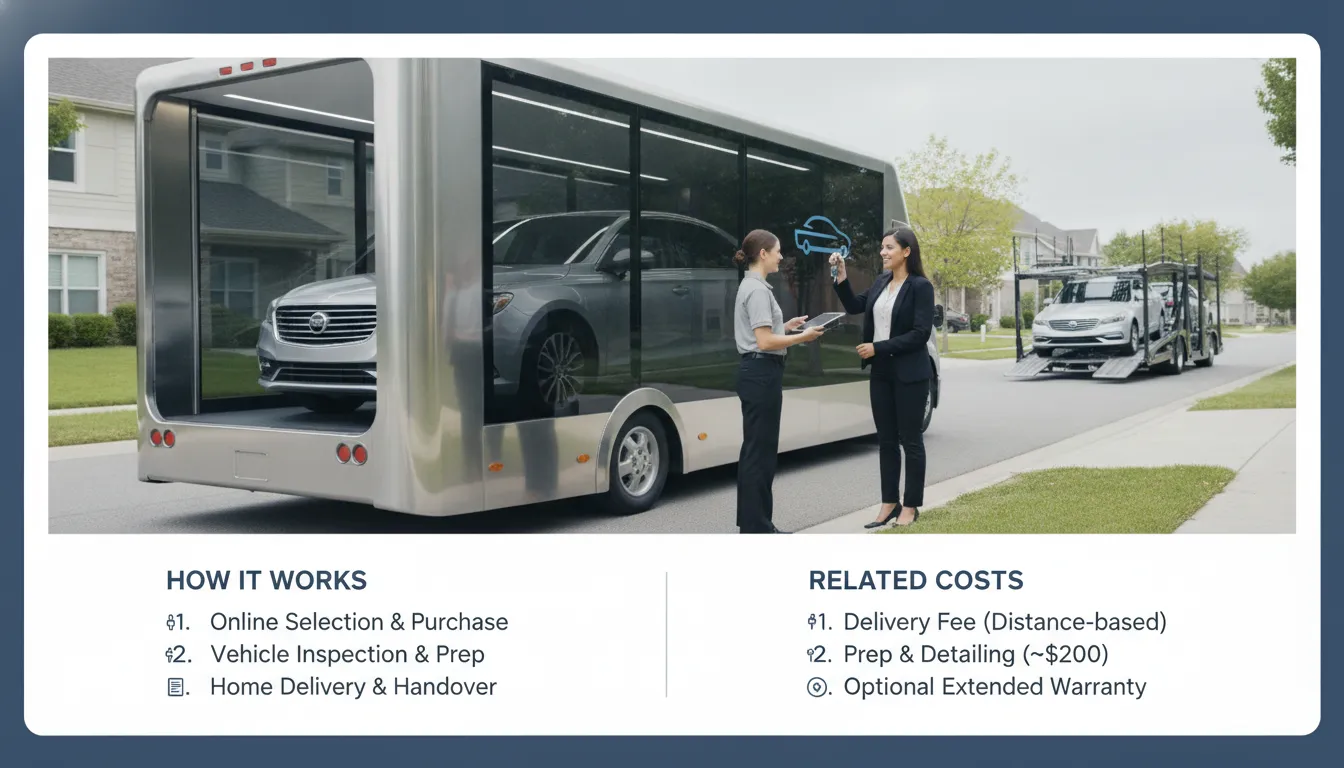
A used car delivery service lets you buy a pre-owned vehicle online, compare options, handle paperwork remotely, and arrange home delivery with clear costs.
Finding the right pre-owned vehicle takes more than choosing a make and model. You also need to compare mileage, features, condition, title history, financing terms, fees, and delivery options. A used car delivery service can bring those details together through one point of contact, making the buying process easier to manage from home. Instead of contacting several dealerships yourself, you can share your budget and preferences with a specialist who searches available inventory on your behalf. The best services offer clear pricing, honest vehicle information, reliable communication, and nationwide delivery support. Here’s what to know before you make a purchase.
Key Takeaways
- Review the complete cost before buying: Ask for an itemized quote covering the vehicle, delivery, broker fees, taxes, registration, financing, and trade-in details.
- Confirm the vehicle’s condition and history: Check the VIN, title, mileage, history report, inspection records, current photos, and warranty or return terms before signing.
- Choose a transparent delivery partner: Look for insured transportation, clear paperwork, responsive communication, and one experienced contact from vehicle search through home delivery.
What Is a Used Car Delivery Service?
A used car delivery service helps you purchase a pre-owned vehicle without making repeated trips to local dealerships. You can browse available vehicles online, compare features and condition, discuss pricing and financing with a specialist, complete the paperwork remotely, and arrange delivery to your home.
The process depends on the provider. Some services operate as dealerships, while others act as brokers that search multiple dealer inventories for you. A broker may help compare vehicles, coordinate communication, arrange transportation, and keep the transaction moving through one point of contact. Before you commit, confirm who owns the vehicle, who prepares the paperwork, and who handles transportation.
A reliable service should provide clear information about the vehicle, total purchase cost, delivery arrangements, and post-sale support. Online car buying and home delivery can make purchasing more convenient, but you should still review every document and ask questions before signing.
Browse nationwide inventory online
A delivery service can give you access to vehicles beyond the dealerships near your home. Instead of limiting your search to one city or a small group of local lots, you can review inventory from multiple locations and consider models that match your budget, preferred equipment, color, and mileage requirements.
Automated Brokers works with inventory across nine dealerships, giving buyers access to more than 1,300 vehicles, including brands such as Toyota, Jeep, and Kia. You can view available inventory and share the features that matter most with a car-buying specialist.
A wider search does not mean managing several dealer conversations yourself. Your broker can help identify suitable vehicles, confirm availability, and explain the next steps before you make a purchase decision.
Compare mileage, features, condition, and availability
Online listings make it easier to compare vehicles side by side, but the details deserve a close look. Check the mileage, model year, trim, drivetrain, safety features, service history, tire condition, interior wear, and reported damage. Two vehicles with similar prices may have very different equipment or maintenance needs.
Ask whether each vehicle is still available and whether the listed price includes every dealer charge. You can also request current photos and clarification about anything that is difficult to judge online. Buyers can review vehicles at their own pace, then select the model and features that best fit their needs, as described in this overview of online vehicle home delivery.
Condition descriptions vary between sellers, so ask specific questions rather than relying only on labels such as “clean” or “excellent.” Written answers give you a clearer record of what the seller represented before purchase.
Verify the VIN, history, title, and odometer
The vehicle identification number, or VIN, connects the car to its records. Use it to confirm the year and model, review the vehicle history, and check for reported accidents, title problems, odometer discrepancies, recalls, and prior use. Request the VIN before placing a deposit whenever possible.
Ask for a current vehicle history report and confirm whether the title is clear or has a brand designation. A history report may not include every repair or incident, so it should support, not replace, a careful inspection. The Federal Trade Commission’s guide to buying a used car recommends reviewing vehicle history and gathering independent information before purchase.
Confirm the odometer reading on the listing, history report, purchase documents, and vehicle itself. If the numbers do not match, pause the transaction until the seller explains the difference in writing.
Request photos, inspection details, and a written quote
Photos should show more than the vehicle’s best angles. Request clear images of the exterior, wheels, seats, dashboard, cargo area, engine bay, underbody if available, and any scratches, dents, stains, or warning lights. If the listing photos appear outdated, ask for a current walkaround video.
Ask whether the vehicle received a dealership inspection and what that inspection covered. An independent pre-purchase inspection may provide additional confidence, especially when you are buying from another state. A mobile mechanic may be able to inspect the vehicle at its current location.
Finally, request a written quote that identifies the vehicle price, taxes, title and registration costs, dealer or broker fees, delivery charges, and optional products. Some sellers may offer a home test drive or inspection before the final purchase, so ask what options are available. A detailed quote makes it easier to compare the actual cost of multiple vehicles.
Review financing for every credit profile
A used car delivery service may help you compare financing options without requiring visits to several dealerships. Share accurate information about your income, employment, credit history, desired down payment, and preferred loan term. This allows the specialist to discuss realistic options and estimate your payment.
Financing approval and rates depend on the lender, vehicle, loan amount, term, and your financial profile. “All credit types considered” does not mean every application receives identical terms or an approval. Ask which lenders may review your application, whether the inquiry is hard or soft, and which documents you need to provide.
Compare the annual percentage rate, total interest, loan term, fees, and total amount financed, not only the monthly payment. The Consumer Financial Protection Bureau explains how auto loans work and why a longer term can increase your total borrowing cost.
Get a trade-in value and loan payoff
If you plan to trade in your current vehicle, provide its VIN, mileage, condition, photographs, lender information, and payoff statement. The payoff amount comes directly from your current lender and may differ from the balance shown on your latest statement.
Your trade-in value is compared with the payoff amount. If the vehicle is worth more than you owe, you may have positive equity that reduces the amount needed for your next purchase. If you owe more than the vehicle is worth, you may need to pay the difference separately or include it in the new loan, subject to lender approval.
Ask whether the trade-in value depends on an in-person inspection and whether the offer can change after the vehicle arrives. Confirm how the title, keys, registration, and remaining loan documents will be transferred. Automated Brokers can help coordinate the trade-in conversation as part of its white-glove car-buying process.
Complete purchase, insurance, title, and registration paperwork
Once you choose a vehicle and agree on the terms, you will need to complete the sale documents. These may include the buyer’s order, bill of sale, financing contract, odometer disclosure, title documents, privacy forms, and delivery or inspection acknowledgments.
You will also need insurance before the vehicle can be driven. Ask the seller or broker which coverage details your insurer must provide and when the policy should begin. Registration requirements, taxes, temporary tags, and title timing vary by state, so confirm how the process works for your address.
Remote purchasing can reduce paperwork at the dealership, but it does not remove the need to read every document. Check the VIN, purchase price, fees, lender information, trade-in credit, and delivery address before signing. Some home delivery programs let buyers complete the purchase remotely, including required signatures, as explained by O’Brien Team Illinois.
Schedule insured home delivery
After the paperwork and payment arrangements are complete, the service coordinates transportation to your address. Confirm the estimated pickup and delivery dates, the carrier’s contact details, and whether the vehicle will arrive on an open or enclosed carrier. Delivery timing can change because of weather, traffic, carrier availability, and distance.
Ask when shipping insurance takes effect and what it covers. Confirm the claims process, deductible, and documentation requirements before the vehicle leaves the originating dealership. A reputable provider should explain what happens if the vehicle arrives with damage or does not match the agreed condition.
Delivery services may offer a delivery window rather than an exact appointment. TrueCar explains that vehicles purchased through its program are insured during shipping and that buyers can select a delivery date within an available range. Your provider should give you similar details in writing before transportation begins.
See how Automated Brokers takes you from online search to delivery
Automated Brokers gives buyers one point of contact for finding, evaluating, purchasing, and transporting a used vehicle. You can share your preferred make, model, budget, mileage range, features, and location, then let the team search inventory across its dealership network.
The service can help coordinate vehicle details, pricing, financing conversations, trade-in information, paperwork, and nationwide delivery. That approach is useful if you want access to more inventory but prefer not to contact several dealerships or arrange transportation on your own.
Automated Brokers has 30 years of industry experience and serves buyers across the country, including customers in Maryland. To understand the process and discuss available vehicles, review how the service works or contact Automated Brokers with your vehicle preferences.
Why Use a Used Car Delivery Service?
Buying a used car does not have to mean spending your weekend visiting dealerships, comparing limited local inventory, and repeating the same conversation with multiple sales teams. A used car delivery service lets you shop from home while a specialist helps coordinate pricing, financing, paperwork, and transportation.
The right service can make the process more convenient without removing important buyer protections. You should still review the vehicle history, confirm the title status, understand the complete price, and inspect the car before accepting delivery. The main difference is that you have one experienced contact helping organize each step.
For buyers in Maryland and across the country, this approach can make long-distance purchases easier to manage. You can compare more vehicles, ask questions before committing, and arrange delivery without planning a separate trip to the dealership.
Shop beyond local inventory
Local dealerships can offer convenient test drives, but their selection may not include the make, model, trim, color, or mileage you want. A used car delivery service gives you access to vehicles outside your immediate area, so you are not limited to what happens to be parked nearby.
According to TrueCar’s explanation of online car delivery, online shoppers may access inventory from across the country rather than searching only at nearby dealerships. A wider search can help when you want a specific SUV, a particular package, or a used vehicle with a narrow set of features.
Automated Brokers helps buyers search beyond Maryland’s local inventory through its dealership network. Share your budget, preferred models, mileage range, and must-have features, then let a specialist help identify options that fit your needs.
Compare vehicles from multiple dealerships
Comparing several vehicles is easier when you are not limited to one dealership’s inventory. You can review differences in mileage, equipment, model year, condition, pricing, and availability before choosing the option that suits you best.
A used car delivery service may also help compare vehicles across multiple dealership locations. That matters when similar cars have different ownership histories, service records, accident disclosures, or added fees. Comparing the full picture is more useful than choosing based on the lowest advertised price alone.
Automated Brokers can search more than 1,300 vehicles across nine dealerships, including brands such as Toyota, Jeep, and Kia. Its available inventory gives you a starting point, while a specialist can help narrow the choices based on your budget and priorities.
Skip dealership visits and save time
A remote purchase can remove much of the time associated with traditional car shopping. Instead of driving from lot to lot, waiting for a salesperson, and sitting through repeated negotiations, you can handle many conversations by phone, text, or online.
Home delivery services may allow customers to complete much of the purchase remotely, including vehicle selection, financing, paperwork, and delivery arrangements. O’Brien’s home delivery process explains how online buyers can avoid dealership travel, waiting, and the need to arrange transportation for pickup.
That convenience is helpful for busy professionals, parents, older buyers, and anyone purchasing a car from another state. You can focus on reviewing the vehicle and purchase terms instead of coordinating several dealership visits.
Work with one car-buying specialist
Shopping for a used vehicle often brings up detailed questions. You may want to compare trim levels, understand a technology package, confirm the engine type, review maintenance records, or check whether a particular feature is included.
With a delivery service, one car-buying specialist can help coordinate those questions and keep the process organized. Buyers may communicate by phone, text, or online chat, depending on their preference. This is simpler than starting over with a new salesperson every time you compare another dealership.
A specialist should explain the vehicle clearly, point out meaningful differences, and provide documentation without pressuring you into a quick decision. Automated Brokers offers a concierge-style buying process, giving customers a consistent contact while they review vehicles, pricing, financing, and delivery options.
Access nationwide delivery through one contact
Buying from an out-of-state dealership can create logistical challenges. You may need to arrange a transport company, coordinate pickup times, confirm insurance, and determine who handles title and registration paperwork. A used car delivery service can help coordinate these details through one point of contact.
Delivery availability varies by provider, vehicle, location, and carrier. Some services deliver across the continental United States, while others serve selected regions. Confirm that the provider can deliver to your address, and ask about the estimated timeline and total transportation charge before committing to a vehicle.
Automated Brokers serves buyers nationwide, with a particular focus on Maryland customers. Its team can discuss delivery arrangements, timing, and address coverage as part of the purchase process. Start by contacting Automated Brokers with your location and vehicle preferences.
Simplify financing, trade-ins, and paperwork
A car purchase involves more than choosing the vehicle. You may also need financing, a trade-in valuation, a loan payoff, insurance documentation, title work, registration, and temporary tags. Managing every item separately can make a straightforward purchase feel complicated.
A used car delivery service can help organize these steps from home. You may be able to submit a financing application, provide trade-in information, review a loan payoff, and complete purchase documents electronically. The exact process depends on the dealer and lender, so ask which items the service handles directly.
Automated Brokers works with buyers across credit profiles and can help review financing options based on your application. If you have a trade-in, provide the vehicle identification number, mileage, condition, photographs, and current loan information. These details help the team estimate trade-in equity or the remaining payoff more accurately.
Understand market pricing for pre-owned vehicles
Used car pricing depends on several details, including mileage, condition, model year, service history, location, demand, equipment, and title status. Two vehicles with the same model name can have very different values once you compare their records and features.
A reliable delivery service should explain how the asking price relates to the vehicle’s condition and current market. You should also receive a written breakdown of the vehicle price, delivery, taxes, registration, dealer fees, and any broker or processing charges.
Be cautious with unusually low prices that exclude required fees or do not reflect the vehicle’s actual condition. Ask whether the vehicle has a clean title, documented damage, open recalls, or an inspection requirement. Automated Brokers offers pre-owned vehicles at market prices, with specialists available to explain the details behind each option.
Explore 1,300-plus vehicles across nine dealerships
A broader dealership network can make it easier to find a used vehicle that matches your specifications. Instead of checking each dealership separately, you can submit one request and have a brokerage team search across its available sources.
Automated Brokers has access to more than 1,300 vehicles across nine dealerships. The selection includes popular brands such as Toyota, Jeep, and Kia, along with different body styles, model years, mileage ranges, and equipment levels.
A large inventory does not mean every vehicle will be the right fit. Ask for the vehicle identification number, current location, photographs, history report, inspection information, and complete price before making a decision. Review the current inventory, then ask a specialist to help compare the most suitable options.
Benefit from 30 years of Automated Brokers’ experience
Experience matters when a purchase involves multiple dealerships, lenders, trade-ins, and transportation providers. A knowledgeable broker can help identify missing information, explain the next step, and keep the transaction moving without requiring you to manage every conversation yourself.
Automated Brokers brings 30 years of auto brokerage experience to the buying process. The company helps simplify the search and coordinate the details while giving customers a clear view of their vehicle, financing, pricing, and delivery options. This support can be especially useful when purchasing from another state or choosing a vehicle without seeing it in person first.
Professional assistance does not replace your role in the decision. Review the vehicle documents, ask questions about anything unclear, and make sure all pricing and delivery terms are documented. Learn more about the company’s customer-focused approach before requesting a vehicle search.
How Much Does Used Car Delivery Cost?
The cost of a used car delivery service depends on more than the vehicle’s advertised price. Your final amount may include the vehicle price, delivery charge, broker fee, taxes, title and registration costs, financing charges, trade-in adjustments, and dealer fees. Requesting an itemized, out-the-door estimate is the best way to understand what you will pay before agreeing to the purchase.
Automated Brokers helps buyers compare pre-owned vehicles from multiple dealerships and coordinate the buying process through one point of contact. Whether you are purchasing in Maryland or arranging delivery across the country, reviewing each cost in advance can help you make a confident decision. Here are the main expenses to consider.
Separate the vehicle price, broker fee, and delivery charge
Begin by separating the vehicle’s selling price from every service-related expense. An advertised price may cover the car itself but leave out delivery, brokerage, documentation, taxes, registration, or dealer-installed accessories. Ask for each charge to appear as a separate line item.
A broker may charge for finding vehicles, negotiating with dealerships, coordinating paperwork, arranging financing, or scheduling delivery. That service can save time and give you access to vehicles beyond your local market, but you should know exactly what the fee includes.
Also ask whether delivery is included in the broker fee or billed separately. When you work with Automated Brokers, request a breakdown of the vehicle price, brokerage services, delivery arrangements, and government charges. A clear estimate makes it easier to compare your options without confusing one fee for another.
Understand what affects shipping costs
Used car delivery charges vary according to several factors. Distance is one of the most important, but the vehicle’s size, weight, pickup location, delivery address, carrier availability, and transport type can also affect the price.
Open transport is commonly used and carries multiple vehicles at once. Enclosed transport provides additional protection and may cost more. Delivery to a major city can also differ from delivery to a rural property or an address that requires special routing.
Ask whether the shipping quote is firm or subject to change. Confirm what could cause the price to change, such as a difficult pickup location or a change in delivery instructions. The Federal Motor Carrier Safety Administration’s consumer guidance offers helpful information about selecting and working with an auto transport provider.
Confirm coverage for your address
Before choosing a vehicle, confirm that delivery is available to your exact address. Nationwide service does not always mean a carrier can reach every residential street, apartment complex, gated community, or rural property. In some cases, a large transport truck may not be able to access your home safely.
Provide your full address and ZIP code as early as possible. Ask whether residential delivery is available, whether the carrier requires a nearby meeting location, and whether the quoted price includes the final leg from the carrier’s route to your address.
Automated Brokers helps customers arrange vehicle purchases and delivery across state lines, including for buyers in Maryland. You can contact Automated Brokers to discuss your preferred vehicle, location, and delivery requirements before moving forward.
Budget for taxes, title, registration, and dealer fees
The vehicle price is only one part of your total purchase cost. Depending on where you live and where you buy the vehicle, you may owe sales or excise tax, title fees, registration charges, inspection costs, and other state or local expenses. Dealer documentation or administrative fees may apply as well.
Ask which fees are collected by the dealership, which are paid to your state motor vehicle agency, and which are included in the written estimate. Government charges can differ from one state to another, so do not assume that a fee from a previous purchase will apply again. Maryland buyers can review current requirements through the Maryland Motor Vehicle Administration.
If you are buying from another state, confirm how the seller handles title and registration paperwork. Some dealerships complete the process for you, while others provide temporary documents and leave registration to the buyer.
Include temporary tags and processing charges
If your permanent registration is not ready when the vehicle arrives, you may need a temporary tag or transit permit. The cost, duration, and requirements depend on the state where you purchase the vehicle and the state where you plan to register it.
Processing charges may also appear during an online or interstate purchase. These fees can cover document preparation, electronic filing, title work, or administrative tasks. They may be legitimate, but they should be disclosed before you agree to the purchase.
Ask for a complete list of temporary tag, title, registration, and processing costs in advance. Confirm which documents you will receive at delivery and when you should expect the title. A written timeline can help prevent delays if you need to register the vehicle shortly after it arrives.
Factor in the down payment, rate, and loan term
If you finance the vehicle, look at the loan’s total cost rather than the monthly payment alone. Your down payment, annual percentage rate, loan term, taxes, fees, and amount financed all affect the final amount you pay.
A longer loan term may lower the monthly payment, but it can increase the total interest and leave you owing more on the vehicle for a longer period. Before accepting an offer, request the amount financed, APR, number of payments, monthly payment, and total of payments in writing. The Consumer Financial Protection Bureau’s auto loan guidance explains several terms worth reviewing.
Automated Brokers works with buyers across different credit profiles, although approval terms depend on the lender and your application. Compare financing offers based on total repayment, not just whether the monthly payment fits your budget.
Calculate trade-in equity or loan payoff
A trade-in may reduce the amount you need to finance, but first determine whether you have positive or negative equity. Positive equity means your vehicle is worth more than your remaining loan balance. Negative equity means you owe more than the vehicle is worth, and the difference may be added to your next loan.
Request a current payoff amount directly from your lender. The balance on your monthly statement may not include interest through the payoff date. Then compare the payoff figure with realistic trade-in offers. Kelley Blue Book’s valuation tools can provide a starting estimate, although the final offer depends on condition, mileage, demand, and inspection results.
Ask for the trade-in allowance, loan payoff, and remaining equity or balance to appear separately in the purchase paperwork. This helps you see exactly how the trade affects the final amount financed.
Confirm carrier insurance and damage coverage
Before scheduling delivery, ask who is responsible for the vehicle while it is in transit and what insurance applies. Auto carriers generally carry cargo insurance, but policy limits, deductibles, and exclusions can vary. Request the carrier’s name, insurance information, and instructions for reporting damage.
Take photographs of the vehicle at pickup and again when it arrives. Check the exterior, wheels, glass, interior, and accessories. Existing marks should be documented before the vehicle leaves the seller, often on the carrier’s bill of lading.
At delivery, record any new damage before signing for the vehicle. Take photographs, describe the issue in writing, and ask the carrier how to begin a claim. Your personal auto insurance policy may not cover every part of the transport process, so confirm the applicable coverage before the vehicle is shipped.
Request an itemized, written out-the-door estimate
An out-the-door estimate should show the full amount required to purchase and receive the vehicle. It should include the selling price, delivery charge, broker fee, taxes, title and registration costs, dealer fees, temporary tags, accessories, trade-in credit, loan payoff, down payment, and financing terms when applicable.
Request the estimate by email or another written channel. Check that the vehicle identification number, mileage, equipment, condition, and delivery address match what you discussed. If the vehicle has a history report or inspection, ask for those documents to be included or attached to the purchase file.
A written estimate reduces confusion and gives you something to review before signing. Automated Brokers can help you compare available vehicles and clarify the costs involved in purchasing and delivering a pre-owned car. Start by browsing the available inventory, then request pricing for a vehicle that fits your needs.
Compare total costs, not monthly payments
A low monthly payment does not always indicate a lower-cost vehicle. The payment may reflect a longer loan term, a larger down payment, or trade-in credit that changes the overall calculation. Compare the total amount paid, including interest, delivery, taxes, fees, and any balance rolled into the loan.
When comparing vehicles, review their out-the-door prices and financing terms side by side. Look at the down payment, APR, loan length, total interest, warranty costs, delivery charge, and likely ownership expenses. Also consider whether one vehicle may need immediate maintenance, new tires, or other work.
The most useful comparison is based on the full purchase and ownership cost, not simply the smallest advertised payment. Ask questions about anything that is unclear, and make sure the final terms match the written estimate before you complete the purchase.
What Happens on Used Car Delivery Day?
Used car delivery day should feel like the final step in a well-organized purchase, not a rushed handoff. Before the vehicle arrives, confirm the agreed price, financing terms, trade-in details, delivery address, and expected arrival window. A dependable delivery service should explain who will contact you, how the vehicle will travel, and what to do if the delivery is delayed or the vehicle arrives in a different condition than expected.
With a concierge service such as Automated Brokers, you can complete much of the buying process remotely and arrange delivery to your home. That convenience does not replace your final review, however. You should still inspect the vehicle, compare its VIN and mileage with your paperwork, and understand the terms that apply after delivery.
Set aside enough time for the handoff. Choose a location with good lighting and enough space to walk around the vehicle safely. Keep your purchase agreement, inspection report, delivery instructions, and phone ready for photos and notes. If another person will accept the vehicle for you, confirm that the seller and carrier allow it in advance.
Confirm the purchase, financing, and delivery timeline
Before the vehicle leaves the dealership, request a written summary of the transaction. It should include the VIN, purchase price, taxes, dealer fees, trade-in credit, loan amount, interest rate, and estimated monthly payment. Compare these details with the offer you accepted, especially if your financing approval was conditional or required additional documentation.
Confirm the delivery address, expected arrival date, and contact information for the transport company or driver. Ask whether the delivery window is an estimate or a scheduled appointment, and find out how you will receive updates if the timeline changes. If you are working with Automated Brokers, review its car-buying process so you know which steps are handled by the broker and which require your approval. Do not sign final documents until errors in the price, VIN, financing, or trade-in terms have been corrected.
Track transit updates and the delivery window
Once the vehicle is in transit, ask how updates will be shared. Some carriers provide a driver’s phone number, while others send text messages or email notifications. You may receive a delivery window instead of an exact appointment because traffic, weather, loading delays, and route changes can affect the schedule.
Keep your phone available on delivery day and confirm whether the driver will call before arriving. Make sure the delivery location can accommodate the carrier. Narrow streets, low-hanging branches, apartment entrances, steep driveways, and parking restrictions may require a different meeting point. Tell the delivery coordinator about these concerns before the vehicle ships.
If the driver cannot reach your address, an alternate location may add time or cost. Confirm any changes in writing, including who pays additional charges. Clear updates help you prepare for the handoff and give you time to address delays without guessing where the vehicle is.
Prepare identification, payment, insurance, and trade-in documents
Have your driver’s license, proof of insurance, purchase agreement, financing documents, and payment confirmation ready. Your lender or seller may require an insurance binder before releasing the vehicle. Ask which documents require original signatures and which can be completed electronically.
If you are trading in a vehicle, gather its keys, title or payoff information, registration, service records, and lien documents. Remove personal belongings, toll transponders, and garage remotes before the carrier or representative takes possession. Take photos of the trade-in’s condition and record its mileage.
If the trade-in loan has an outstanding balance, confirm how the payoff will be handled and when the lender will receive it. Also ask whether you need a temporary tag or registration document before driving the vehicle. Having these items organized can prevent a missing signature or document from delaying delivery.
Review the bill of sale, title status, and odometer disclosure
Compare the bill of sale with the terms you agreed to. Check the VIN, buyer name, seller information, purchase price, taxes, fees, trade-in credit, and financing details. Review the odometer disclosure as well. It should accurately state the mileage and identify whether the mileage is actual, exceeds mechanical limits, or is not the actual mileage.
Ask about the title status before accepting the vehicle. A clean title, branded title, existing lien, or delayed title can affect registration, insurance, resale value, and financing. If the title is not available at delivery, ask when it will be sent and what documentation you will receive in the meantime.
The National Highway Traffic Safety Administration’s odometer guidance explains why mileage disclosures matter. Do not sign paperwork containing an incorrect VIN, mileage, price, or title description. Request a corrected document and keep a copy of the final version.
Arrange a virtual walkaround or independent inspection
If you cannot inspect the vehicle before purchase, request a detailed walkaround video. Ask the seller to show the exterior from every angle, the interior, tires, dashboard, engine bay, underbody, and any areas mentioned in the condition report. The video should show the vehicle starting and may also demonstrate that warning lights turn off after startup.
For additional confidence, arrange an independent inspection near the selling dealership before the vehicle ships. A qualified mechanic can check the brakes, suspension, fluids, tires, frame, leaks, and diagnostic codes. A mobile inspection service may be able to visit the vehicle if you are buying from another state.
Ask whether the inspection report includes photos and whether repairs must be completed before delivery. Automated Brokers sources vehicles through its available inventory, so ask for the listing details, inspection records, and known condition issues before committing to a specific vehicle.
Inspect the vehicle at home before accepting delivery
When the vehicle arrives, inspect it before signing the delivery receipt or bill of lading. Compare the VIN on the dashboard and door label with your purchase documents. In good light, walk around the vehicle and check the body panels, glass, wheels, tires, lights, mirrors, trim, and roof.
Open the doors, trunk, and hood. Look for stains, tears, odors, missing accessories, loose trim, and new warning lights. Start the vehicle and confirm that the engine, climate control, audio system, windows, locks, cameras, and other listed features work. Check the odometer and fuel level against the delivery documents.
If the carrier requires a signature before unloading, ask what you can inspect first. If possible, take a short test drive after the vehicle is insured and legally permitted on the road. Do not let a rushed schedule prevent a careful review. If something appears wrong, pause the handoff and contact the seller or broker.
Document damage, missing items, and condition differences
Take timestamped photos and videos before moving the vehicle. Capture each side, the roof, wheels, windshield, interior, odometer, VIN, and any damage. Photograph scratches, dents, cracked glass, missing keys, warning lights, or other concerns from close range and several feet away so their size and location are clear.
Compare what you see with the original listing, condition report, inspection report, and pre-shipment photos. Some imperfections may have been disclosed before purchase, while others may have occurred during transport. Write down the difference rather than relying on memory.
If you find an issue, note it on the delivery paperwork before signing. Avoid stating that the vehicle arrived in perfect condition before completing your inspection. Contact the broker, seller, or carrier promptly and send the photos, video, VIN, mileage, and a short written description. Keep copies of every message and document.
Review the bill of lading and claims process
The bill of lading records the vehicle’s condition when the carrier receives it and when it arrives. Read both sections carefully and compare them with your photos and the listing. Look for notes about existing scratches, dents, cracked glass, missing equipment, fuel level, and mileage.
Ask who handles a transportation claim, how quickly you must report damage, and which documents are required. Carrier agreements may set strict reporting deadlines, so do not wait several days to raise a concern. If the paperwork lists damage that was not present at pickup, ask how the carrier will investigate it.
Keep copies of the bill of lading, purchase agreement, inspection report, delivery receipt, and all messages. Take a photo of the signed delivery paperwork before the driver leaves. If you need help identifying the right contact, use the Automated Brokers contact page to ask about the next step.
Compare warranties, returns, exchanges, and refund terms
A used vehicle may come with a dealer warranty, manufacturer-backed coverage, a service contract, or no warranty beyond protections required by law. Ask what each option covers, where repairs can be completed, whether a deductible applies, and how to file a claim. Request the coverage terms and exclusions in writing.
Review the cancellation, return, exchange, and refund policy before delivery. These policies vary by seller and may include mileage limits, time limits, inspection requirements, shipping charges, or restocking fees. Do not assume that home delivery includes a trial period or automatic return rights.
If the purchase includes optional protection products, ask whether they can be canceled and how refunds are calculated. Confirm whether financing charges, registration costs, delivery fees, and trade-in arrangements are refundable. Keep the signed policy with your purchase documents so you can refer to the exact terms if a concern appears later.
Confirm post-delivery support and issue resolution
A reliable used car delivery service should remain available after the vehicle arrives. Before delivery, ask who handles questions about registration, title delays, financing documents, trade-in payoffs, mechanical concerns, and transport damage. Save your representative’s name, phone number, email address, and preferred contact method.
If an issue appears after delivery, report it quickly and keep your message specific. Include the VIN, purchase date, mileage, photos, repair estimate, and the outcome you are requesting. Ask for a written response and a clear timeline. If a repair is needed, find out whether you must receive approval before authorizing the work.
Keep every invoice, inspection report, message, and claim number in one folder. Automated Brokers’ contact team can help clarify the next step when paperwork, delivery, financing, or vehicle concerns need attention. Clear records make it easier for everyone involved to review the issue and respond.
How to Choose a Reliable Used Car Delivery Service
Buying a used car online can save time and give you access to vehicles beyond your local dealerships. It also means you need to be more deliberate about the company handling the sale and delivery. When you cannot inspect a vehicle in person, clear documentation and responsive support matter.
A reliable used car delivery service should explain who is selling the vehicle, how its condition was checked, which fees apply, and what happens if the car arrives with damage. You should receive the VIN, vehicle history, purchase terms, delivery details, and paperwork requirements before making a commitment.
Use the checklist below to compare providers. A trustworthy company will answer questions directly, share information in writing, and give you reasonable time to review the details. If a representative avoids basic questions, withholds the vehicle history report, or pressures you to send money immediately, treat that as a warning sign.
Search locally and check nationwide coverage
Compare local delivery services with providers that source vehicles nationwide. A local company may be convenient if you want to visit a nearby dealership, but its selection could be limited. Nationwide sourcing gives you more choices when you are looking for a specific make, model, trim, color, mileage range, or price.
Online shoppers can access inventory from across the country instead of limiting their search to nearby dealerships, according to TrueCar’s guide to home delivery. This wider search can help when local inventory is limited or a particular vehicle is hard to find.
Ask whether the provider works with multiple dealerships and delivers to your address. Automated Brokers sources more than 1,300 vehicles across nine dealerships, including Toyota, Jeep, and Kia inventory. Its nationwide delivery service gives buyers one contact while they shop beyond their immediate area.
Know the difference between a broker, dealer, and carrier
A broker, dealer, and carrier perform different jobs. The dealer sells the vehicle and prepares sales documents. An auto broker helps you locate and purchase a vehicle, often by comparing inventory from several dealerships. A carrier transports the vehicle from the seller or holding location to your home.
Knowing these roles helps you identify who handles each part of the transaction. A broker may coordinate vehicle selection, pricing, financing, trade-in details, and delivery. The dealership may issue the bill of sale, title documents, and temporary tags. The carrier transports the vehicle and records its condition at pickup and delivery.
Ask whether the company acts as a broker, dealer, or both. Also ask which carrier will transport the vehicle and who you should contact if delivery is delayed. Programs such as O’Brien Home Delivery show how vehicle sales and home transportation can be coordinated through one process.
Verify the seller, dealership license, and title process
Before paying a deposit, confirm the seller’s identity and the dealership involved in the transaction. Request the dealership’s legal business name, physical address, phone number, and license information where applicable. Check independent reviews and make sure the contact details match the company’s official website.
Ask how the title will be transferred and whether the vehicle has a clean, rebuilt, or salvage title. You should also find out whether a lender holds the title, whether there is an existing lien, and whether a title delay is possible. The provider should explain who submits title and registration paperwork, what you need to sign, and how long processing usually takes.
Many online buying services handle financing, trade-in valuations, vehicle selection, and paperwork remotely. This home delivery example shows the type of support buyers may receive from home. Review every document yourself, and contact your state motor vehicle agency if you have questions about registration requirements.
Look for vehicle history reports and condition disclosures
Request a vehicle history report before agreeing to buy. It may show reported accidents, title events, ownership history, mileage records, and service entries. Compare the VIN on the report with the VIN shown in the listing, photos, and purchase documents. Even a small mismatch deserves an explanation before you proceed.
A history report does not replace a condition disclosure or inspection. Ask about tire tread, brake condition, warning lights, paintwork, interior wear, mechanical issues, and known repairs. Request current photos of the exterior, interior, engine bay, tires, and odometer. If the vehicle is far away, consider paying for an independent inspection before finalizing the purchase.
Comprehensive vehicle history reports can help reveal past accidents, repairs, and service records. A dependable provider should share available information instead of relying on vague descriptions such as “excellent condition.”
Confirm financing, trade-in, registration, and delivery terms
Choosing the vehicle is only one part of the purchase. Ask how financing works for your credit profile, whether you can use your own lender, and how the interest rate, term, and monthly payment are determined. Request an estimate showing the amount financed, annual percentage rate, loan term, and total finance charges.
If you have a trade-in, confirm its value, payoff process, and how negative equity could affect the new loan. Ask when the trade-in will be collected and whether you need to provide separate documents. You should also know whether the provider handles registration in your state and which party submits the required paperwork.
Some online buying programs let customers get pre-approved, adjust finance terms, and request a trade-in offer. Reviewing these details early helps you compare the full cost instead of focusing only on the monthly payment. Confirm the expected delivery timeline and possible causes of delay.
Get every fee and promise in writing
Request an itemized, out-the-door quote before paying a deposit. It should list the vehicle price, broker or service fee, delivery charge, taxes, title and registration costs, documentation fees, temporary tags, dealer-installed equipment, and any other required charges. Ask whether each fee is required and whether the deposit is refundable.
Written terms should also cover mileage, vehicle condition, included accessories, delivery timing, financing, and trade-in value. Save the quote, purchase agreement, messages, inspection reports, and delivery instructions in one folder. Before signing, compare the final contract with the numbers and promises discussed earlier.
Online prices may exclude shipping, dealer-installed equipment, licensing, registration, administrative fees, and taxes, as O’Brien Team Illinois explains. A professional provider should welcome questions and give you time to review the agreement.
Check carrier insurance and final-mile arrangements
Ask who will transport the vehicle, whether the carrier has cargo insurance, and how damage claims are handled. The carrier should inspect the vehicle at pickup and record its condition on a bill of lading. At delivery, compare the car with that record before accepting it.
Clarify whether delivery is door-to-door or terminal-to-door. Large transport trucks may not reach narrow streets, private roads, apartment complexes, or areas with limited clearance. If direct access is not possible, the carrier may arrange a nearby meeting point or use a smaller vehicle for the final portion of the trip.
Confirm who assumes responsibility while the car is in transit. Transport companies commonly document condition at pickup, and the carrier assumes responsibility during shipping, as described by O’Brien Home Delivery. Ask about the claims deadline, required photos, and inspection process before delivery day.
Assess communication before you commit
Pay attention to communication during your first interaction. Does the representative answer questions clearly, provide documents when promised, and explain the next step? Or do they avoid pricing questions, send vague messages, or pressure you to decide quickly?
Ask how you will receive updates about vehicle availability, financing approval, paperwork, pickup, and delivery. Find out whether you will have one dedicated contact or need to repeat your information to different departments. A reliable provider should offer a phone number and a written channel, such as email or text, so you can keep a record of important details.
Some home delivery programs let customers ask questions by phone, text message, or online chat. Review the available communication options before committing. If getting answers is difficult before the sale, post-purchase support may be equally frustrating.
Choose transparent, pressure-free concierge support
A concierge service should simplify the car-buying process without hiding important details. Look for a representative who listens to your needs and helps you compare vehicles based on price, mileage, features, condition, and delivery distance. You should feel comfortable requesting another option or taking time to review the agreement.
Avoid providers that demand a deposit before sharing the VIN, history report, fees, or purchase terms. Be cautious if someone claims a vehicle will sell immediately unless you pay, especially when they will not provide basic documentation. Clear information matters more than an aggressive sales pitch.
A no-haggle, no-obligation process can make a provider easier to evaluate. Transparent home delivery programs give buyers room to review financing, trade-in values, and delivery terms before moving forward. The right concierge partner should help you make an informed choice, whether you buy right away or continue comparing vehicles.
Consider Automated Brokers for Maryland and nationwide delivery
Automated Brokers helps buyers find and purchase vehicles without making repeated dealership visits. The company sources new and pre-owned vehicles through a network of dealerships, giving customers access to more options than a single local lot. Its inventory page is a useful starting point if you already know the make, model, or vehicle type you want.
The company offers new vehicles at invoice or below and pre-owned vehicles at market prices. Its team can assist with vehicle selection, financing questions, trade-ins, paperwork, and transportation. Automated Brokers works with buyers across Maryland and provides nationwide delivery, including when the right used car is located outside your area.
To learn more, review how the buying process works, explore the company’s concierge service, or contact Automated Brokers with questions about availability, pricing, and delivery to your address. The company’s 30 years of experience gives buyers one knowledgeable contact from the initial search through vehicle delivery.
Related Articles
- How Home Delivery Works When Buying a Car Online
- Team Gillman Home Delivery: Buy a Car Online
- O’Brien Delivers: Online Car Buying & Home Delivery
- Five Ways to Build Customer Trust with Vehicle History Reports
- Consumer Financial Protection Bureau: Auto Loans
Frequently Asked Questions
Can I buy a used car online and have it delivered to my home?\ Yes. You can review vehicles, request details, discuss financing, complete paperwork, and arrange transportation remotely. Before delivery, confirm the VIN, vehicle condition, total cost, title status, insurance requirements, and delivery terms.
How much does it cost to have a used car delivered?\ The total cost may include the vehicle price, transportation, broker or service fees, taxes, title and registration charges, documentation fees, and financing costs. Ask for an itemized, out-the-door quote that also accounts for any trade-in credit or loan payoff.
How can I check a used car before buying it from another state?\ Request the VIN, a current vehicle history report, detailed photos, inspection records, and a walkaround video. You can also hire an independent mechanic or mobile inspection service near the selling dealership. Compare the vehicle’s mileage, title information, condition, and equipment with the purchase documents.
What should I inspect when the vehicle arrives?\ Check the VIN, odometer, body panels, glass, wheels, tires, lights, interior, controls, warning lights, and included accessories. Photograph the vehicle before signing the delivery paperwork. If you find new damage or missing items, record the issue on the bill of lading and contact the seller, broker, or carrier promptly.
How can Automated Brokers help with a used car purchase?\ Automated Brokers gives you one point of contact while you search inventory across nine dealerships. The team can help compare vehicles, discuss pricing and financing, coordinate trade-in details and paperwork, and arrange nationwide delivery, including for buyers in Maryland. You can view inventory or contact the team to begin.