Used Cars Sarasota Under $5000: Smart Buying Tips
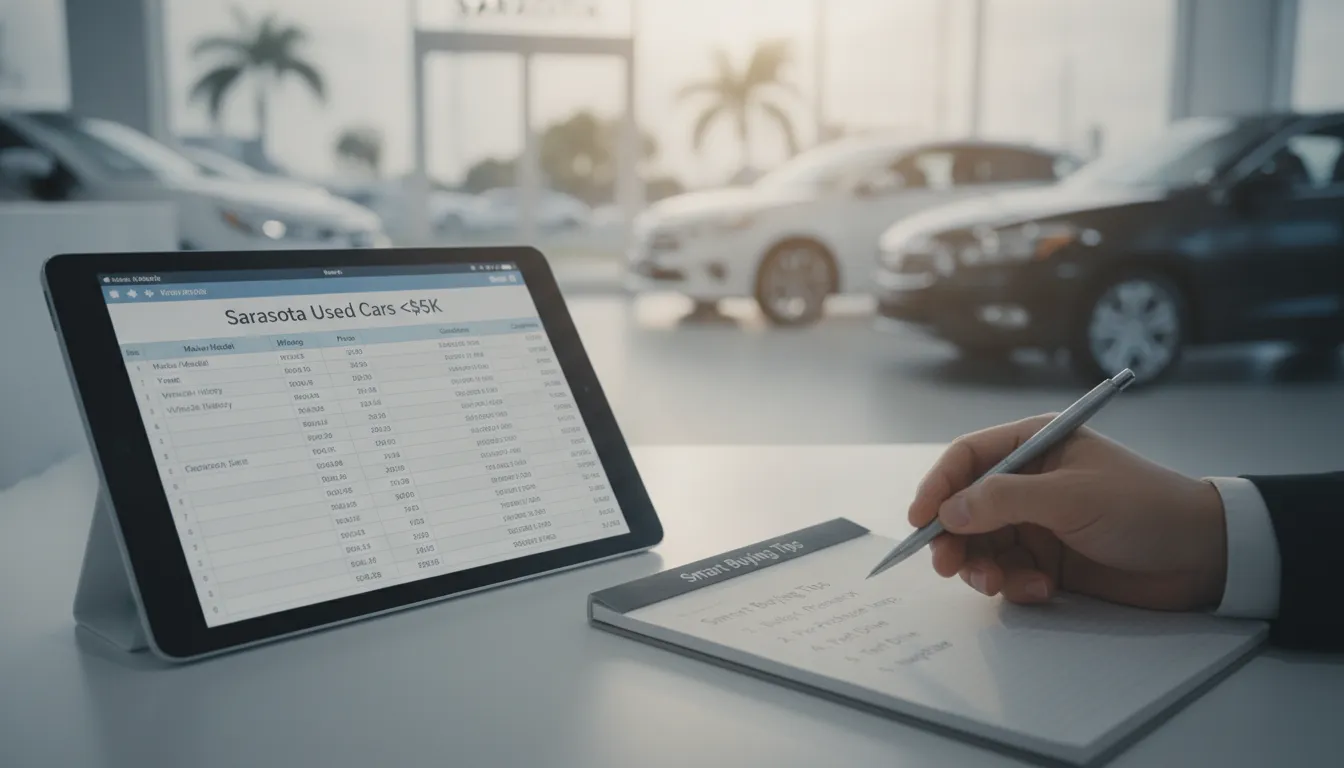
Find practical tips for buying used cars Sarasota under $5000. Learn how to compare options, check condition, and avoid costly surprises before you buy.
A limited budget can still get you on the road, but buying a used vehicle for under $5,000 calls for a thorough process. Listings for used cars sarasota under $5000 may include vehicles with faded paint, worn interiors, high mileage, or overdue maintenance. Those issues are not always deal breakers. Serious title problems, flood damage, unsafe tires, warning lights, and major mechanical failures deserve much more attention. You also need to account for taxes, registration, insurance, delivery, and repairs after purchase. This guide covers the key questions to ask, the inspections to arrange, and the ways Automated Brokers can help you compare vehicles across its dealer network.
Key Takeaways
- Set an all-in budget: Account for the vehicle price, taxes, registration, fees, delivery, insurance, fuel, and immediate repairs before choosing a car.
- Inspect every detail before buying: Verify the VIN, title, history, service records, air conditioning, safety equipment, and mechanical condition, then arrange an independent inspection.
- Compare more options with less dealership time: Automated Brokers searches more than 1,300 vehicles across nine dealerships and supports financing, local pickup, and nationwide delivery through phone, text, or email.
Which Used Cars Can You Find in Sarasota for Under $5,000?
Finding a used car in Sarasota for less than $5,000 usually means considering older model years, higher mileage, or vehicles with visible cosmetic wear. That does not automatically make a car a poor choice. It does mean you need to pay close attention to maintenance records, mechanical condition, title history, and the repairs you may need to handle soon after purchase.
You may find compact sedans, hatchbacks, older SUVs, crossovers, pickup trucks, minivans, and wagons in this price range. Each body style has different ownership costs and practical benefits. A small sedan may be inexpensive to fuel, while an older SUV may offer more room but require costlier tires, suspension work, or drivetrain repairs.
Listings can change quickly, so compare several vehicles instead of choosing the first one that fits your budget. Automated Brokers can search across its dealer network based on your preferred body style, mileage, location, and budget. You can view available inventory or contact the team to discuss the type of vehicle you need.
Before you visit a seller, decide how you will use the car. Will it handle a daily commute, family transportation, weekend projects, or occasional hauling? Your answer will help you focus on vehicles that fit your needs rather than judging every listing by its price alone.
Choose sedans for affordable daily driving
Sedans are often among the most common vehicles available for under $5,000. Their practical size, straightforward design, and generally reasonable fuel economy make them useful for commuting, errands, and regular highway driving. You may find older compact and midsize sedans from brands such as Toyota, Honda, Ford, Hyundai, Nissan, and Chevrolet.
Do not evaluate a sedan by its model year alone. Check the engine, transmission, mileage, tires, brakes, suspension, and service history. Ask whether the timing belt, battery, fluids, and other routine maintenance items have been replaced recently. A higher-mileage sedan with consistent records may be a better choice than a newer vehicle with neglected maintenance.
Sedans can also be easier to insure and repair than larger or luxury vehicles. Compare parts prices and ask local repair shops about common issues with the specific model. Sedans are a practical option for daily driving, especially when fuel costs and predictable maintenance matter.
Choose hatchbacks for fuel-efficient practicality
Hatchbacks can provide useful cargo space without the size and fuel costs of a larger SUV. Their rear seats often fold down, creating room for groceries, luggage, tools, or small furniture. The shorter body can also make parking easier in busy areas around Sarasota.
When inspecting a hatchback, test the rear hatch several times and check that the latch, hinges, and gas struts work properly. Look for damaged weather seals or damp carpeting, which may indicate water intrusion. Fold the rear seats down and confirm that they lock securely when returned to their upright position.
A hatchback’s interior can reveal how the vehicle was used. Check the cargo floor, seat fabric, door panels, and carpet for excessive wear. Also inspect the tires, brakes, and suspension, since small cars are not automatically inexpensive to repair.
For commuters, students, and first-time buyers, an older hatchback may offer a useful mix of low fuel consumption and flexible storage. Hatchbacks combine city-friendly size with practicality, but the vehicle’s condition should guide your decision.
Consider older SUVs and crossovers for space
Older SUVs and crossovers may fit a $5,000 budget when they have higher mileage, older model years, or cosmetic imperfections. They can provide extra passenger room, a higher seating position, and cargo capacity for families, pets, luggage, or outdoor equipment. These benefits can make an SUV worthwhile when a sedan does not provide enough space.
The tradeoff is often higher ownership costs. Larger vehicles may use more fuel and require more expensive tires, brakes, suspension components, or drivetrain repairs. During an inspection, pay particular attention to the transmission, cooling system, suspension, exhaust, and four-wheel-drive or all-wheel-drive systems.
Test the rear air conditioning, power windows, liftgate, interior lights, and dashboard controls. If the SUV has a third row, check that the seats fold correctly and that passengers can access them safely. Review records for towing, off-road use, or major repairs, as these may affect the vehicle’s remaining service life.
SUVs can suit families that need additional room, but space alone does not make an older SUV a good value. Compare its condition and running costs with smaller alternatives.
Consider trucks, minivans, and wagons for utility
A truck, minivan, or wagon can be a sensible choice when you need more than basic commuting. An older pickup may help with home projects, tools, or light hauling. A minivan can offer flexible seating and a large cargo area, while a wagon may provide useful storage with easier handling and potentially lower fuel costs than an SUV.
These vehicles deserve a careful inspection because their previous use can affect their condition. On a truck, check the bed, hitch, frame, suspension, tires, and signs of towing or heavy loads. Look underneath for fluid leaks, damage, or corrosion. On a minivan, test the sliding doors, power seats, third-row seating, climate controls, and rear entertainment equipment if included.
For a wagon, inspect the cargo area, hatch, weather seals, and rear suspension. Uneven tire wear may point to alignment or suspension problems. Review service records for transmission work, cooling-system repairs, and other major maintenance.
Trucks, minivans, and wagons meet different utility needs, so compare each vehicle with the tasks you expect it to handle regularly.
Compare fuel economy, parts, insurance, and repair costs
The sticker price is only one part of buying a $5,000 car. Two vehicles listed at the same price can have very different ownership costs. Before making an offer, compare fuel economy, insurance rates, tire prices, replacement parts, and common repairs for each model.
An older SUV may cost more to fuel than a compact sedan. An aging luxury car may have a low purchase price but require specialized labor or expensive electronic components. A less familiar model may also take longer to repair if parts are difficult to source. Ask local repair shops whether they regularly work on the make and model you are considering.
Review the vehicle history and maintenance records for clues about future expenses. Look for recent work on the brakes, tires, battery, cooling system, air conditioning, and suspension. If several major items are due soon, include those costs in your offer and total budget.
Buyers who understand a vehicle’s history and possible warning signs have better information when comparing used car prices. A low purchase price is not a bargain if repairs quickly exceed what you can afford.
Prioritize working air conditioning, safety features, and overall condition
Sarasota’s warm climate makes a working air-conditioning system essential. Test the system while the car is stationary and during a road test. It should produce cold air, maintain airflow at different fan speeds, and change between the vents, floor, and defroster settings. Listen for unusual noises from the compressor and check whether the temperature changes consistently.
Also inspect the brakes, tires, headlights, brake lights, turn signals, mirrors, seat belts, airbags, windows, door locks, and dashboard warning lights. Ask about any warning light that remains illuminated after the engine starts. A vehicle with missing or malfunctioning safety equipment may require immediate repairs.
Look over the body for mismatched paint, uneven panel gaps, corrosion, water stains, and signs of flood or storm damage. Check the trunk, spare-tire well, carpeting, and door seals for moisture. Take the car for an independent inspection if possible, and request written estimates for any repairs the mechanic identifies.
A thorough inspection can reveal needed repairs and help you decide whether the vehicle’s condition supports the asking price. When a seller will not allow an inspection or refuses to discuss known problems, consider that a reason to keep looking.
How to Compare Sarasota Used Cars Under $5,000
Finding Sarasota used cars under $5,000 takes more than sorting listings from lowest to highest price. At this budget, two vehicles with similar mileage can have very different ownership costs. One may have reliable service records and several years of practical use left, while another may need tires, brakes, air-conditioning work, or major repairs soon after purchase.
Compare each vehicle as a complete package: age, mileage, condition, history, equipment, fees, and expected maintenance. A vehicle history report can reveal important details, but it should support a professional inspection rather than replace one. Automated Brokers can also help you compare vehicles across its dealer network based on your budget, preferred body style, mileage, and condition.
Set realistic expectations for age, mileage, and condition
A vehicle priced below $5,000 will usually be older, have higher mileage, or show more cosmetic wear than newer cars. That does not automatically make it a bad purchase. The goal is to find a vehicle whose condition matches its price and your transportation needs.
You may need to accept faded paint, worn upholstery, minor dents, or outdated technology. However, serious mechanical problems, water damage, warning lights, unsafe tires, or a questionable title deserve careful attention. Make a list of features you consider essential, such as working air conditioning or reliable transportation for a daily commute.
Mileage also needs context. A well-maintained car with 160,000 miles may be a better choice than a neglected vehicle with 120,000 miles. Reviewing used-car pricing and market value can help you judge whether the asking price fits the vehicle’s age and condition.
Compare vehicles by year, trim, engine, mileage, and history
Do not compare every listing as if it represents the same vehicle. A model’s year, trim, engine, transmission, drivetrain, and equipment can affect fuel costs, insurance, reliability, and repair prices. Two cars with the same model name may have different engines, safety features, or maintenance requirements.
Create a simple checklist for each vehicle. Record the model year, trim, mileage, engine, transmission, number of owners, accident history, title status, and major service work. Then compare vehicles with similar specifications instead of automatically choosing the lowest-priced listing.
A VIN search can provide useful context when a listing leaves out important information. Buyers who combine VIN data with market comparisons have a stronger basis for judging price and condition. This used-car pricing guide offers additional guidance on evaluating market value.
Value maintenance records over low mileage
Low mileage can be helpful, but it does not prove that a vehicle was well maintained. A car that sat unused for long periods may have aging tires, a weak battery, dried seals, or old fluids. Consistent maintenance records often tell you more about a vehicle’s condition than the odometer alone.
Look for documentation showing oil changes, brake work, tire replacements, cooling-system service, transmission maintenance, and other recommended repairs. Ask whether the timing belt, battery, alternator, or air-conditioning system has been replaced when those components apply to the model.
When comparing similar vehicles, favor the one with clear records and fewer unexplained gaps. The Better Business Bureau’s used-car guidance recommends reviewing maintenance records, title history, inspection results, and the vehicle’s overall condition before buying.
Separate the price from taxes, registration, fees, and repairs
A vehicle advertised for $4,800 is not necessarily a $4,800 purchase. Your final cost may include sales tax, title and registration charges, documentation fees, delivery, financing costs, and immediate repairs. Ask for every charge in writing before you agree to buy.
Create an out-the-door budget with four categories: vehicle price, government charges, dealer or delivery fees, and initial maintenance. This keeps the advertised price from using your entire budget before you account for essential repairs.
If a seller focuses only on the monthly payment, bring the conversation back to the total amount you will pay. Car-buying negotiation guidance explains why buyers should review the full numbers instead of relying on advertised payment estimates. A complete buyer’s order should show the vehicle price, fees, taxes, financing terms, and any add-ons.
Use listing ratings as a starting point, not proof
Online ratings can help you identify vehicles worth reviewing, but they cannot confirm that a car is mechanically sound. A listing may receive a strong rating because of its price, appearance, or available features, even when it has unresolved maintenance needs.
Use ratings to create a shortlist, then investigate each vehicle more closely. Review the VIN, photos, service records, title information, inspection report, and buyer’s order. Ask specific questions about warning lights, accident repairs, recent work, tire age, air conditioning, and whether the vehicle is sold as-is.
You can also compare similar Sarasota vehicles priced below $5,000 to see how mileage, equipment, and condition affect asking prices. A rating should guide your questions, not make the buying decision for you.
Check title history, accidents, inspections, and needed repairs
Before making an offer, confirm that the VIN on the listing, vehicle, and paperwork all match. Review the title for salvage, rebuilt, flood, lemon-law, or other brands. Ask whether the seller has disclosed every reported accident and whether repairs were completed by a qualified shop.
A history report may show that an accident occurred without explaining the quality of the repair. Request inspection notes, repair invoices, photographs, and evidence that safety systems were restored. If the seller cannot explain a major history entry, treat that uncertainty as a reason to reconsider the price or walk away.
Arrange an independent pre-purchase inspection, even if the vehicle already passed a dealer inspection. A mechanic can check the engine, transmission, suspension, brakes, frame, fluid leaks, and electrical systems. VIN data may also reveal risks that affect the vehicle’s value and financing options.
Budget for tires, brakes, batteries, fluids, and air-conditioning repairs
Set aside money for routine work after you buy. Tires, brake pads, rotors, batteries, belts, filters, and fluids are common expenses on older vehicles. In Sarasota’s warm climate, inspect the air-conditioning system carefully, including cooling performance, compressor operation, leaks, and unusual noises.
Ask when these items were last replaced and request receipts when possible. Check tire tread and tire age, not just appearance. A battery that starts the car today may still be near the end of its service life, while old or dirty fluids can point to deferred maintenance.
Get written estimates for every repair identified during the inspection. Subtract those costs from the amount you can comfortably spend on the vehicle. A car with a slightly higher purchase price may be the better value if it needs fewer immediate repairs.
Where Can You Find Reliable Sarasota Used Cars Under $5,000?
Finding a dependable used car under $5,000 in Sarasota takes more than sorting listings by price. Cars in this range are often older, have higher mileage, or need immediate maintenance. A smart search compares condition, ownership history, fees, and likely repair costs alongside the advertised price.
You can search Sarasota dealerships, private sellers, and nearby Florida markets on your own. You can also ask a broker to search a larger group of vehicles for you. Automated Brokers’ concierge car-buying service lets you share your budget, preferred vehicle type, financing needs, and location by phone, text, or email. The team can help compare options without requiring you to visit multiple dealerships.
Start with Automated Brokers’ concierge search
Begin by telling Automated Brokers exactly what you need. Share your maximum purchase price, preferred body style, mileage range, transmission, fuel type, and essential features. If you need a daily commuter, mention your focus on fuel economy and affordable maintenance. If you need a family vehicle, explain how much passenger and cargo space you require.
Be clear about your full budget, too. A $5,000 vehicle may also involve taxes, registration, insurance, delivery, and immediate repairs. Ask the team to focus on vehicles that fit your total spending limit, not just the listed price.
You can review Automated Brokers’ car-buying process before reaching out. Prepare your driver’s license information, financing preferences, trade-in details, and a short list of must-have features to make the initial search more efficient.
Ask Automated Brokers to search 1,300-plus vehicles across nine dealerships
Automated Brokers searches more than 1,300 vehicles across nine dealerships, giving you a broader selection than a single Sarasota dealership may offer. A larger search can help you compare different model years, mileage levels, trims, service histories, and conditions within the same budget.
This approach may be helpful when you need something specific, such as a sedan with working air conditioning, an SUV with a clean title, or a vehicle that meets a lender’s requirements. Ask which options are located near Sarasota and which may require delivery.
Before you consider a vehicle, request its VIN, current mileage, title status, history report, and known mechanical issues. You can also check the company’s available inventory, then confirm that any listing you like is still active.
Filter vehicles by budget, body style, mileage, condition, financing, and location
Start with your maximum out-the-door budget. If you have $5,000 available, you may need to reserve money for registration, insurance, delivery, and repairs. Tell the broker how much you can spend in total, along with the amount you can put down.
Next, filter by practical needs. Sedans and hatchbacks may cost less to fuel and maintain, while older SUVs, trucks, and minivans can offer more room but may require pricier repairs. Set a mileage preference, but judge mileage alongside maintenance records and overall condition.
Include financing and location in the search. Share your credit situation, preferred down payment, and monthly budget early. Ask whether each vehicle is in Sarasota, elsewhere in Florida, or at another dealership in the network. That information helps you compare delivery costs and lender requirements before choosing a vehicle.
Compare Automated Brokers’ options with CarGurus, TrueCar, and iSeeCars
Online marketplaces can help you estimate whether a vehicle’s price is reasonable. Compare similar cars on CarGurus’ Sarasota listings under $5,000, paying attention to the year, mileage, trim, engine, title status, and listed fees.
You can also review TrueCar’s Sarasota vehicles under $5,000 and use iSeeCars to check nearby markets. These sites are useful comparison tools, but a low listing price does not prove that a vehicle is a good value. It may need tires, brakes, suspension work, or air-conditioning repairs.
Use the same criteria for every option. Confirm whether the advertised amount includes documentation fees, dealer charges, taxes, delivery, or optional products. Comparing itemized totals gives you a more accurate picture than comparing headline prices alone.
Compare Sarasota dealers, private sellers, and nearby Florida inventory
Sarasota dealerships may provide financing assistance, organized paperwork, and access to service records. A private seller may offer a lower price, but you will need to manage title verification, payment security, and the inspection process yourself.
Do not assume the closest listing is the best choice. A vehicle in Bradenton, Venice, Tampa, or another Florida market may have better records, fewer repairs, or a cleaner interior. Compare those advantages with your travel costs, delivery charges, and time.
Ask every seller for the VIN before arranging an appointment. Use it to check the vehicle history and compare the reported mileage with the listing. For a private sale, inspect the vehicle in a safe public location, verify the seller’s ownership documents, and avoid sending money before confirming the car and title are legitimate.
Expand your search to Bradenton, Venice, Tampa, and nearby areas
Searching beyond Sarasota can give you more vehicles to compare, especially when your budget or vehicle requirements are specific. Bradenton and Venice may be convenient for an in-person inspection, while Tampa can offer a larger selection. Always add travel time, fuel, inspection costs, and delivery charges to your comparison.
Ask Automated Brokers whether a vehicle from its network can be delivered to Sarasota or picked up locally. Since customers can complete much of the process by phone, text, or email, you may not need to visit every dealership in person. Review the company’s service details to understand how the concierge model works.
Confirm the vehicle’s location and availability before traveling. Request recent photos, the VIN, current mileage, title status, and a written list of known mechanical concerns. This can prevent an unnecessary trip for a car that no longer meets your needs.
Confirm active listings, verify the VIN, and request an itemized price
Before making an offer, confirm that the vehicle is still available and that its price has not changed. Request the VIN and compare it with the number on the dashboard, driver’s door label, title, and vehicle-history report. A mismatch should stop the transaction until the issue is explained and resolved.
Ask for an itemized buyer’s order showing the vehicle price, taxes, title and registration charges, documentation fees, delivery, optional products, and every other cost. This makes it easier to compare an Automated Brokers quote with offers from local dealers, private sellers, and online marketplaces.
The Florida Highway Safety and Motor Vehicles VIN guidance can help you understand identification and title requirements. Do not send a deposit until you know who owns the vehicle, what you are purchasing, and the exact amount you will pay.
What Should You Check Before Buying a Sarasota Used Car Under $5,000?
A low-priced used car can make sense, but a smaller purchase budget leaves less room for unexpected repairs. Before you commit, inspect the vehicle carefully, verify its history, and look beyond the listing photos. This is especially important in Sarasota, where heat, humidity, heavy rain, and coastal conditions can affect a vehicle over time.
Ask for the VIN, maintenance records, title information, and a test drive before discussing final payment. If you are comparing multiple vehicles, Automated Brokers can help search available inventory based on your budget, preferred body style, and condition requirements.
Confirm the VIN, title, liens, and vehicle history
Start by matching the VIN on the dashboard and driver’s door with the number on the title, registration, and sales paperwork. A mismatch could point to an administrative error, a replaced part, or a more serious title issue. Do not move forward until the seller explains the difference and provides corrected documentation.
Use the VIN to review reported accidents, ownership changes, odometer readings, and title status. Confirm that the seller has the legal right to transfer ownership, and ask whether a lender or other party still has a lien on the vehicle. The National Motor Vehicle Title Information System can help you find approved vehicle history providers and learn more about title information.
Check for flood damage, water exposure, corrosion, and storm repairs
Flood damage is not always visible during a quick walk-around. Look for damp carpeting, a musty smell, water lines, silt under the seats, rust around electrical connections, or upholstery that does not match the vehicle’s age. Check the trunk, spare-tire well, glove box, and areas beneath the floor mats.
Inspect exposed metal and fasteners for unusual corrosion, especially underneath the vehicle and around the doors, seats, and wiring. Fresh carpet, new seat fabric, or strong air fresheners may deserve extra attention if they seem inconsistent with the rest of the car. The National Insurance Crime Bureau VINCheck can identify some vehicles reported as stolen or salvage, but it should not replace a complete history report and physical inspection.
Look for odometer inconsistencies, accident repairs, and title brands
Compare the odometer reading with service invoices, inspection records, and older listings. If the mileage appears to move backward or does not match the vehicle’s visible wear, ask for supporting documents before continuing. A worn steering wheel, sagging driver’s seat, or heavily used pedals can offer additional clues about how much use the car has received.
Examine the body panels in good daylight. Differences in paint color, uneven gaps, overspray, ripples, or fresh undercoating may indicate previous collision repairs. Review the title for brands such as salvage, rebuilt, flood, or lemon. These labels can affect resale value, insurance, financing, and safety, so confirm what each designation means before making an offer.
Review service records, recalls, previous owners, and recent repairs
Maintenance records can tell you more than the asking price or a clean exterior. Look for oil changes, cooling-system service, brake work, tire replacements, battery changes, and major repairs. Consistent records suggest the vehicle received regular care, while long gaps may indicate deferred maintenance.
Ask how many people owned the vehicle and why it is being sold. Then use the NHTSA recall lookup tool to check for unresolved safety recalls by VIN. A recall does not automatically make a vehicle a poor choice, but you should know whether the repair is available and whether it has been completed. Request receipts for recent repairs instead of relying only on verbal claims.
Inspect the air conditioning, seals, paint, tires, interior, and electronics
Test the air conditioning after the engine has warmed up. It should produce cold air without unusual noises, weak airflow, or an inconsistent temperature. In Sarasota’s climate, air-conditioning repairs can quickly change the true cost of a car priced under $5,000. Test the heater, defroster, windows, locks, mirrors, dashboard lights, radio, and backup camera as well.
Inspect door and trunk seals for cracking, gaps, or moisture. Check the paint for peeling, bubbling, rust, and uneven repairs. Examine the tires for tread depth, uneven wear, sidewall damage, and mismatched brands. Inside the vehicle, lift the floor mats, inspect the seat belts, and look for water stains, burns, or unusual odors. A used-car inspection checklist can help you catch details that are easy to overlook.
Test the engine, transmission, brakes, steering, suspension, and safety features
Start the vehicle from cold if possible. Listen for knocking, ticking, squealing, or grinding, and watch for excessive exhaust smoke. During the test drive, the engine should accelerate smoothly, the transmission should shift without harsh jolts, and the car should remain steady without pulling to either side.
Apply the brakes at different speeds and listen for vibration or grinding. Drive over a few safe, uneven surfaces to listen for clunks that could point to suspension problems. Test the steering for excessive play, and confirm that the ABS, airbag, traction control, and other warning lights turn on briefly at startup, then go out. If a warning light stays on, have the cause diagnosed before negotiating.
Schedule an independent pre-purchase inspection
A seller’s inspection or a recent repair receipt can provide useful information, but neither replaces an independent evaluation. Arrange for a qualified mechanic who has no connection to the seller to inspect the vehicle. Ask the mechanic to examine the engine, transmission, suspension, brakes, frame, fluids, electrical system, tires, and signs of flood or collision damage.
Give the mechanic the VIN and explain any concerns you noticed during the test drive. For an older vehicle priced under $5,000, an inspection may uncover repairs that cost a significant portion of the purchase price. If the seller refuses to let you arrange an inspection, slow down and consider another vehicle. The Federal Trade Commission’s used-car guidance also recommends an independent inspection before purchase.
Get written repair estimates for every issue
Do not treat a mechanic’s list of problems as a general warning. Ask for written estimates that identify each repair, the parts required, labor, taxes, and whether the work is urgent. Separate safety-related repairs, such as worn tires or failing brakes, from items that can wait, such as cosmetic damage or a nonessential electronic feature.
Add the estimated repairs to the vehicle’s price, taxes, registration, insurance, and expected maintenance. Then decide whether the total still fits your budget. Documented repair costs can support a condition-based offer, help you request specific repairs before purchase, or show you when it is better to walk away. If you are comparing several vehicles, Automated Brokers’ inventory gives you another place to look before settling for a car with expensive unresolved problems.
What Costs Should You Add to the $5,000 Price?
A $5,000 listing price is only the starting point for your car-buying budget. Your final cost may include taxes, title and registration, documentation fees, delivery, insurance, and repairs needed soon after purchase. Ask for the complete out-the-door price before making an offer so you can compare vehicles accurately.
A lower-priced car can still be a sensible choice, but you need room for maintenance and unexpected problems. Use the same cost checklist whether you’re buying from a Sarasota dealer, a private seller, or a concierge service such as Automated Brokers.
Calculate taxes, title, registration, documentation fees, and delivery
Ask for the vehicle’s total price after taxes, title, registration, documentation fees, and delivery. These costs vary by location and transaction, so the advertised price may not reflect what you will actually pay. If you’re purchasing a vehicle from outside your area, confirm who handles the registration paperwork and whether you need to complete any steps yourself.
Request an itemized quote before leaving a deposit. The Better Business Bureau’s used-car guidance recommends confirming the final price, financing costs, and dealer charges before signing. If the vehicle will be shipped, ask whether delivery is included or billed separately. Confirm the delivery charge, estimated timing, and payment terms in writing.
Estimate immediate maintenance, including fluids, belts, filters, brakes, and tires
Older vehicles may need routine maintenance soon after purchase, even if they drive well during a short test drive. Set aside money for an oil change, coolant, brake fluid, transmission fluid, air filters, wiper blades, and a battery. Also inspect the belts, hoses, brakes, and tires, since replacing several of these items can add hundreds of dollars to your costs.
Ask for service records and schedule an independent inspection before committing to the purchase. iSeeCars’ used-car guidance recommends reviewing the vehicle’s condition, title history, maintenance records, inspection results, and total fees. A written inspection report gives you a clearer repair estimate and may help you negotiate based on actual needs.
Budget for insurance, fuel, roadside assistance, and future repairs
Your ownership costs include more than the purchase price or monthly loan payment. Get an insurance quote using the vehicle identification number before buying. Then estimate fuel costs based on your commute, driving habits, and the car’s fuel economy. Roadside assistance may also be worth considering, particularly if the vehicle has higher mileage or you rely on it for work.
Leave room for future repairs, such as suspension work, air-conditioning service, sensors, or cooling-system repairs. Yahoo Finance cites a general guideline of keeping total vehicle expenses, including fuel, insurance, maintenance, repairs, and registration, within 20% of monthly household income. Treat that as a starting point and adjust it for your household budget, driving needs, and existing financial obligations.
Compare total ownership costs instead of the lowest price
The cheapest car is not always the least expensive one to own. Compare each vehicle by purchase price, expected repairs, fuel use, insurance premiums, parts availability, and maintenance history. A slightly more expensive sedan with recent tires and documented service may cost less overall than a cheaper car that needs brakes, tires, and suspension work immediately.
Use the VIN, inspection results, and service records to support your comparison. Vehicle-history tools and market guides can help you assess whether a listing is reasonably priced, while an independent mechanic can identify issues that an online advertisement will not show. You can also ask Automated Brokers to search available inventory based on your budget, preferred body style, mileage, and condition.
Keep an emergency repair fund after buying
Try not to spend every dollar on the purchase itself. An emergency repair fund gives you options if the battery fails, a dashboard warning light appears, or the air conditioning stops working shortly after you buy the vehicle. The right amount depends on the car’s age, mileage, condition, and repair history, but any reserve is better than having none.
Before buying, ask which services were completed recently and which repairs the inspection identified. Review the title, accident history, ownership details, and maintenance records, then set aside money for the items most likely to need attention. If the car will be delivered, keep funds available for repairs that may be discovered during your arrival inspection.
Request a complete buyer’s order before signing or paying
Ask for a buyer’s order that lists the vehicle identification number, selling price, taxes, title and registration charges, documentation fees, delivery costs, financing terms, add-ons, deposit, and final amount due. Read each line carefully and ask the seller to explain anything you do not recognize.
Do not rely on verbal promises about repairs, discounts, included services, or fee changes. Have every agreement added to the paperwork before you sign or send payment. Automated Brokers explains its buying process and financing options, but you should still review the final documents yourself. Confirm that the vehicle, fees, repairs, and payment terms match what you agreed to before completing the purchase.
What Financing and Warranty Options Can You Use?
A used car priced under $5,000 still requires careful financial planning. The purchase price is only one part of the deal. Interest, taxes, registration, documentation fees, repairs, insurance, and vehicle protection can all affect your total cost. Comparing these details before signing helps you choose a car that fits your budget beyond the initial purchase.
Automated Brokers can help you compare vehicles and financing options through a concierge process. Share your budget, credit profile, preferred vehicle, and payment goals by phone, text, or email, without spending your day visiting dealerships or contacting multiple sellers yourself.
Compare cash, credit union, dealer, and buy-here-pay-here financing
Paying cash can simplify the purchase and eliminate interest, but it may use most of your available savings. A credit union loan may offer competitive rates, while dealer financing is convenient because the application and purchase happen together. Ask whether the dealer works with several lenders or presents only one financing option.
Buy-here-pay-here financing may help buyers with limited or damaged credit because the dealership handles the loan directly. These loans can also involve higher rates, larger down payments, or stricter payment requirements. Compare the full cost of each option, including the amount financed, interest, fees, and repayment schedule. The Consumer Financial Protection Bureau’s auto loan guidance offers useful questions to consider before choosing a lender.
Check minimums, down payments, APR, terms, and total repayment
Some lenders set a minimum loan amount, which can make financing a low-priced vehicle difficult. Others may require a specific down payment or limit the loan term based on the car’s age and mileage. Ask for the annual percentage rate, monthly payment, loan length, and total amount you will repay.
A longer loan term may reduce the monthly payment while increasing the interest paid over time. Also ask about application fees, documentation fees, late charges, and automatic payment requirements. Request written loan offers and compare them side by side. A $5,000 vehicle can cost much more after interest and lender fees, so focus on the total repayment amount rather than the monthly payment alone.
Confirm the vehicle meets lender age, mileage, price, and condition rules
Lenders often set requirements for the vehicles they finance. A bank may restrict loans for cars that are too old, have high mileage, fall below a minimum price, or show significant damage. A vehicle that appears affordable may not qualify if it does not meet the lender’s guidelines.
Before applying, provide the lender with the vehicle identification number, year, mileage, selling price, and condition details. Review the title history, inspection results, maintenance records, and total fees as well. The Better Business Bureau’s used-car buying tips recommend checking these details before completing a purchase. Confirming eligibility early can prevent delays after you find the right car.
Compare options for prime, near-prime, and credit-rebuilding buyers
Your credit profile affects the financing options available to you, but it is not the only factor lenders consider. Prime buyers may qualify for lower rates and smaller down payments. Near-prime buyers may have several choices but pay a higher rate. Credit-rebuilding buyers may need a larger down payment, a co-signer, or a specialized financing program.
Ask each lender which documents it needs and whether it considers income, employment history, or recent payment activity. Do not assume the first approval is the best offer. Automated Brokers can discuss financing paths for buyers with strong, limited, or challenged credit. Share your target payment and total budget early so the vehicle search stays realistic and focused.
Get preapproved before negotiating the price
Preapproval gives you a clearer spending limit before you compare vehicles. It can also help you separate the car’s price from the cost of financing. When you know your rate, loan amount, and estimated payment, you can negotiate the vehicle price without focusing only on a monthly figure.
Ask the lender whether the preapproval expires, applies to private-party or dealer purchases, and covers vehicles priced under $5,000. After identifying a car, confirm the final loan amount and terms because its age, mileage, and condition may affect approval. Bring the written preapproval when discussing the deal, but continue comparing the out-the-door price separately.
Check whether lenders offer loans for lower-priced vehicles
Some lenders do not offer small auto loans because processing a low balance may not fit their lending model. Others set minimum vehicle prices or loan amounts. This matters when you are shopping for a car under $5,000, especially after adding taxes, registration, and documentation fees.
Ask whether the lender will finance the vehicle itself, the purchase costs, or both. You may need a larger down payment to meet the lender’s minimum. A personal loan could be another option, but compare its rate, fees, and terms with an auto loan first. Automated Brokers can help identify vehicles and financing possibilities that match your price range through its inventory search.
Review warranty or service-contract coverage, exclusions, deductibles, and waiting periods
A warranty or service contract may help cover certain repairs, but the details vary widely. Read the contract before paying for coverage. Check which parts are included, whether labor is covered, and whether the plan has a deductible for each repair visit.
Look for exclusions involving pre-existing conditions, routine maintenance, wear items, electrical components, seals, or air-conditioning systems. Some contracts have waiting periods before coverage begins. Others require repairs at approved facilities or prior authorization before work starts. Ask how to submit a claim and whether the contract can be canceled or transferred. Request the complete agreement instead of relying on a salesperson’s verbal summary.
Confirm whether the vehicle comes as-is and how repairs get handled
An as-is sale typically means the seller is not promising to repair problems discovered after the purchase. Before signing, ask whether the vehicle includes a written warranty, limited dealer guarantee, or separate service contract. Confirm who pays if the engine, transmission, air conditioning, or safety equipment needs attention after delivery.
Request every promise in writing, including repairs the seller agrees to complete before pickup or delivery. Find out where covered repairs must be performed, how claims are submitted, and whether you need approval before authorizing work. The Federal Trade Commission’s used-car buying guidance also recommends reviewing the buyer’s guide and understanding warranty terms before signing.
Ask Automated Brokers about financing and vehicle protection options
Automated Brokers can review your vehicle preferences, budget, and financing needs while searching more than 1,300 vehicles across nine dealerships. Tell the team whether you plan to pay cash, use a credit union, seek dealer financing, or need a program for rebuilding credit.
You can also ask which vehicles may qualify for financing, what down payment may be required, and whether protection plans are available. Discuss the vehicle price, estimated payment, delivery or Maryland pickup, and taxes or fees before moving forward. Contact Automated Brokers through its concierge service to compare options by phone, text, or email.
How Can You Negotiate the Best Price Under $5,000?
Negotiating a used car under $5,000 takes more than asking for a lower price. At this budget, the strongest deal usually combines a fair purchase price with a clean history, reasonable condition, and manageable repair costs. A car that seems inexpensive can become costly if it needs tires, brakes, air-conditioning work, or major engine repairs soon after purchase.
Before making an offer, compare similar vehicles, review the VIN history, arrange an independent inspection, and calculate the complete purchase cost. Automated Brokers can help you compare available vehicles by budget, condition, financing needs, and location, so you have more options before settling on one listing.
Research comparable Sarasota and nearby listings
Search for vehicles with similar years, mileage, trims, engines, and equipment in Sarasota, Bradenton, Venice, Tampa, and nearby areas. Compare several listings instead of relying on one unusually low or high price. Check whether each advertised price includes dealer fees, warranties, delivery, or required add-ons.
A VIN search can provide helpful information about ownership, mileage, accidents, and title history. Combining that information with market guides and comparable listings gives you stronger evidence during negotiations. Used-car price analysis can help you understand how condition and history affect value. If a vehicle costs more than similar cars without offering a clear advantage, ask the seller to explain the difference.
Set a maximum out-the-door budget, not a monthly payment
Decide how much you can spend in total before contacting the seller. Your maximum should include the vehicle price, sales tax, title and registration costs, documentation fees, delivery, and immediate repairs. Keep a separate emergency fund for unexpected maintenance after the purchase.
Avoid negotiating around a monthly payment. A low payment can result from a longer loan term, a higher interest rate, or optional products added to the contract. Ask for an itemized buyer’s order showing the selling price, fees, down payment, financing terms, and total amount due. You can also review Automated Brokers’ financing assistance when comparing payment options.
Use inspection findings, defects, and upcoming maintenance to support your offer
An independent inspection gives you specific reasons for your proposed price. Worn tires, weak brakes, fluid leaks, damaged suspension components, a malfunctioning air conditioner, or overdue maintenance can all increase the vehicle’s actual cost. Ask the mechanic to separate urgent safety repairs from items that can wait.
Use written estimates when possible. If the car needs $900 in tires and brakes, you can ask the seller to complete the work or reduce the price to reflect part of that expense. Each documented issue can support a lower offer, as explained in these used-car negotiation tips. Focus on problems that affect safety, reliability, or near-term ownership costs rather than treating every cosmetic flaw as a major deduction.
Negotiate the price, fees, add-ons, and financing separately
Keep each part of the transaction separate. First, agree on the vehicle’s selling price. Then review taxes and required fees. After that, consider optional products such as service contracts, protection packages, accessories, or delivery. Finally, compare financing offers by annual percentage rate, loan term, down payment, and total repayment.
This process makes it easier to see what you are paying for. If the conversation shifts toward a monthly payment, bring it back to the total purchase amount. You can pause before signing and request revised figures in writing. A friendly, direct approach works well: explain that you are comparing the complete cost, not only the payment.
Put every agreed repair and fee in writing
Verbal promises can be difficult to enforce after the sale. If the seller agrees to replace tires, repair the air conditioner, remove an add-on, waive a fee, or provide a specific warranty, make sure the agreement appears on the buyer’s order, repair order, or another signed document.
Review the paperwork before paying a deposit or signing a financing contract. The final documents should identify the vehicle by VIN and list the selling price, fees, promised repairs, warranty terms, and delivery charges. If an item is missing or unclear, request a correction before moving forward. These used-car negotiation recommendations also emphasize your right to leave when documented risks are not addressed.
Make a condition-based offer instead of choosing an arbitrary discount
A strong offer connects the amount to the vehicle’s actual value. Start with comparable Sarasota-area listings, then adjust for mileage, maintenance records, title status, accident history, equipment, and required repairs. A vehicle with complete service records may deserve a higher price than a similar car with unknown maintenance, even when both have comparable mileage.
Some buyers begin 15% to 20% below the asking price, but that range is only a starting point. Your offer should reflect documented facts, not a random discount. Explain your number clearly: the car costs more than comparable listings, needs tires and brakes, or lacks service records. Give the seller a fair opportunity to respond, and revise your offer only when new information supports the vehicle’s value.
Walk away when title issues, repairs, or missing records reduce the value
Some problems are too serious to solve with a small price reduction. Walk away if the seller cannot provide a clear title, the VIN does not match the paperwork, a lien remains unresolved, or the vehicle has a title brand you do not understand. Flood exposure, severe structural damage, inconsistent odometer records, and missing ownership documents also require serious caution.
Large mechanical problems can make a car under $5,000 much more expensive than it appears. Leave the deal if the seller refuses an independent inspection, will not provide an itemized price, or pressures you to pay before answering basic questions. You can compare Automated Brokers’ available inventory to find vehicles that better match your budget and requirements.
How Can You Arrange Sarasota, Nearby, or Nationwide Delivery?
Buying a used car in Sarasota does not always require a dealership visit. With a clear process, you can compare vehicles remotely, review pricing, arrange local pickup or shipping, and inspect the car when it arrives. Delivery should be part of the purchase plan from the beginning, not an item to discuss after you have already agreed to buy.
Start by requesting a complete buyer’s order. It should list the vehicle price, taxes, registration costs, documentation fees, delivery charges, financing terms, and any repairs included in the agreement. Verify the VIN and vehicle history before sending payment, especially when shopping for an older vehicle priced under $5,000. Automated Brokers can help compare available vehicles and manage much of the purchase through its concierge buying process.
Compare Sarasota vehicles with inventory from Automated Brokers’ network
Begin by comparing Sarasota listings with vehicles available through Automated Brokers’ network. The company searches more than 1,300 vehicles across nine dealerships, giving you a wider selection than you may find at one local lot. Ask the broker to search for vehicles that match your budget, preferred body style, mileage range, features, and condition requirements.
Review each option using the same criteria: model year, trim, mileage, engine, title status, accident history, service records, and total purchase price. A low listing price may not be the best value if the vehicle needs tires, brakes, air-conditioning work, or other immediate repairs. Ask for current photos, the VIN, and an itemized price before making a decision. You can review the company’s available vehicle inventory to identify models worth investigating.
When comparing options, use VIN information and market data together. A vehicle history report can reveal issues that are not obvious in a listing, while comparable prices can show whether the asking price fits the car’s age and condition.
Shop by phone, text, or email instead of visiting dealerships
Automated Brokers allows customers to handle much of the buying process by phone, text, or email. This can be helpful if you live outside Sarasota, have limited free time, or prefer to compare vehicles without visiting several dealerships.
Send the broker a clear list of your requirements, including your maximum budget, preferred makes and models, mileage limit, must-have features, and financing needs. Ask for written answers about the VIN, mileage, title status, condition, service records, price, fees, and delivery options. Specific questions make it easier to compare one vehicle with another.
Keep important details in writing. If a seller agrees to replace a tire, repair the air conditioning, provide a second key, or waive a fee, make sure that promise appears on the buyer’s order or another signed document. Written records also make it easier to identify changes before you sign paperwork or send payment.
Ask about local pickup or nationwide delivery
Ask whether you can pick up the vehicle locally or have it delivered to your home. Local pickup may be convenient if you live in Sarasota, Bradenton, Venice, Tampa, or another nearby community. It also gives you the option to inspect the vehicle in person before accepting it.
If you live outside Florida, ask about nationwide delivery and whether the vehicle will arrive at your address or a nearby transport location. Confirm who arranges transportation, who provides shipping updates, and whether the delivery charge is included in the quoted price or added separately.
Automated Brokers offers a concierge approach that can help coordinate the purchase from a distance. Review the company’s buying process and ask who your primary contact will be during the transaction. You should know whom to contact if the delivery schedule changes or you have questions about the vehicle before it arrives.
Confirm shipping costs, timing, insurance, and vehicle condition
Get delivery details in writing before making a payment. Confirm the total shipping cost, estimated pickup date, expected arrival window, and whether the carrier provides door-to-door service. Ask whether the vehicle will travel on an open or enclosed carrier. Open transport is common and often costs less, while enclosed transport may provide additional protection for certain vehicles.
Ask when the vehicle’s condition will be documented and who handles damage claims. Request current photos or a walk-around video showing the exterior, interior, tires, dashboard, and odometer. Any known defects should appear in the listing, buyer’s order, or another written document.
Compare the VIN report with the vehicle’s records before finalizing the purchase. As this guide to used car price analysis and financing explains, VIN information can reveal details that affect a vehicle’s value, condition, and financing options.
Complete payment, title, registration, and financing paperwork before delivery
Before delivery, review the buyer’s order, financing contract, title paperwork, registration requirements, and temporary tag information. Check that every document shows the correct VIN, purchase price, taxes, fees, down payment, interest rate, loan term, and monthly payment. Do not rely on a verbal promise that a charge, accessory, or repair will be handled later.
If you are financing the vehicle, confirm that the lender approved the specific car. Some lenders have requirements related to vehicle age, mileage, price, or condition. Ask when your first payment is due and whether the lender or dealership will submit registration documents.
If you are paying cash, verify payment instructions through a trusted contact at the dealership or brokerage. Keep copies of receipts, contracts, title documents, shipping paperwork, and messages related to the purchase. Before the vehicle leaves for delivery, confirm whether any balance must be paid before shipment or at the time of delivery.
Check the VIN, odometer, keys, title, and condition upon arrival
Inspect the vehicle before accepting delivery whenever possible. Compare the VIN on the dashboard and driver-side doorjamb with the VIN on your paperwork. Confirm that the odometer reading matches the purchase documents and that you received the promised keys, owner’s manuals, title documents, temporary registration, and accessories.
Walk around the vehicle in good lighting. Look for new dents, scratches, cracked glass, missing trim, damaged wheels, and fluid leaks. Start the engine and test the air conditioning, headlights, windows, locks, radio, backup camera, warning lights, and other listed features. Take photos and record a short video during the inspection.
If you cannot inspect the vehicle yourself, ask someone you trust to do it before signing the delivery receipt. Do not sign that the vehicle arrived in acceptable condition until you have had a reasonable opportunity to check it. If the carrier requires a quick inspection, focus first on visible damage, the VIN, odometer, and included equipment.
Report delivery damage immediately and follow the inspection process
If you find damage or another condition issue, document it before the carrier leaves. Take clear photos of the problem, the full vehicle, the VIN, the odometer, and the transport equipment. Describe the issue on the delivery inspection form instead of accepting the vehicle without comment. Ask the driver to acknowledge the notation and keep a copy for your records.
Contact Automated Brokers and the dealership immediately using the phone number or email listed in your purchase documents. Ask what evidence they need and whether you should obtain a repair estimate or independent inspection. Do not arrange repairs or sign a final release until you understand the claims process.
If the issue existed before shipping, the seller may handle it under the purchase agreement. If it occurred during transport, the carrier’s insurance and inspection procedures may apply. Keep all photos, videos, messages, estimates, receipts, and signed forms until the matter is resolved. Prompt documentation gives everyone a clearer record of the vehicle’s condition at delivery.
Related Articles
- Best Used Cars Under $5,000
- How to Negotiate Used Car Financing: Dealership Negotiation Tips, Car Price Analysis, and Used Car Prices Explained
- BBB Tip: Buying a Used Car
- Used Cars for Sale Under $5,000 in Sarasota, FL
- How to Negotiate the Best Price for a Used Car
Frequently Asked Questions
Can you find a reliable used car in Sarasota for under $5,000?\ Yes, but expect older model years, higher mileage, or cosmetic wear. Focus on maintenance records, title history, mechanical condition, air conditioning, tires, brakes, and the cost of repairs you may need soon after purchase. A pre-purchase inspection can help you avoid a car with serious hidden problems.
What types of vehicles are available for less than $5,000?\ You may find compact sedans, hatchbacks, older SUVs, crossovers, trucks, minivans, and wagons. Sedans and hatchbacks often have lower fuel and repair costs, while SUVs, trucks, and minivans provide more space but may cost more to maintain. Choose a vehicle based on how you plan to use it, not just its body style or price.
What costs should I include beyond the $5,000 vehicle price?\ Plan for taxes, title and registration charges, documentation fees, delivery, insurance, fuel, and immediate maintenance. Older cars may also need tires, brakes, batteries, fluids, belts, or air-conditioning repairs. Request an itemized out-the-door price and keep an emergency repair fund instead of spending your entire budget on the purchase.
Can Automated Brokers help me find a used car in Sarasota?\ Yes. Automated Brokers can search more than 1,300 vehicles across nine dealerships based on your budget, preferred make, body style, mileage, condition, financing needs, and location. You can work with the team by phone, text, or email, then arrange local pickup or nationwide delivery. Visit the Automated Brokers inventory or review how the process works.
How can I protect myself before buying a low-priced used car?\ Verify the VIN on the vehicle and paperwork, review the title and vehicle history, check for flood or accident damage, test the air conditioning and safety features, and arrange an independent inspection. Ask for written repair estimates and a complete buyer’s order. If the seller refuses an inspection, will not explain title issues, or pressures you to pay quickly, consider another vehicle.