Used Hybrid Cars: Benefits, Drawbacks and Ownership Costs
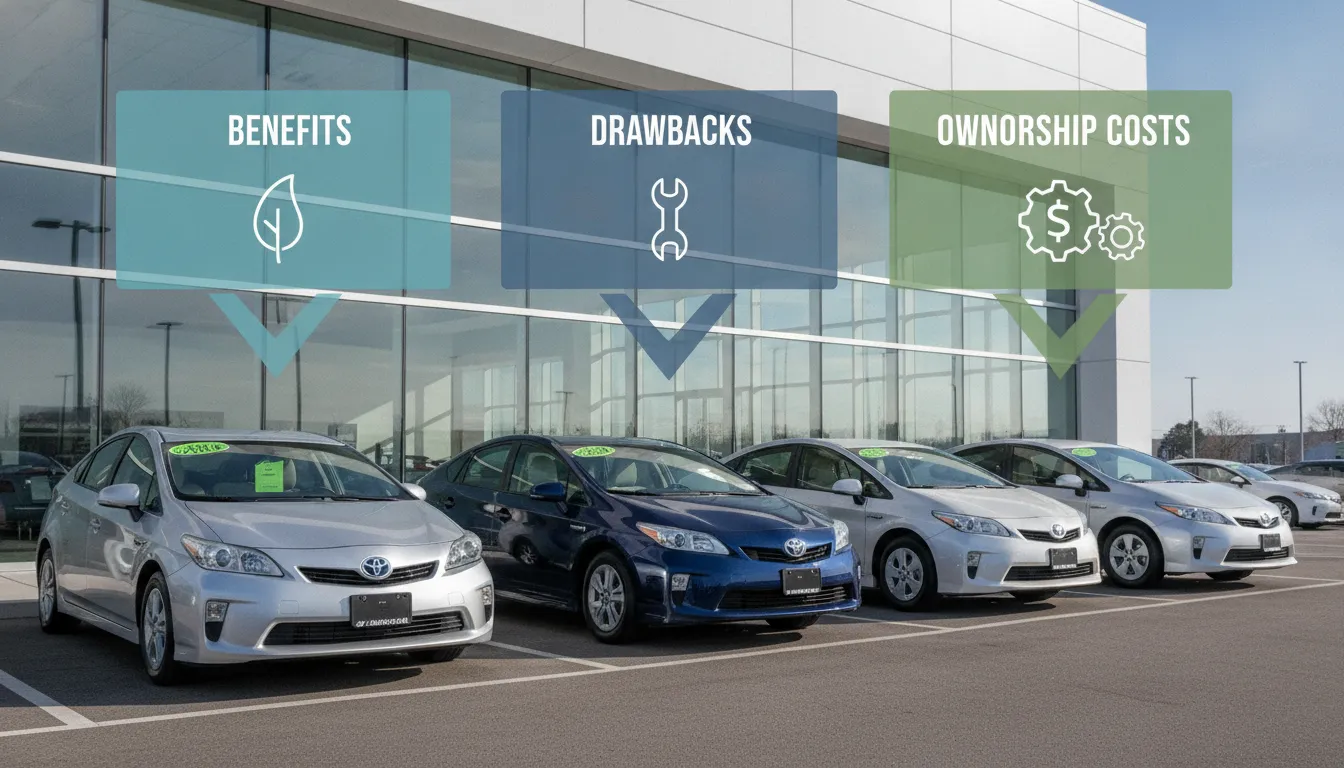
Get the facts on used hybrid cars, including benefits, drawbacks, and real ownership costs to help you decide if a used hybrid fits your needs.
Shopping for used hybrid cars can feel overwhelming when every listing highlights a different year, trim, mileage range, and price. One vehicle may offer excellent fuel economy, while another provides more cargo space, all-wheel drive, or a stronger remaining warranty. The right choice depends on how you drive and what you expect from ownership. City commuters may value regenerative braking and low fuel use, while families may prioritize rear-seat room and dependable cargo capacity. You also need to examine the high-voltage battery, 12-volt battery, cooling system, brakes, tires, and service records. This guide breaks down those decisions and shows how Automated Brokers can simplify remote vehicle shopping.
Key Takeaways
- Match the hybrid to your routine: Consider your commute, annual mileage, charging access, passenger space, cargo needs, climate, and preferred powertrain before comparing vehicles.
- Verify condition before buying: Review the VIN, maintenance history, battery warranty, diagnostic results, recalls, cooling system, 12-volt battery, brakes, and tires with a qualified hybrid technician.
- Compare the complete cost, not just the listing price: Include financing, fuel or charging, insurance, taxes, registration, maintenance, repairs, delivery, and resale value, then compare options through Automated Brokers’ remote buying service.
Used Hybrid Cars: Benefits and Drawbacks
A used hybrid can offer a practical balance of fuel efficiency, quiet performance, and lower day-to-day running costs. These vehicles combine a gasoline engine with one or more electric motors, using electric power where it can be most efficient. For example, the motor may assist during acceleration, while the engine can shut off when the vehicle stops in traffic. This can help reduce fuel use during city driving and frequent errands.
Buying used may also make hybrid ownership more affordable. The first owner has already absorbed much of the vehicle’s initial depreciation, and the difference between a used hybrid and a similar gas-powered vehicle may be smaller than it was when both were new. Still, a lower purchase price does not guarantee lower ownership costs.
Battery age, mileage, climate, maintenance history, fuel prices, and driving habits all affect the value of a used hybrid. A plug-in hybrid also requires dependable access to charging, while some older hybrids may need specialized service. Before comparing listings, consider how and where you drive, how long you plan to keep the vehicle, and whether the expected fuel savings justify the purchase price.
Save Fuel and Reduce Emissions
Hybrid vehicles often use less gasoline than comparable gas-powered cars, especially in city traffic. The electric motor can help the vehicle move away from a stop, while the gasoline engine may shut off during idling or low-demand driving. This reduces unnecessary fuel use during commutes, errands, and stop-and-go traffic.
Using less gasoline also produces fewer tailpipe emissions. The exact difference depends on the model, road conditions, maintenance, and driving habits, but hybrid fuel savings and emissions are important reasons many buyers consider this powertrain.
Real-world fuel economy can fall below the number shown on the window sticker. Cold weather, high speeds, aggressive acceleration, heavy cargo, hilly roads, and underinflated tires all affect efficiency. A used hybrid generally makes the most sense when you drive regularly, spend time in traffic, or cover enough miles for fuel savings to have a meaningful effect on your budget.
Pay Less Than You Would for a New Hybrid
A used hybrid may cost less than a new one because the vehicle has already experienced its steepest depreciation. New hybrids often carry a price premium over comparable gas vehicles, partly because of their electric motors, battery packs, and specialized components. With a pre-owned model, that original premium may be smaller relative to the vehicle’s current market value.
The amount you save depends on the model, year, mileage, trim, condition, and local demand. Popular hybrids can retain their value well, so an older, high-demand vehicle may still have a higher price than expected. Compare several vehicles with similar equipment and mileage instead of judging the deal by one listing.
Remember to include taxes, registration, financing, delivery, and immediate maintenance in your budget. A lower purchase price may not save money if the vehicle needs tires, a 12-volt battery, or cooling-system service shortly after purchase. This overview of hybrid versus gas vehicle pricing offers useful context when comparing pre-owned models.
Enjoy Regenerative Braking and Smooth Performance
Regenerative braking is one feature that gives a hybrid its distinctive driving feel. When you slow down, the electric motor can work as a generator. It captures some of the vehicle’s kinetic energy and sends it back to the high-voltage battery instead of losing all of it as heat through the friction brakes.
This process can reduce wear on brake pads and rotors, but it does not remove the need for brake service. Friction brakes still operate during hard stops, at low speeds, and when the battery cannot accept additional charge. During a test drive, pay attention to brake-pedal feel, stopping consistency, unusual noises, and warning lights.
Many hybrids also feel quiet and steady in traffic because the electric motor handles some low-speed operation. A guide to regenerative braking explains how the motor converts energy during deceleration into electricity. Smooth transitions between electric and gasoline power are usually a good sign, while hesitation or harsh engagement deserves further inspection.
Compare Full, Mild, and Plug-In Hybrid Systems
Not all hybrid systems provide the same driving experience or fuel-saving potential. A full hybrid can use its electric motor for short periods, assist the gasoline engine during acceleration, and recover energy through braking. Models such as the Toyota Prius and RAV4 Hybrid use this type of system. The vehicle recharges its battery while driving, so you do not need to plug it in.
A mild hybrid uses a smaller electric motor to assist the engine, support stop-start operation, and power certain accessories. It usually cannot drive on electric power alone. This simpler setup may improve efficiency and smoothness, but its fuel savings can differ from those of a full hybrid.
A plug-in hybrid has a larger battery that can be charged from an outlet or charging station. It may cover part of a daily commute using electric power before operating as a regular hybrid. However, its value depends on reliable charging access, electric range, and electricity costs. Review the differences between hybrid system types before choosing a vehicle.
Understand Battery Lifespan and Maintenance
The high-voltage battery is one of the most important components to evaluate in a used hybrid. Hybrid batteries are designed to last for many years, but age, mileage, heat exposure, climate, and maintenance history can affect their condition. A battery nearing the end of its useful life may contribute to reduced fuel economy, limited electric assistance, warning lights, or noticeable changes in performance.
Ask for the battery warranty information and confirm whether coverage transfers to the next owner. Terms vary by manufacturer, model year, location, and hybrid component. Before buying, have a qualified technician scan the hybrid system and assess battery performance. A normal test drive cannot reveal every battery problem.
Battery cooling also matters. Many hybrids use a fan and air ducts to control battery temperature. Dust, pet hair, or blocked vents can restrict airflow and increase heat. Regular service and battery health monitoring can support long-term reliability. If you are considering an older model, keep a repair reserve available and ask whether local technicians can work on high-voltage systems.
Know When a Gas Vehicle Makes More Sense
A conventional gas vehicle may suit you better if you drive very few miles, spend most of your time on the highway, or expect to sell the vehicle soon. Highway driving gives a hybrid fewer opportunities to recover energy through braking, while low annual mileage means fuel savings may take longer to offset the purchase price or possible repair costs.
A gas model may also be the better fit if you need frequent heavy towing, a specific cargo layout, or the lowest possible upfront price. Some buyers prefer the simpler powertrain and wider availability of conventional repairs and parts, particularly in areas with limited hybrid service options.
Compare the expected fuel-cost difference between similar vehicles using your annual mileage and local fuel prices. Kelley Blue Book’s hybrid break-even guidance explains why fuel savings do not always justify a higher purchase price. An independent inspection, realistic maintenance estimate, and honest assessment of how long you will keep the vehicle can help you choose between a used hybrid and a comparable gas car.
How Much Do Used Hybrid Cars Cost to Own?
The purchase price is only one part of what a used hybrid costs. To estimate your real ownership budget, include fuel, charging, maintenance, insurance, registration, financing, repairs, and delivery. These expenses can vary widely based on the vehicle, your driving habits, local prices, and the hybrid system’s condition.
A used hybrid may cost more upfront than a similar gas-powered vehicle, but lower fuel use and reduced brake wear can help offset the difference. The opposite can also happen if the vehicle needs battery, inverter, or electrical repairs outside its warranty.
Compare ownership costs over the period you expect to keep the car, such as three, five, or seven years. This gives you a clearer picture than comparing monthly payments alone. A lower payment may still result in higher total costs if the loan lasts longer or the vehicle uses more fuel.
Automated Brokers can help you compare used hybrids, pricing, financing, and delivery options based on your needs. You can review available inventory and request assistance without visiting a dealership.
Estimate Annual Fuel Costs and Real-World MPG
Start by estimating how much fuel you expect to use each year. Divide your annual mileage by the vehicle’s real-world miles-per-gallon figure, then multiply that result by your average local gas price. For example, a driver covering 15,000 miles in a hybrid rated at 50 mpg will generally use less fuel than someone driving the same distance in a gas model rated at 34 mpg.
In one example, Kelley Blue Book estimates annual fuel costs of about $1,434 for the gas model and $975 for the hybrid. That creates an estimated annual difference of $459. You can use Kelley Blue Book’s hybrid fuel-cost calculator to compare vehicles using your mileage and local fuel prices.
Use the EPA rating as a helpful starting point, not a promise. Your actual results can change with traffic, weather, tire pressure, driving style, passengers, and cargo. Owner reports and a test drive can also help you form a more realistic estimate before making an offer.
Account for City Driving, Highways, Weather, and Cargo
Your daily routine has a direct effect on fuel economy. Full hybrids often perform well in city traffic because they can recover energy during braking, use electric power at lower speeds, and reduce engine idling. Frequent stops and starts may therefore work in a hybrid’s favor.
Highway driving can reduce the fuel economy difference between a hybrid and a gas vehicle, especially at higher speeds. Cold temperatures may also reduce efficiency because the engine can run longer to heat the cabin. Snow tires, roof racks, heavy cargo, and frequent use of climate control can have a similar effect.
Think about your actual commute before relying on the combined mpg rating. A Maryland driver with a stop-and-go commute may see different results from someone who spends most of the week on the interstate. If you carry several passengers, transport equipment, or tow a trailer, include those conditions in your estimate.
Include the Purchase Price, Taxes, Fees, Financing, and Delivery
Compare the complete out-the-door price rather than the advertised vehicle price. Your total may include the purchase price, sales tax, title and registration charges, documentation fees, dealer fees, financing costs, and optional protection products. If the vehicle is delivered, confirm whether transportation or delivery charges appear separately.
Financing can significantly change the total cost. A lower purchase price may not be the least expensive option if it comes with a higher interest rate or longer loan term. Compare the total amount paid over the loan, not only the monthly payment. A larger down payment can reduce interest, but make sure it does not leave you without an emergency fund.
Automated Brokers can help customers compare vehicles across multiple dealerships and assist with financing for prime, near-prime, and credit-rebuilding buyers. The company also offers Maryland pickup and nationwide delivery. You can learn how the buying process works before requesting a vehicle search.
Budget for Oil Changes, Maintenance, and Brake Savings
A hybrid still has a gasoline engine, so it needs oil changes, filters, coolant service, inspections, and other scheduled maintenance. Follow the manufacturer’s maintenance schedule for the exact model and year. If you are buying an older hybrid, review its records to identify overdue services and upcoming costs.
Regenerative braking lets the electric motor slow the vehicle and recover some energy. Because it reduces reliance on the friction brakes, the pads and rotors may last longer than those on a comparable gas-only vehicle. Kelley Blue Book notes that regenerative braking can reduce wear on brake components.
That does not make the braking system maintenance-free. Have the pads, rotors, calipers, brake fluid, and regenerative braking operation inspected regularly. Vehicles driven on salted roads may need extra attention, and long periods of parking can also contribute to corrosion or brake issues.
Plan for Battery, Inverter, Cooling, and Electrical Repairs
Hybrid vehicles contain components that traditional gas cars do not, including a high-voltage battery, inverter, electric motor, battery cooling system, and specialized control modules. These parts are built for long service, but repairs can be costly if a failure occurs after warranty coverage ends.
Request a hybrid battery health check before buying. Review the battery warranty using the vehicle identification number, model year, mileage, and location because coverage can vary. Also ask whether the vehicle qualifies for any remaining emissions-related warranty protection.
Battery cooling deserves particular attention. Dust, pet hair, or blocked vents can restrict airflow and contribute to excess heat. Regular maintenance and battery monitoring can support long-term performance. Even with a healthy inspection, keep a repair reserve for unexpected inverter, cooling, battery, or electrical work.
Calculate Plug-In Hybrid Charging and Electricity Costs
Plug-in hybrids have larger batteries than standard hybrids and can travel farther on electricity alone. If you charge consistently, many daily trips may use little or no gasoline. That can lower operating costs when your commute fits within the vehicle’s electric range.
Estimate home charging costs by multiplying the electricity needed for a full charge by your local utility rate. Include charging losses, since the power drawn from the outlet is usually greater than the battery’s usable capacity. Then compare the electricity cost for that distance with the cost of driving on gasoline.
Home charging is often more convenient and predictable than public charging. Regular home charging can bring plug-in hybrid running costs closer to those of an electric vehicle, but your results depend on utility rates, gasoline prices, charging equipment, and how often you plug in. Ask whether the vehicle includes a charging cable before purchasing.
Add Insurance, Tires, Registration, and Service Plans
Insurance premiums depend on your driving history, location, vehicle value, safety equipment, repair costs, and claim history. A hybrid does not always cost less to insure than a gas model. Advanced sensors, specialized electronics, and expensive components may affect the premium. Request quotes for the exact year, trim, and vehicle identification number before buying.
Include tires, registration, inspections, and routine service in your budget. Hybrids can weigh more than comparable gas vehicles, and poor alignment, low tire pressure, or aggressive driving can shorten tire life. Low-rolling-resistance tires may support efficiency, but they still require regular pressure and tread checks.
You may also consider a service contract, roadside assistance, tire coverage, or prepaid maintenance plan. Review each plan’s exclusions, deductibles, authorized repair locations, and high-voltage component coverage. Do not assume a general warranty covers the hybrid battery, inverter, or every electrical system.
Check Tax Credits and Incentive Eligibility
Tax credits and local incentives may affect the cost of a used hybrid, but eligibility depends on the vehicle, buyer, income, purchase date, location, and transaction details. Rules can differ between standard hybrids, plug-in hybrids, and fully electric vehicles.
Some programs require the vehicle to meet specific age, price, battery, or seller requirements. Others apply only to eligible buyers or participating dealerships. Verify current requirements with the Internal Revenue Service clean vehicle credit guidance and your state or local tax authority before including an incentive in your budget.
Do not count a possible credit as guaranteed savings until you confirm that you qualify. Check whether the incentive is applied at purchase or claimed later on your tax return. Keep the purchase agreement, vehicle identification number, and eligibility documents with your records.
Compare Depreciation, Resale Value, and Market Demand
Your ownership cost also depends on what the hybrid is worth when you sell or trade it. Estimate depreciation by comparing current prices for similar vehicles with different model years, mileage, trims, and conditions. A popular model with a strong reliability record may retain more value than a less sought-after alternative.
Hybrids often hold their value well compared with gas-only vehicles, although results vary by model and market conditions. Fuel economy, battery reputation, warranty coverage, reliability history, and replacement-part availability can all affect resale demand. Plug-in hybrids may appeal to buyers with home charging, while others may prefer a standard hybrid.
Keep service records, repair invoices, warranty documents, and inspection reports. Good documentation helps future buyers understand the vehicle’s condition. Before purchasing, review pricing tools and local listings to estimate what the hybrid could be worth after your planned ownership period.
Calculate Total Ownership Costs and Your Fuel-Savings Break-Even
To estimate total ownership cost, add the purchase price, taxes, fees, financing interest, fuel or electricity, insurance, maintenance, repairs, registration, tires, and delivery. Then subtract the vehicle’s expected resale or trade-in value. This provides a more useful estimate than the listing price or monthly payment alone.
Next, compare the hybrid with a similar gas-powered vehicle. If the hybrid costs $3,000 more but saves $500 per year on fuel and maintenance, it would take about six years to recover the difference, before accounting for financing, repairs, incentives, and resale value. Your break-even point may come sooner if you drive many miles or spend most of your time in city traffic.
Use conservative estimates for fuel economy, repair costs, and resale value. Kelley Blue Book recommends calculating costs for your specific driving situation because the right choice depends on how you use the vehicle. Automated Brokers can help you compare used hybrids and gas vehicles by price, mileage, trim, and ownership needs.
How Reliable Are Used Hybrid Cars?
Used hybrid cars can be highly reliable, but the vehicle’s condition matters more than the hybrid badge on the hood. A well-maintained hybrid may provide years of efficient driving, smooth acceleration, and reduced brake wear. It also includes components that a conventional gas vehicle does not, such as a high-voltage battery, electric motors, inverters, cooling systems, and specialized control electronics.
The best way to evaluate a used hybrid is to look beyond the mileage and asking price. Review its maintenance history, confirm battery coverage, check for warning lights, and arrange an inspection with a technician who understands hybrid systems. A higher-mileage vehicle with consistent records may be a safer purchase than a low-mileage car with an unclear history.
Reliability varies by model, powertrain, climate, and driving habits. Before choosing a vehicle, compare its repair history, parts availability, service network, and battery warranty. Consumer Reports has found hybrid technology to be reliable in its surveys, with the Toyota Prius often ranking among the strongest performers. You can review hybrid reliability findings as you compare your options.
For Maryland buyers and customers elsewhere in the country, a remote buying service can make this research easier. Automated Brokers searches more than 1,300 vehicles across nine dealerships, helping customers compare model, mileage, trim, condition, and pricing without visiting multiple lots. You can view available inventory and discuss your preferences by phone, text, or email.
Check Hybrid Battery Age, Health, and Warranty Coverage
The high-voltage battery is one of the most important parts of a used hybrid. It powers the electric motor and stores energy recovered through regenerative braking. Battery packs are designed to last for many years, but age, heat, mileage, and maintenance can affect their condition.
Ask for the battery’s age, warranty details, and any available diagnostic report. A qualified technician may check battery performance, cell balance, charge levels, and stored fault codes with specialized equipment. Do not rely only on the dashboard, since a battery can show early signs of deterioration before a warning light appears.
Confirm whether the original battery warranty remains active and transfers to a new owner. Coverage varies by manufacturer, model year, location, and powertrain. If the warranty has ended, ask what replacement would cost for that specific vehicle. Consumer Reports says battery replacements are relatively uncommon, although they can cost thousands when needed. Learn more about hybrid battery repair costs before making an offer.
Inspect 12-Volt Batteries, Inverters, Motors, and Electronics
A hybrid’s high-voltage battery receives most of the attention, but smaller components also affect starting, charging, and drivability. The 12-volt battery powers accessories and helps activate the vehicle’s control systems. When it becomes weak, the hybrid may fail to start or display several warning messages at once.
Have the 12-volt battery tested, especially if it is several years old. Ask the technician to inspect the inverter, electric motor generators, wiring, sensors, and electronic control modules. These components manage energy between the battery, motor, and gas engine.
During a test drive, watch for hesitation, unusual noises, harsh transitions between electric and gas power, or warning lights that appear after the vehicle warms up. A diagnostic scan may reveal stored codes that are not currently visible. Understanding how regenerative braking converts kinetic energy into electrical energy also explains why these systems need a careful inspection.
Maintain Battery Cooling and Thermal-Management Systems
Hybrid batteries generate heat while charging and delivering power. Most vehicles use fans, vents, ducts, coolant, or a combination of these systems to keep battery temperatures within a safe range. If a fan fails or an intake becomes clogged, the battery may run hotter than intended, affecting performance and long-term durability.
Locate the battery cooling intake and check it for dust, pet hair, luggage, or other obstructions. Some intakes sit near a rear seat, cargo panel, or side trim, so they can be easy to miss. Ask whether the cooling fan has been cleaned and whether the vehicle’s coolant services are current.
Temperature affects daily driving, too. Cold weather can reduce electric assistance and fuel economy, while extreme heat places greater demand on the cooling system. Modern hybrids include systems designed to manage these conditions and often remain more efficient than conventional vehicles in winter. Review hybrid cold-weather performance when comparing vehicles for your climate.
Consider Mileage, Climate, Driving Habits, and Ownership History
Mileage provides useful context, but it does not tell the whole story. A hybrid used for steady highway trips may experience different wear from one driven in stop-and-go traffic, short trips, or extreme temperatures. Frequent short journeys can limit warm-up time, while heavy traffic places repeated demands on the battery, engine, and braking systems.
Ask how and where the vehicle was driven. A car from a hot climate may have experienced more battery heat, while one used in an area with road salt may have additional underbody corrosion. Flood exposure, long periods without use, and commercial service can also change the vehicle’s risk profile.
Ownership history can reveal how carefully the hybrid was treated. Look for consistent oil changes, coolant services, brake inspections, tire rotations, and completed recall work. High mileage does not automatically disqualify a vehicle, but it should be reflected in the price and inspection results. Excessive mileage can affect battery condition, so consider mileage as part of the battery assessment.
Compare Model-Specific Reliability, Parts, and Service Availability
Hybrid reliability depends partly on the specific model and generation. Some vehicles have established powertrains, widely available parts, and many technicians familiar with their systems. Others use newer technology, limited-production components, or specialized parts that cost more or take longer to source.
Before buying, check whether local repair shops service that model and whether the manufacturer has an established hybrid service network. Ask about common repairs, battery availability, inverter pricing, and labor rates. It is also worth checking whether replacement parts are available from the manufacturer, reputable suppliers, or certified recyclers.
Compare several model years rather than assuming the newest option is the best choice. A slightly older hybrid with a proven powertrain and complete records may offer a more predictable ownership experience than a newer model with limited service history. Automated Brokers can help you compare Toyota, Hyundai, Kia, Nissan, Subaru, and other vehicles through its available inventory.
Understand Common Hybrid Drawbacks and Repair Risks
Used hybrids have clear advantages, but they are not maintenance-free. Their gas engines still need oil, filters, coolant, and regular inspections. Hybrid-specific parts, including battery packs, inverters, electric motor components, and cooling equipment, may require specialized labor and cost more than familiar repairs on a conventional vehicle.
Brake wear may be lower because regenerative braking handles part of the stopping work. However, brake components can still corrode or develop problems when they are used less often, particularly if the vehicle sits for long periods. Tires, suspension parts, air conditioning systems, and 12-volt batteries remain part of the ownership budget.
Ask for an estimate that separates parts and labor. Confirm whether the technician recommends a new, remanufactured, or used component, and ask about the warranty for each option. Consumer Reports explains that hybrid battery replacement can cost thousands, even though its survey data shows replacements are not common. A pre-purchase inspection and a repair reserve can help you prepare for those possibilities.
Spot Signs of a Neglected Hybrid
Small details can reveal whether a used hybrid received regular care. Look for missing service records, dashboard warning lights, uneven tire wear, low fluid levels, damaged wiring, or a dirty battery cooling intake. A strong engine smell, unusual exhaust, fluid leaks, or grinding brakes also deserve attention.
During the test drive, notice whether the engine starts smoothly and whether the vehicle shifts between electric and gas power without sharp jolts. Watch for reduced electric assistance, a battery gauge that changes rapidly, inconsistent regenerative braking, or cooling fans that run loudly for an extended period.
Check the interior and exterior, too. Water stains, musty odors, corrosion, and damp carpet may indicate flood exposure. Mismatched paint or uneven panel gaps can point to accident repairs. Service records should show that issues were addressed instead of repeatedly postponed. Use a used vehicle reliability checklist to organize the inspection.
Choose Qualified Technicians for High-Voltage Repairs
High-voltage hybrid systems require different safety procedures from conventional vehicle repairs. Battery packs, orange cables, inverters, and electric drive components can retain dangerous electrical energy even when the vehicle is turned off. Do not attempt to inspect or disconnect these parts yourself.
Choose a repair shop with technicians trained to work on the make and model you are considering. Ask whether the shop has hybrid diagnostic equipment, high-voltage safety procedures, and experience testing battery packs. A qualified technician can inspect the battery, scan control modules, check cooling systems, and identify problems a basic inspection may miss.
For a pre-purchase inspection, request a written report that separates urgent repairs from routine maintenance. If the nearest qualified shop is far away, include travel or transportation costs in your buying decision. Automated Brokers can help buyers compare vehicles, discuss financing for prime, near-prime, and credit-rebuilding buyers, and complete the purchase remotely. Learn how the buying process works, including Maryland pickup and nationwide delivery options.
Used Hybrid Car Models to Compare
Used hybrids come in more shapes and sizes than the familiar compact hatchback. You can find efficient sedans for commuting, roomy SUVs for family trips, and plug-in hybrids for drivers who can charge at home. The right choice depends on more than fuel economy. Battery age, passenger space, cargo capacity, all-wheel drive, repair costs, and replacement-part availability all deserve attention.
Start by matching the vehicle type to your routine. A compact hybrid may suit a long solo commute, while a hybrid SUV may work better for car seats, sports equipment, or frequent road trips. Compare estimated fuel economy across model years with the EPA’s Fuel Economy website, then consider how your actual driving conditions may affect those figures.
Automated Brokers can help you compare used vehicles by make, model, mileage, trim, and budget. The team searches dealer inventory across a large network and manages the buying process by phone, text, or email. Review the available inventory and ask about current hybrid options, vehicle history, financing, and delivery before choosing a specific model.
Explore Automated Brokers’ Toyota, Hyundai, Kia, Nissan, and Subaru Options
Toyota has one of the broadest used-hybrid lineups, including the Prius, Camry Hybrid, Corolla Hybrid, RAV4 Hybrid, and Highlander Hybrid. Depending on the model year, Hyundai shoppers may find the Ioniq, Sonata Hybrid, Tucson Hybrid, or Santa Fe Hybrid. Kia options can include the Niro, Sportage Hybrid, Sorento Hybrid, and Optima Hybrid.
Nissan’s hybrid availability varies by model year, so verify the exact powertrain rather than relying on the vehicle’s name or badge. Subaru has offered limited hybrid options, including the Crosstrek Hybrid in select years. Inventory also varies based on mileage, location, trim, and dealer stock.
Automated Brokers searches more than 1,300 vehicles across nine dealerships, which may give you access to options that are not available at one nearby lot. Share your preferred make, model, mileage range, budget, and must-have features through the Automated Brokers buying process.
Compare Compact Hybrids: Prius, Ioniq, Insight, and Niro
Compact hybrids often deliver low fuel costs while remaining easy to park and practical for daily driving. The Toyota Prius is a popular choice, with strong fuel economy, a useful hatchback design, and broad service familiarity. The Hyundai Ioniq Hybrid offers efficient hatchback performance, while the Honda Insight combines sedan styling with a hybrid powertrain and a comfortable cabin.
The Kia Niro sits between a hatchback and a small SUV. It offers useful cargo space and a slightly raised seating position without the size of a traditional crossover. Compare more than the EPA estimate. Check rear-seat room, cargo access, road noise, acceleration, and the condition of the hybrid battery.
A compact hybrid may suit city driving and commuting, but it may not work for frequent towing, bulky cargo, or all-wheel-drive needs. Review the vehicle’s EPA fuel-economy ratings, then compare them with the roads, weather, and traffic conditions you expect to encounter.
Compare Hybrid Sedans: Camry, Accord, Fusion, and Sonata
Hybrid sedans can provide a comfortable ride, generous trunk space, and efficient highway performance. The Toyota Camry Hybrid is widely available in the used market and is known for its quiet cabin. The Honda Accord Hybrid typically offers a spacious interior and composed handling. Ford Fusion Hybrid and Hyundai Sonata Hybrid models may appeal to buyers looking for an older hybrid at a lower purchase price.
Model year matters with each sedan. Safety technology, battery coverage, infotainment systems, interior equipment, and powertrain details may change from one year to the next. Check for features that matter to you, such as adaptive cruise control, heated seats, Apple CarPlay, or blind-spot monitoring.
Sedans generally have a lower step-in height than SUVs and may perform well on the highway. Their trunks, however, can be less flexible than a hatchback or crossover. Request the vehicle history, maintenance records, and a battery assessment before making an offer.
Compare Hybrid SUVs: RAV4, CR-V, Tucson, and Sportage
Hybrid SUVs appeal to buyers who want more ground clearance, flexible cargo space, and available all-wheel drive. The Toyota RAV4 Hybrid is offered in several practical trims, while the Honda CR-V Hybrid provides a roomy cabin and useful cargo area. Hyundai Tucson Hybrid and Kia Sportage Hybrid models may offer modern interiors, advanced safety features, and competitive warranty coverage.
Compare more than the name on the liftgate. Check rear-seat legroom, liftgate height, cargo-floor design, roof-rail capacity, and spare-tire arrangements. Some hybrid SUVs use a dedicated electric motor for all-wheel drive, while others use a different system depending on the model year and trim.
Towing capacity also varies. Do not assume a hybrid SUV can tow the same load as its gas-powered counterpart. Check the owner’s manual and manufacturer specifications for the exact vehicle, including hitch requirements and tongue-weight limits. A used hybrid SUV can be a practical choice when its cargo, towing, and drivetrain capabilities match your regular needs.
Assess Plug-In Hybrids and Home-Charging Needs
Plug-in hybrids, or PHEVs, have a larger battery and an external charging port. They can drive a set distance on electricity before operating like a conventional hybrid. Regular charging may reduce gasoline use for short commutes, errands, and school runs. For longer trips, the gas engine provides flexibility without requiring the same charging planning as a fully electric vehicle.
Before choosing a PHEV, confirm that you have a convenient place to charge. A standard household outlet may work with some vehicles, but charging can take several hours. A Level 2 charger may reduce charging time, although installation adds to your ownership costs. The Department of Energy’s charging guidance explains common charging equipment and infrastructure.
Check the vehicle’s electric range, charging cable, port condition, and battery warranty. A PHEV may not deliver meaningful fuel savings if you rarely charge it, so compare its purchase price and operating costs with those of a regular hybrid.
Compare Model Years, Trims, and Powertrains
The same hybrid name can describe substantially different vehicles across model years. A newer version may have a larger battery, updated safety technology, improved interior materials, or a revised hybrid system. An older trim may cost less but lack features you consider essential. Compare the exact year, trim, drivetrain, and equipment rather than comparing model names alone.
Pay close attention to powertrain terms. A mild hybrid provides electric assistance but generally cannot drive on electric power by itself. A full hybrid can use its electric motor for short periods and recharge through braking and the engine. A plug-in hybrid has a larger battery that charges through an external connection.
Use the VIN to verify original specifications, warranty details, and recall history. You can check open recalls with the National Highway Traffic Safety Administration’s VIN lookup tool. When two vehicles are similar, documented maintenance and battery condition may matter more than a small difference in trim equipment.
Review Battery Coverage, Reliability, and Parts Costs
A hybrid battery is designed to last for many years, but age, climate, mileage, and maintenance history still matter. Ask whether the battery remains under the factory warranty and whether that coverage transfers to you. Federal emissions rules may require longer coverage for certain components, but terms vary by vehicle, location, and model year. Confirm the details in the warranty booklet or with the manufacturer.
Battery replacement is not the only possible hybrid repair. These vehicles also contain inverters, electric motors, cooling components, sensors, and high-voltage cables. Parts availability and technician experience may differ by brand and region. A widely sold model may be easier and less expensive to service because more repair shops are familiar with its system.
Request a diagnostic scan and have a qualified technician assess battery performance before purchasing. Manufacturer resources, such as Toyota’s warranty information, can explain general coverage. Still, verify the details for the specific VIN, especially when comparing older used hybrids.
Match Passenger Space, Cargo Room, AWD, and Towing Needs
Choose a vehicle around your daily life, not just its fuel-economy rating. Consider the space needed for child seats, adult passengers, pets, or mobility equipment. Bring a stroller, suitcase, or another frequently used item to a test drive when possible. A vehicle that looks spacious on paper may have a sloping roof, raised cargo floor, or limited rear-seat access.
All-wheel drive can help with traction in rain, snow, and loose conditions, but it may add weight, cost, and mechanical complexity. Compare the exact drivetrain because AWD systems differ among manufacturers and model years. If you tow, check the rated capacity, hitch requirements, tongue weight, and whether the required equipment is included.
Think about where you drive most often. A compact hybrid may be easier to park and well suited to city streets. A larger hybrid SUV may make more sense for highway travel, family use, and cargo. Automated Brokers can help compare vehicles against your space, drivetrain, mileage, and budget requirements, with Maryland pickup or nationwide delivery available.
How Do You Choose the Right Used Hybrid Car and Price?
Choosing a used hybrid starts with more than finding the lowest listing price. The right vehicle should fit your commute, climate, passengers, cargo needs, charging access, and monthly budget. A compact hybrid may work well for a city driver, while a hybrid SUV may make more sense for frequent highway trips, family travel, or added cargo space.
Start by comparing the powertrain, battery age, mileage, trim level, service records, and vehicle history. Then review several examples of the same model instead of relying on one advertised price. Comparing similar vehicles gives you a clearer idea of fair market value and helps you identify listings that seem unusually cheap.
Your purchase price is only one part of the decision. Include financing, insurance, registration, fuel or charging costs, maintenance, possible battery repairs, and delivery. Automated Brokers can search more than 1,300 vehicles across nine dealerships and help you compare options by phone, text, or email through its used vehicle inventory.
Match the Powertrain to Your Commute, Climate, and Charging Access
Consider how and where you drive before choosing a hybrid system. A conventional hybrid charges its battery through regenerative braking and the gasoline engine, so you do not need home charging equipment. That makes it a practical option for apartment residents, road-trippers, and drivers without reliable access to a charger.
Full hybrids often perform especially well in stop-and-go traffic because the electric motor can assist at lower speeds. Highway drivers can still benefit, although fuel savings may be less noticeable at sustained speeds. Review the vehicle’s estimated fuel economy and compare it with your actual driving pattern.
Cold weather does not automatically rule out a hybrid. Insulated battery packs and engine-control systems help manage reduced battery efficiency in low temperatures. Winter tires, cabin heating, snow, and idling can still affect fuel economy, so review how hybrid vehicles perform in cold weather before choosing a model.
Choose Between a Hybrid and Plug-In Hybrid
A conventional hybrid does not need to be plugged in. It uses gasoline and recovers energy while driving, which keeps ownership simple. You can refuel it at any gas station and take longer trips without planning charging stops.
A plug-in hybrid, or PHEV, has a larger battery and can travel a limited distance on electricity alone. If you can charge at home or work and most of your daily trips fit within its electric range, a PHEV may reduce gasoline use. Once the battery charge is depleted, it generally operates like a regular hybrid.
The trade-off may include a higher purchase price, added weight, greater mechanical complexity, and charging equipment costs. Compare electric range, charging time, battery warranty, and local electricity rates. This overview of hybrid vehicle longevity can help you weigh efficiency against long-term ownership considerations.
Set a Purchase Budget and Monthly Ownership Limit
Set two limits before you shop: the most you want to spend and the monthly ownership cost you can comfortably manage. Your payment should leave room for insurance, fuel, charging, maintenance, registration, parking, and other transportation expenses.
A larger down payment can reduce the amount you borrow, but avoid using all your emergency savings. Used hybrids may need tires, brake work, cooling-system service, or a 12-volt battery during the first year. Leave room for those costs, particularly when buying an older vehicle with higher mileage.
Estimate fuel savings realistically. City driving, highway speeds, winter temperatures, tire pressure, and cargo can all affect real-world results. Hybrids may also hold their value well compared with some gas-only vehicles. Kelley Blue Book’s hybrid versus gas cost comparison can help you estimate whether expected fuel savings justify a higher purchase price.
Compare Loan Rates, Down Payments, and Total Interest
Two used hybrids with the same advertised price can have very different ownership costs. Compare the annual percentage rate, loan term, down payment, lender fees, and total interest. A longer term may lower the monthly payment, but it usually increases the total amount you repay.
Request financing quotes before committing to a vehicle. Compare your bank or credit union with dealer-arranged financing, and ask for the total repayment amount in writing. If your credit is near-prime or rebuilding, focus on the complete loan cost rather than the monthly payment alone.
Also consider the vehicle’s age and your expected ownership period. A long loan on an older hybrid can leave you making payments after the car needs major repairs. Automated Brokers works with prime, near-prime, and credit-rebuilding buyers, so you can learn how the buying process works before choosing a financing structure.
Compare Prices for the Same Used Hybrid Model
Compare listings for the same year, model, trim, drivetrain, and approximate mileage. A 2021 Toyota RAV4 Hybrid XLE with all-wheel drive is not directly comparable to a base front-wheel-drive model. Equipment, battery warranty, condition, location, and dealer fees can all affect the price.
Focus on vehicles with similar histories and condition. Remove listings with salvage titles, major accident damage, missing records, or unusually high fees from your primary comparison. Ask for an out-the-door price so you are comparing the real cost, not just the advertised number.
Used hybrid prices change with inventory and consumer demand. Auto Trader has reported shifts in average used hybrid pricing, which shows why older assumptions may not reflect current listings. Check current used hybrid pricing before making an offer.
Adjust for Mileage, Trim, Condition, and Vehicle History
Mileage matters, but it does not tell the entire story. A well-maintained hybrid with higher highway mileage may be a better purchase than a lower-mileage vehicle with missed service, heavy idling, or signs of neglect.
Trim level can affect value through features such as all-wheel drive, heated seats, driver-assistance technology, upgraded infotainment, and larger wheels. Decide which features you actually need before paying more for them. Also inspect tire tread, brake wear, paint, upholstery, underbody components, and signs of water intrusion.
Review the title, accident records, ownership history, maintenance records, and open recalls. Accident damage does not automatically disqualify a vehicle, but you should understand what was repaired and whether the work was completed properly. A clean history and consistent service records support a stronger asking price.
Budget for Battery Health and Upcoming Maintenance
A used hybrid does not automatically need a battery replacement, but battery age and condition should affect your budget. Ask whether the high-voltage battery has been tested, whether its warranty remains active, and whether the vehicle has displayed warning lights or reduced electric assistance.
Look beyond the high-voltage battery, too. The car may soon need an oil change, coolant service, filters, tires, brake work, or a 12-volt battery. Some models use specialized fluids or have service intervals that differ from gas-only vehicles.
Ask for a written estimate of upcoming maintenance and set aside a repair reserve. Regular oil changes, brake service, tire rotations, cooling-system care, and manufacturer-recommended maintenance support long-term reliability. Review these battery and maintenance considerations before setting your maximum purchase price.
Add Taxes, Registration, Insurance, Financing, and Delivery
The advertised vehicle price is not the final amount you pay. Build an out-the-door estimate that includes sales tax, title and registration fees, documentation charges, financing costs, insurance, and dealer-installed products. If the vehicle is delivered, confirm the transportation cost and whether it appears in the written quote.
Insurance can vary based on the model, location, driver profile, repair costs, and coverage level. Request a quote before buying, especially when comparing a compact hybrid with a larger SUV or plug-in model.
Ask for every fee in writing and avoid comparing monthly payments alone. A lower payment may reflect a longer loan term, a larger final balance, or optional products you did not request. Automated Brokers offers Maryland pickup and nationwide delivery, so you can request a clear breakdown of the purchase and delivery process.
Use Inspection Results to Negotiate
An independent inspection gives you facts to use during price discussions. Ask a qualified technician to evaluate the hybrid battery, charging and cooling systems, engine, transmission, electric motor, brakes, tires, suspension, steering, electronics, and 12-volt battery.
Separate immediate safety repairs from normal wear and future maintenance. Worn tires or overdue brake service may justify a price adjustment, while a battery fault requires a more serious decision. Request written findings and repair estimates so you can discuss specific costs.
You may negotiate a lower price, request repairs, ask for new tires, or seek additional warranty coverage. If the seller will not address a significant issue, be prepared to walk away. An inspection cannot guarantee a trouble-free vehicle, but it can reveal problems that are easy to miss during a short test drive.
Set a Fair Walk-Away Price
Decide your maximum price before making an offer. Base it on comparable vehicles, inspection results, expected maintenance, financing costs, and your complete ownership budget. Include the value of the features and condition you want, but do not let a rare color or limited availability push you beyond your limit.
Write down the reasons behind your number. You may adjust downward for worn tires, an expiring battery warranty, missing service records, or a higher interest rate. You may accept a slightly higher price for a clean history, strong battery test results, newer tires, and included delivery.
If the final numbers no longer make sense, pause the purchase. There will be other used hybrids, even if one listing seems especially tempting. Automated Brokers can search multiple dealerships and compare vehicles based on your preferred model, mileage, trim, and budget through its concierge vehicle-buying service.
What Should You Check Before Buying a Used Hybrid Car?
A used hybrid can offer excellent fuel economy, quiet performance, and lower running costs, but it deserves a more detailed inspection than a standard gas-powered vehicle. Along with checking the body, interior, tires, engine, and transmission, you should review the hybrid battery, electric motor, inverter, cooling system, and vehicle software.
Start by requesting the vehicle identification number, service records, ownership details, and battery warranty information. During the test drive, include a cold start, stop-and-go traffic, highway speeds, braking, and uphill driving. If you are considering a plug-in hybrid, test the charging port and cable before making an offer.
Do not rely on the dashboard alone. Some problems only appear after a technician scans the vehicle with manufacturer-specific diagnostic equipment. A qualified inspection can also identify battery temperature issues, uneven cell performance, cooling-system problems, and stored fault codes.
Automated Brokers can help you compare used vehicles by make, model, mileage, trim, condition, and price. You can complete the buying process by phone, text, or email, with Maryland pickup or nationwide delivery available. Before arranging vehicle delivery or pickup, complete as many checks as possible and ask for clear documentation.
Review the VIN, Title, Accident, Flood, and Recall History
Request the VIN before making an offer. Use it to review the title, ownership history, reported accidents, mileage, flood damage, salvage branding, and open recalls. The National Highway Traffic Safety Administration’s recall lookup tool can identify unresolved safety recalls by VIN.
Look for mileage gaps, repeated auction listings, inconsistent ownership dates, or repairs after a collision. Flood damage deserves special attention because moisture can affect wiring, sensors, battery connections, and control modules long after the vehicle appears dry.
Ask whether recall repairs have been completed and request supporting documents. If the history shows major structural damage, a branded title, or unexplained mileage changes, arrange an independent inspection before moving forward.
Check Maintenance Records and Ownership History
Maintenance records can show whether the previous owner followed the manufacturer’s service schedule. Look for oil changes, coolant replacement, brake service, tire rotations, 12-volt battery replacement, software updates, and hybrid-system inspections. Several years of records are more useful than one recent service receipt because they reveal how the vehicle was treated over time.
Review the number of previous owners and how they used the car. A hybrid driven for regular commuting may have a different wear pattern from one used for delivery work, frequent short trips, or long periods of storage. Mileage matters, but it does not tell the entire story.
If records are incomplete, ask the seller to explain the missing intervals. You can also request dealership service records using the VIN. When reviewing Automated Brokers’ inventory, ask for available maintenance and vehicle-history information before scheduling an appointment.
Test Hybrid Battery Health and Scan the System
The hybrid battery is one of the most important components to evaluate. During the test drive, watch how quickly the charge level rises and falls, whether the gas engine starts and stops smoothly, and whether warning messages appear. Sudden charge swings, weak electric operation, or an engine that runs constantly may require further testing.
A visual inspection cannot confirm battery health. Ask a qualified technician to scan the hybrid control system and review stored, pending, and manufacturer-specific fault codes. The scan should examine battery temperature readings, cell-voltage balance, state-of-charge behavior, and cooling-system performance.
Battery capacity changes with age, mileage, climate, and use. An older battery does not automatically make a vehicle a poor choice, but its condition should be reflected in the price. A hybrid technician can explain whether the readings are normal for that model.
Confirm Battery Warranty and Service Eligibility
Hybrid battery warranties vary by manufacturer, model year, location, and powertrain. A used vehicle may still have coverage for the battery or related hybrid components, while another may be outside its original warranty period. Do not assume that coverage transfers automatically or includes every part of the system.
Contact an authorized dealer with the VIN and ask for the exact warranty status. Confirm the expiration date or mileage limit, covered components, transfer rules, and any regional conditions. Ask whether the vehicle has received required software updates or battery-related service campaigns.
A warranty may cover a manufacturing defect but exclude normal capacity loss, collision damage, neglected maintenance, or aftermarket modifications. Request the terms in writing. General resources such as GreenCars’ used hybrid guide can provide background, but VIN-specific manufacturer records should guide your decision.
Test the Cold Start, Drive Modes, and Electric-to-Gas Transition
Arrange the test drive when the vehicle is cold, if possible. A cold start can reveal rough idling, unusual engine noise, delayed engagement, warning lights, or cooling-system problems that may not appear after the car warms up. Ask the seller not to run the vehicle before you arrive.
Test the car in low-speed traffic, moderate acceleration, highway cruising, reversing, and uphill driving. Pay attention to the transition between electric power and the gas engine. It should feel controlled and smooth, without harsh jolts, grinding, hesitation, or unexplained vibration.
Try available drive modes, such as EV, Eco, Normal, Sport, or Charge. Some modes only operate under certain speed, temperature, battery, or throttle conditions, so a mode that does not engage is not always a fault. Ask the technician to interpret unusual behavior.
Inspect the Engine, Transmission, Motor, and Regenerative Braking
A hybrid still contains many conventional components that require inspection. Check the gas engine for oil leaks, coolant leaks, unusual smoke, damaged belts, and rough operation. Review fluid levels and look underneath the vehicle for fresh drips or signs of older leaks.
Many hybrids use an electronically controlled transmission rather than a traditional automatic transmission, but service needs vary by model. During acceleration and deceleration, listen for whining, clunking, shuddering, or delayed response. An electric motor may produce a light, consistent whir, but sudden changes in sound deserve attention.
Regenerative braking should feel smooth and predictable. As you lift off the accelerator or press the brake pedal, the system may recover energy and send it back to the battery. The transition from regenerative braking to friction braking should not feel abrupt.
Check the Battery Fan, Inverter, Fluids, and Air Conditioning
Hybrid batteries and inverters generate heat, so their cooling systems must work properly. Inspect the battery cooling fan and intake for dust, pet hair, or other debris. A blocked intake can restrict airflow and contribute to higher battery temperatures. Do not remove high-voltage covers yourself.
Ask a qualified technician to inspect the inverter, cooling lines, pumps, and connectors. Check the engine coolant and hybrid-system coolant where applicable, and look for leaks or contamination. Fluid requirements differ by make and model, so the technician should follow the manufacturer’s specifications.
Run the air conditioning during the inspection. Many hybrids use an electrically powered compressor, which can be more complex than a belt-driven unit. Confirm that it produces cold air, operates quietly, and does not trigger warning lights. A hybrid technology guide can help explain how these systems work together.
Inspect Brakes, Tires, Suspension, Steering, and the 12-Volt Battery
Regenerative braking can reduce wear on friction brakes, but it does not eliminate the need for an inspection. Check the brake pads, rotors, calipers, brake lines, and parking brake. Rust can develop on rotors when friction braking is used less often, particularly if the vehicle has been stored for long periods.
Inspect the tires for tread depth, uneven wear, sidewall damage, age, and matching sizes. Uneven wear may point to alignment, suspension, or steering problems. During the test drive, note whether the car pulls to one side, vibrates at speed, or makes clunking sounds over bumps.
The 12-volt battery powers many computers and startup functions. A weak battery can create confusing warning messages or prevent the hybrid system from operating. Have it load-tested and ask when it was replaced. Consumer Reports’ hybrid ownership guidance also emphasizes checking regular wear items.
Test the Plug-In Charging Port, Cable, and Charging System
If you are considering a plug-in hybrid, test each part of the charging process. Inspect the charging port for corrosion, bent pins, moisture, loose connections, or damage to the locking mechanism. Check the cable for fraying, cracks, heat damage, and missing parts.
Connect the vehicle to a compatible charger and confirm that charging begins normally. Check the dashboard or charging app for the estimated completion time, charging status, and error messages. If possible, verify that the battery reaches its expected charge level rather than stopping early.
Ask whether the original charging cable is included and whether the vehicle supports the type of home charger you plan to use. Requirements vary by model and may include a standard outlet, dedicated circuit, or higher-powered setup. Review the manufacturer’s specifications before buying additional equipment. This plug-in hybrid charging overview can help you assess your charging needs.
Schedule an Independent Inspection with a Hybrid Technician
An independent inspection is one of the most useful steps in the buying process. Choose a technician who regularly services the specific make and hybrid powertrain you are considering. A standard pre-purchase inspection may cover the body, tires, engine, and suspension while missing battery data, inverter codes, high-voltage wiring, and hybrid cooling components.
Ask for a written report that separates urgent repairs from routine maintenance. It should cover the hybrid battery, 12-volt battery, diagnostic codes, cooling system, charging system if applicable, brakes, tires, suspension, fluids, leaks, and signs of collision or flood damage.
Schedule the inspection before finalizing the purchase, not after delivery. If the vehicle is being shipped, ask whether the seller can arrange a local inspection or provide a recent report from a qualified facility. Automated Brokers can coordinate remote purchases, financing support, Maryland pickup, and nationwide delivery, while an independent technician gives you a clearer view of the vehicle’s condition before you commit.
Maintain Your Used Hybrid Car After Purchase
A used hybrid can be a dependable daily driver when you follow the manufacturer’s maintenance schedule and pay attention to the systems that set it apart from a gas-only vehicle. Hybrid ownership does not eliminate routine service. It changes which components deserve extra attention, including the high-voltage battery, inverter, cooling system, regenerative brakes, and 12-volt battery.
Find the maintenance schedule for your exact year, make, model, and powertrain. A standard hybrid and a plug-in hybrid may share some components, but their charging equipment, battery systems, and service requirements can differ. Keep the owner’s manual in the vehicle or save a digital copy so you can confirm the correct fluid types, inspection intervals, tire specifications, and warning-light procedures.
It is also smart to schedule a baseline inspection soon after purchase, even if the vehicle passed a pre-purchase inspection. A qualified technician can document the condition of the brakes, tires, battery cooling vents, fluids, and electrical systems. Regular maintenance and battery-health monitoring can help you identify small issues before they become costly repairs.
Follow Oil, Coolant, Brake-Fluid, and Filter Intervals
Hybrid engines may shut off when the vehicle is stopped or moving at low speeds, but they still need regular oil changes. Follow the interval listed for your vehicle and use the recommended oil grade and capacity. Short trips, extreme temperatures, dusty roads, and frequent heavy loads may require more frequent service.
Coolant is especially important because many hybrids use separate circuits for the gasoline engine, inverter, and battery components. Do not assume one coolant type works for every system. Ask your technician to check the level, condition, and service interval for each circuit.
Brake fluid absorbs moisture over time, even when regenerative braking reduces friction-brake use. Replace it according to the service schedule instead of waiting for a braking problem. Engine air filters and cabin air filters also affect performance and comfort. A clogged cabin filter can restrict airflow, while a dirty engine filter can affect efficient operation. Following the manufacturer’s service schedule is one of the simplest ways to protect long-term reliability.
Keep Battery and Inverter Cooling Systems Clear
Hybrid batteries and inverters generate heat, so they rely on airflow and cooling systems to stay within their normal operating range. Depending on the model, the battery may draw cabin air through a vent near the rear seat or cargo area. Keep that vent clear of clothing, luggage, pet hair, and other debris.
Inspect the vent as recommended in the owner’s manual. Avoid spraying liquids into the opening or taking apart high-voltage components yourself. A restricted vent can make the cooling fan work harder and may contribute to elevated battery temperatures.
The inverter and related components may use coolant, fans, or air passages that also need inspection. Ask a qualified hybrid technician to check these systems during scheduled service, especially if you notice a loud cooling fan, reduced performance, warning lights, or unusual heat. Battery cooling and thermal management deserve regular attention because monitoring hybrid battery health can support vehicle longevity.
Check Tire Pressure, Tread, and Alignment
Tires affect fuel economy, ride comfort, braking, and handling on every vehicle. They can matter even more in a hybrid because the electric motor delivers instant torque, which may contribute to faster wear if you accelerate aggressively or use tires that are not suited to the vehicle.
Check tire pressure at least once a month and before long trips. Use the pressure listed on the driver’s doorjamb label, not the maximum pressure printed on the tire sidewall. Inspect the tread for uneven wear, cracks, bulges, and objects lodged in the rubber. Replace tires when the tread reaches the manufacturer’s limit or when age and condition make replacement appropriate.
Have the alignment checked if the vehicle pulls to one side, the steering wheel sits off-center, or the tires show wear on one edge. Rotate the tires according to the owner’s manual and confirm that replacement tires match the required size, load rating, and speed rating. Proper maintenance and appropriate tire selection support stable handling and predictable wear.
Maintain Regenerative and Friction Brakes
Hybrid vehicles use regenerative braking to recover energy as the vehicle slows. The system sends some of that energy back to the battery, which can reduce reliance on traditional friction brakes. As a result, brake pads may last longer than those on some gas-only vehicles, but they still require regular inspection.
Surface rust can develop on brake rotors when friction brakes are used less often, particularly if the vehicle sits outside or is driven mainly at low speeds. During service, ask the technician to inspect the pads, rotors, calipers, brake lines, and parking brake. Pay attention to grinding, vibration, pulling, squealing, or a change in pedal feel.
Do not ignore a brake warning light or a message about the regenerative braking system. Hybrid braking combines electronic controls with conventional hydraulic components, so diagnosis may require specialized equipment. Regenerative braking can reduce wear, but it does not remove the need for routine brake service.
Test the 12-Volt Battery Regularly
The high-voltage hybrid battery is not the same as the small 12-volt battery. The 12-volt battery powers many control modules, locks, lights, displays, and startup systems. If it becomes weak, the vehicle may fail to enter ready mode even when the main hybrid battery has sufficient charge.
Ask a technician to test the 12-volt battery during routine service, especially if it is several years old. Look for slow electronic responses, flickering interior lights, repeated jump-starts, unusual warning messages, or accessories that shut off unexpectedly. These signs do not always confirm a failing battery, but they justify a diagnostic check.
Replace the battery with the correct type and specification for your vehicle. Some hybrids require an absorbed glass mat battery or another design that handles the vehicle’s electrical demands and cabin placement. If you disconnect or replace it, the vehicle may need a reset or system relearn. Addressing electrical issues promptly can help prevent small reliability concerns from becoming larger problems.
Address Warning Lights, Recalls, and Software Updates
Treat a warning light as information that needs follow-up, not something to cover up or reset. Some alerts indicate a minor issue, while others can affect the hybrid system, braking, engine operation, or battery temperature. If the vehicle enters a reduced-power mode, stop driving when it is safe and arrange a professional diagnosis.
Check the VIN for open recalls through the manufacturer and the National Highway Traffic Safety Administration’s recall database. Recall repairs are often completed at no charge by an authorized dealer, but eligibility depends on the vehicle and campaign. Ask whether previous recall work has been completed and save the repair confirmation.
Software updates may correct warning messages, improve charging behavior, refine powertrain control, or address communication problems between modules. Do not install an update from an unverified source. Ask an authorized dealer or qualified repair facility whether your vehicle has pending updates. Promptly addressing warning lights, recalls, and updates supports vehicle reliability, as explained in this maintenance guidance.
Maintain Plug-In Charging Equipment
If you own a plug-in hybrid, inspect the charging cable, connector, wall outlet, and vehicle charging port regularly. Look for frayed insulation, bent pins, discoloration, melted plastic, corrosion, or a burning smell. Stop using damaged equipment and have it inspected by a qualified professional.
Keep the charging port clean and dry. Do not force the connector into place, use an extension cord unless the manufacturer permits it, or leave the cable where it can be driven over or exposed to standing water. Secure the cable so it does not create a trip hazard or place strain on the connector.
If charging stops unexpectedly, check the vehicle’s charging settings, timer, circuit breaker, and cable indicators before assuming the battery is defective. Persistent faults may point to a problem with the outlet, charging equipment, port, or vehicle electronics. Follow the manufacturer’s recommendations for maintaining charging equipment and use equipment rated for your plug-in hybrid.
Use Quality Parts and Approved Fluids
Hybrid systems rely on precise electrical, mechanical, and thermal controls. Use replacement parts that meet the manufacturer’s specifications, particularly for the 12-volt battery, air filters, spark plugs, brake components, tires, and cooling-system parts. The least expensive option may not be the right fit for your vehicle.
Fluids also matter. Use the specified engine oil, coolant, brake fluid, transmission fluid, and washer fluid. Some hybrids use specialized transmission or inverter fluids that should not be replaced with a generic alternative. Your owner’s manual or a qualified technician can confirm the correct product and service procedure.
Be cautious with additives and aftermarket electrical devices that claim to improve battery performance or fuel economy. They may not be compatible with the vehicle and can complicate future diagnosis. For high-voltage repairs, use a shop with hybrid training, appropriate safety equipment, and manufacturer-level diagnostic capability. Using quality parts and approved fluids helps protect the systems that make the vehicle efficient.
Keep Detailed Service Records for Resale
Save every service invoice, inspection report, battery test, recall confirmation, tire receipt, and charging-equipment repair record. A simple digital folder organized by date and mileage works well. Include notes about the work completed, parts installed, fluid types, and recommendations for future service.
Record the date and mileage for oil changes, coolant service, brake inspections, tire rotations, 12-volt battery replacement, and hybrid-system diagnostics. For a plug-in hybrid, keep charging-equipment records and note any charging faults that were repaired.
Clear records help you plan upcoming maintenance and give a future buyer confidence in the vehicle’s condition. They can also support warranty claims and help a technician identify recurring issues. When you eventually sell or trade the hybrid, documented care may strengthen its appeal and support its resale value. If you buy through a concierge service such as Automated Brokers, keep the purchase documents and delivery inspection with the rest of your vehicle records.
Buy Used Hybrid Cars with Automated Brokers
Buying a used hybrid does not have to mean visiting several dealerships, comparing scattered listings, and managing every detail yourself. Automated Brokers gives you one point of contact while searching inventory across multiple dealerships, making it easier to compare vehicles by price, mileage, features, condition, and ownership costs.
The process starts with your priorities. Share the makes and models you prefer, your budget, mileage range, desired features, financing needs, and delivery location. The brokerage team can then narrow the search and explain how the available vehicles compare.
Whether you want a fuel-efficient commuter, a family-friendly SUV, or a specific hybrid trim, you can review options remotely through the Automated Brokers process. Research from Auto Trader shows strong demand for used hybrid cars, so comparing multiple vehicles can help you find better value and avoid settling for the first listing you see.
Search More Than 1,300 Vehicles Across Nine Dealerships
Searching for a used hybrid on your own can take hours. You may need to check several dealership websites, compare duplicate listings, and contact each seller about pricing, condition, availability, and financing. Automated Brokers searches more than 1,300 vehicles across nine dealerships, giving you more options through one point of contact.
A broader search can make it easier to find the right combination of model, mileage, trim, color, features, and price. It can also help when a specific hybrid is difficult to find in your local area. Instead of limiting yourself to one dealership’s selection, you can compare vehicles from multiple locations.
Start by sharing your must-have features and deal breakers. You might need all-wheel drive, heated seats, a large cargo area, or a maximum mileage limit. You can also review available vehicles through the Automated Brokers inventory and ask the team to focus on options that match your everyday needs.
Find Toyota, Hyundai, Kia, Nissan, Subaru, and Other Hybrid Makes
Automated Brokers works with Toyota, Hyundai, Kia, Nissan, Subaru, and other manufacturers. Depending on availability, you may find options such as the Toyota Prius, Toyota Camry Hybrid, Hyundai Ioniq, Kia Niro, or another hybrid that fits your needs.
Comparing several brands can help you choose based on passenger space, cargo capacity, fuel economy, safety features, driving comfort, and service availability. A compact hybrid may suit a daily commuter, while a hybrid SUV may offer more room for children, pets, equipment, or road trips. GreenCars’ used hybrid recommendations include popular options such as the Prius, Accord Hybrid, Camry Hybrid, Ioniq, and RAV4 Hybrid.
Tell Automated Brokers which makes and models interest you, along with the features you want to avoid. This gives the search a clear starting point while leaving room to compare alternatives that may offer better value.
Match a Used Hybrid to Your Model, Mileage, Trim, and Budget
The lowest-priced hybrid is not always the best fit. A vehicle with fewer miles may cost more upfront but could offer newer technology, less wear, and more remaining warranty coverage. A higher-mileage hybrid may still be a sensible choice if it has strong maintenance records, a healthy battery, and a price that leaves room in your budget for future service.
Automated Brokers can help compare details that affect value, including model year, trim, mileage, drivetrain, options, condition, and ownership history. Share both your total purchase budget and your monthly payment limit, since financing costs, taxes, fees, and delivery affect the final amount.
Your driving habits matter, too. Someone who spends most of the day in city traffic may prioritize fuel economy and a comfortable ride, while a family driver may care more about rear-seat space and cargo capacity. With proper maintenance, many hybrids can provide years of service, as hybrid longevity research explains.
Review Pre-Owned Pricing, Condition, and Vehicle History
Before buying a used hybrid, review more than the advertised price. Ask about maintenance records, title status, accident history, number of previous owners, and current condition. You should also confirm whether the hybrid battery has been tested and whether any battery warranty remains.
Automated Brokers can help you compare pre-owned vehicles and identify the information you need before making a decision. Request the vehicle identification number, or VIN, so you can review available history reports and check for open recalls. An independent inspection from a technician familiar with hybrid systems can provide another layer of protection.
Pricing varies based on mileage, trim, demand, condition, and location. Used hybrid prices can also change as inventory moves. Compare similar vehicles instead of judging one listing in isolation, and ask for a clear breakdown of the purchase price, taxes, registration, fees, financing, warranty products, and delivery costs.
Compare Used Hybrids with New Vehicles Priced at Invoice or Below
A used hybrid may have a lower purchase price, but it is worth comparing it with new vehicles available at invoice or below. A new vehicle may include updated safety technology, a full factory warranty, and promotional financing. A used model may offer a lower upfront cost, access to discontinued trims, and less depreciation than a new vehicle.
Automated Brokers helps buyers compare both options instead of assuming that used is always the better deal. Ask for side-by-side pricing that includes taxes, fees, financing, delivery, and available warranties. You can then weigh the total cost against each vehicle’s age, mileage, features, and expected ownership period.
Resale value should also factor into the decision. Kelley Blue Book explains how fuel savings and resale value affect hybrid comparisons. A slightly more expensive vehicle may make sense if it offers better equipment, strong demand, and lower expected depreciation.
Arrange Financing for Prime, Near-Prime, and Credit-Rebuilding Buyers
You do not need perfect credit to ask about financing. Automated Brokers works with prime, near-prime, and credit-rebuilding buyers, helping customers consider vehicles that fit their payment range before committing to a specific hybrid.
Share your approximate down payment, desired monthly payment, preferred loan term, and any credit considerations. A longer loan may reduce the monthly payment but increase total interest. A larger down payment may reduce the amount financed. Review the annual percentage rate, finance charges, loan term, and total amount paid instead of focusing only on the monthly figure.
Ask whether the proposed payment includes taxes, registration, delivery, warranties, or other products. You can also request clarification about lender requirements and available loan options. Automated Brokers can help organize these details so you can compare financing offers more clearly.
Complete the Purchase by Phone, Text, or Email
Automated Brokers’ concierge process lets you handle much of the purchase without spending an afternoon at a dealership. You can discuss available hybrids, request pricing, provide documents, ask questions, and review next steps by phone, text, or email.
This format works well if you already know the model you want or need time to compare several options. It also gives you a written record of important details, including the agreed price, included equipment, financing terms, trade-in information, and delivery arrangements. Before signing, review every document carefully and ask about anything that differs from the original quote.
You can request photos, inspection information, vehicle history details, and a description of known wear. A remote purchase still requires careful review. Verify the VIN, confirm the vehicle’s condition, and ask about deposit, cancellation, warranty, and delivery policies before finalizing the transaction. The Automated Brokers overview explains how the concierge model supports buyers throughout the process.
Choose Maryland Pickup or Nationwide Delivery
Maryland buyers can arrange local pickup, while customers in other states may choose nationwide delivery. This gives you the option to shop beyond your immediate area when the right used hybrid is located at another dealership in the network.
Before agreeing to delivery, ask for a written estimate that explains the delivery fee, expected timing, pickup or drop-off process, and required paperwork. Confirm whether the vehicle will be transported directly to your address and what happens if it arrives with damage or differs from the agreed condition.
If you prefer to collect the vehicle in Maryland, ask about the pickup location, required identification, temporary tags, insurance requirements, and final documents. If you choose delivery, confirm when you will receive the title, registration paperwork, purchase documents, and keys. Automated Brokers can coordinate these details whether you pick up locally or have your used hybrid delivered to your door.
Frequently Asked Questions
Is buying a used hybrid car worth it?\ A used hybrid can be a smart choice if you drive regularly, spend time in city traffic, or want to reduce fuel use without moving to a fully electric vehicle. Compare the purchase price, battery condition, maintenance needs, insurance, and expected fuel savings before deciding. A conventional gas vehicle may be a better fit for low-mileage drivers or those who need frequent heavy towing.
How can I check whether a used hybrid battery is healthy?\ Ask for a battery diagnostic report and have the vehicle inspected by a technician experienced with hybrid systems. The inspection should include battery performance, cell balance, stored fault codes, cooling components, and warranty status. A smooth test drive and no warning lights are helpful signs, but they do not replace professional testing.
What costs should I budget for when buying a used hybrid?\ Plan for the vehicle price, taxes, registration, financing, insurance, fuel or charging, tires, routine maintenance, delivery, and possible electrical or hybrid-system repairs. A used hybrid may save money on fuel and brake wear, but battery, inverter, cooling-system, or specialized service costs can affect the total. Compare ownership costs over the number of years you expect to keep the car.
Should I choose a standard hybrid or a plug-in hybrid?\ A standard hybrid may be more convenient if you do not have reliable access to charging because it recharges while driving and can be refueled like a gas vehicle. A plug-in hybrid may cost less to operate when you can charge consistently and most daily trips fit within its electric range. Compare charging access, electric range, battery coverage, purchase price, and electricity costs.
Can Automated Brokers help me buy a used hybrid remotely?\ Yes. Automated Brokers can search vehicles across multiple dealerships and help compare make, model, mileage, trim, condition, pricing, financing, and delivery options. Buyers can communicate by phone, text, or email, then arrange Maryland pickup or nationwide delivery. Request the vehicle history, inspection details, battery information, out-the-door price, and delivery terms before completing the purchase.