Where to Buy Used Cars: A Guide to Your 6 Options
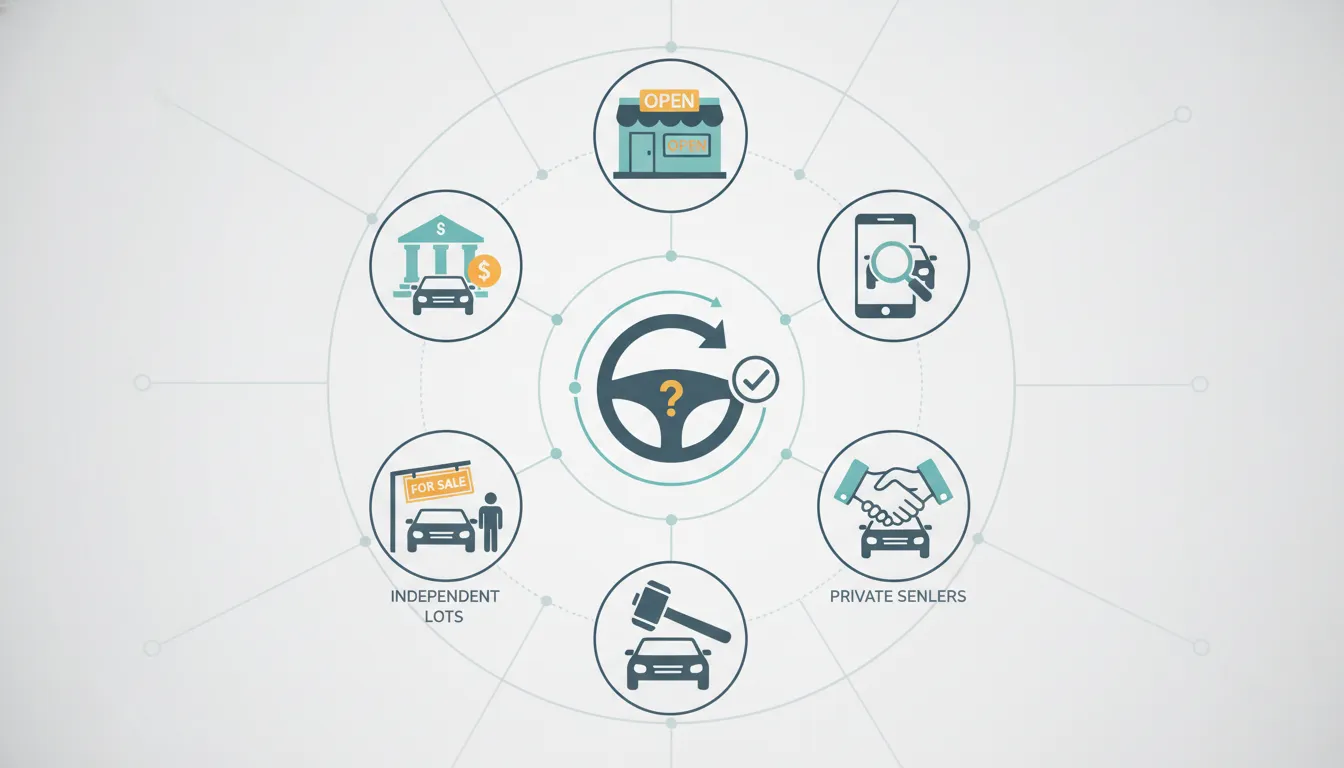
Find out where to buy used cars with this clear guide to six options, including brokers, dealerships, online marketplaces, and private sellers.
You hire experts for so many important decisions, from financial planning to home renovations. So why should buying a car be any different? The traditional process forces you to wear too many hats: mechanic, financing guru, and professional haggler. It’s a system that can make you feel like you’re at a disadvantage from the start. This pressure is exactly why figuring out where to buy used cars feels less like an exciting purchase and more like taking on a second job. In this article, we’ll explore all your options, including a modern approach that’s like having a personal car-buying concierge who handles the hard parts for you.
Key Takeaways
- Do your homework to control the price: Before you start shopping, research the car's market value, get pre-approved for a loan, and consider the total cost of ownership. This preparation gives you the power to negotiate effectively and avoid overpaying.
- Never skip the inspection steps: A vehicle history report reveals a car's past, while a professional mechanic's inspection uncovers its present condition. These two steps are your best defense against hidden problems and future expensive repairs.
- Look beyond the traditional dealership: You have many buying options, including auto brokers, private sellers, and online marketplaces. Understanding the pros and cons of each helps you find the right balance of convenience, price, and security for your needs.
Where to Buy a Used Car: A Breakdown of Your Options
Shopping for a used car can feel like a huge project. With so many places to look, from massive online marketplaces to the private seller down the street, it’s tough to know where you’ll find the best deal and the most reliable vehicle. The truth is, there’s no single "best" place for everyone. Each option has its own set of benefits and drawbacks. Understanding these differences is the first step to finding a car you love without the headache. Let’s walk through the six main places you can buy a used car so you can decide which path is the right one for you.
1. Auto brokers (like Automated Brokers)
Think of an auto broker as your personal car-buying concierge. Instead of you spending weekends hopping between dealerships, a broker does all the heavy lifting. Services like ours at Automated Brokers offer a white-glove experience that completely simplifies the process. We tap into a huge network of vehicles to find exactly what you’re looking for at a fair market price. The best part? We handle the negotiation and paperwork, and then deliver the car directly to your door. It’s the perfect option if you value your time and want to skip the dealership pressure while still getting expert guidance and a great price.
2. Certified Pre-Owned (CPO) programs
Certified Pre-Owned (CPO) cars are often seen as the gold standard of used vehicles. These are typically newer, low-mileage cars sold at a franchised dealership that have passed a rigorous, multi-point inspection set by the manufacturer. They also come with an extended warranty, which adds a fantastic layer of security. According to research from Consumer Reports, people who buy CPO cars report 14% fewer problems than those who buy non-CPO used cars. The trade-off for this peace of mind is a higher price tag, but for many buyers, the reduced risk is well worth the extra cost.
3. Franchised dealerships
You can also buy a non-certified used car from a branded dealership, like a used Toyota from a Ford dealer or vice-versa. These cars are usually less expensive than their CPO counterparts on the same lot. Sometimes, the dealership’s service team may have reconditioned the vehicle, so it can be a solid middle-ground option. You get the experience of buying from an established business without the premium price of a CPO vehicle. However, you’re still in a traditional dealership environment, which means you’ll likely have to deal with sales tactics and negotiations to secure a fair price.
4. Online marketplaces
Websites like Autotrader and Cars.com have changed the game by putting thousands of vehicle listings right at your fingertips. These platforms are giant aggregators, pulling in inventory from both dealerships and private sellers across the country. You can easily filter by make, model, price, and location, making it simple to compare your options from the comfort of your couch. While these sites offer incredible variety, they are just the starting point. You’ll still need to contact the seller, inspect the car, and handle the transaction yourself, which can be time-consuming.
5. Independent used car lots
Independent used car lots are the non-branded dealerships you see in your town. They often offer a wide variety of makes and models at prices that might be lower than what you’d find at a large, franchised dealership. Many also provide in-house financing. However, the quality of cars can be a mixed bag, and these businesses don't have the backing of a major car manufacturer. While some online-first independent dealers like Carvana offer return periods, many smaller lots sell cars "as-is." This means you’ll want to be extra diligent with your pre-purchase inspection.
6. Private sellers
Buying a car directly from its owner can often land you the lowest price. When you cut out the middleman, there are no dealership overhead costs baked into the final number. This is a popular route for older, higher-mileage cars. The downside is that this option carries the most risk. The sale is almost always "as-is," with no warranty or guarantee. You're also on your own for everything, from securing a loan to handling the title transfer and registration paperwork. It requires more effort and a sharp eye for potential issues, but the savings can be significant if you find a well-maintained vehicle.
Weighing Your Options: The Pros and Cons of Each
Choosing where to buy your next car is just as important as choosing the car itself. Each option comes with its own set of benefits and drawbacks, so let’s walk through them to see which one fits you best. Understanding the landscape will help you make a confident decision and find a vehicle you love without the stress.
Auto brokers
Think of an auto broker as your personal car-buying concierge. Companies like Automated Brokers offer a white-glove service that handles the entire process for you, from sourcing the vehicle to delivering it to your door. They tap into a huge network of cars, giving you access to pre-owned vehicles at market prices without you ever having to step into a dealership. The main advantage is the convenience and expert negotiation that simplifies the car buying process. The trade-off is that this service comes with a fee, which can add to the total cost. You’re paying for a professional to save you time and hassle.
CPO programs
Certified Pre-Owned (CPO) programs are a great middle ground between new and used. These cars are backed by the original manufacturer, go through rigorous inspections, and come with extended warranties. In fact, people who buy CPO cars report 14% fewer problems than those who buy standard used cars. This peace of mind is a huge plus, giving you confidence in the car's quality and history. On the flip side, CPO vehicles are typically more expensive than their non-certified counterparts, often costing a bit more. You’re paying a premium for that extra layer of quality assurance and protection.
Franchised dealerships
Franchised dealerships, like your local Toyota or Ford dealer, are the most traditional place to buy a used car. They are often the best source for Certified Pre-Owned vehicles, which usually means you’re looking at newer models with lower mileage and a solid service history. You also get the benefit of a physical location for test drives and future service needs. However, their overhead costs can lead to higher prices compared to other options. You might find yourself paying more for the convenience and brand recognition that comes with buying from an established dealer.
Online marketplaces
Websites like Autotrader and Cars.com have completely changed the car-shopping game. They let you browse thousands of listings from dealers and private sellers across the country, filtering by just about any spec you can imagine. Many listings also include vehicle history reports, which is a big help for your initial research. The downside is the lack of personal interaction. It can be tough to truly assess a car’s condition from photos alone, and negotiating online can feel impersonal and less effective than a face-to-face conversation.
Independent used car lots
You’ve probably seen these local used car lots around your town. They are independent businesses that can sometimes offer lower prices than large franchised dealerships. You might find a hidden gem on one of these lots, and many people share their experiences finding great deals this way. The biggest watch-out here is variability. The quality and reliability of the cars can be all over the place, so it’s absolutely essential to have a trusted mechanic inspect any vehicle you’re serious about before you commit to buying.
Private sellers
Buying directly from a private seller on a platform like Facebook Marketplace or Craigslist can land you the lowest price, especially if you’re looking for an older car with more miles. You’re cutting out the middleman entirely, which can mean big savings. However, this route carries the most risk. There are no warranties, a higher chance of encountering mechanical issues, and you’ll have to handle all the paperwork and financing yourself. It’s a good option if you’re a confident negotiator and know what to look for in a used car.
How to Know You're Getting a Fair Price
Feeling confident that you paid a fair price is one of the best parts of buying a new-to-you car. The goal isn't to find a once-in-a-lifetime steal; it's to pay a price that accurately reflects the car's condition, mileage, and current market demand. Getting to that point requires a bit of homework, but it's what separates a stressful purchase from a satisfying one. Whether you're buying from a private seller or a large dealership, the same principles apply.
While a service like Automated Brokers handles the negotiation and price validation for you, you can absolutely do this yourself. Arming yourself with the right information before you start shopping is the single best way to ensure you drive away happy with both your car and the price you paid for it. By researching the market, securing your financing ahead of time, and knowing what fees to look out for, you can take control of the process and avoid overpaying.
Research the car's market value first
Your best tool in any negotiation is information. Before you even look at a specific car, you should have a solid idea of its general market value. This isn't one single number but a price range influenced by the car's age, mileage, condition, and even your location. Always ask for the vehicle's maintenance records and pull a vehicle history report, as these documents provide crucial details that directly impact its worth. A well-maintained car with a clean history will command a higher price than one with a spotty past, and knowing the difference helps you make a fair offer.
Use online pricing guides like KBB or Edmunds
To find that market value range, turn to online pricing guides. Resources like Kelley Blue Book and Edmunds let you see what cars like the one you want are selling for in your area. You can filter by make, model, year, trim, and mileage to get a precise estimate. Pay attention to the different values provided: the retail price (what a dealer might ask), the private party price (what you'd pay an individual), and the trade-in value. Knowing which number applies to your situation gives you a realistic starting point for any conversation about price.
Get pre-approved for your loan
Walking into a negotiation with your financing already secured is a power move. When you get a loan approval from your own bank or credit union beforehand, you effectively become a cash buyer. This allows you to separate the negotiation for the car's price from the discussion about financing. You can focus on the "out-the-door" price of the vehicle without getting distracted by monthly payment figures, which can sometimes be manipulated with longer loan terms. It also gives you a competitive interest rate you can use as a benchmark if you decide to consider the seller's financing options.
Watch for hidden fees and last-minute add-ons
This is where a seemingly good deal can quickly go sideways. You might agree on a price, only to find it suddenly jumps by a few thousand dollars when you see the final paperwork. Be wary of extra dealer fees and unnecessary add-ons. Common culprits include high "documentation fees," dealer prep charges, and expensive extras like VIN etching or fabric protection. To avoid any surprises, always ask for the total "out-the-door" price that includes all taxes, title, and fees. This number is the only one that truly matters.
Your Essential Pre-Purchase Checklist
Buying a used car is a big deal, and feeling confident in your choice is everything. Think of this checklist as your personal guide to making a smart purchase. It helps you look past a shiny exterior and focus on what really matters: the car's history, health, and overall value. Going through these steps protects your investment and prevents that sinking feeling of buyer's remorse down the road.
Even when you work with a service like ours that handles the legwork, being an informed buyer is your greatest asset. Understanding these checkpoints helps you ask the right questions and know what to look for. Whether you're browsing online or considering a specific vehicle, this list will help you make a decision you can feel great about for years to come. Let's walk through the five non-negotiables before you sign on the dotted line.
Pull the vehicle history report
Before you even think about a test drive, your first move should be to get a vehicle history report. This is a non-negotiable step. Using the car's vehicle identification number (VIN), services like CarFax or AutoCheck will generate a detailed report on the car's past. It tells you about previous owners, accident history, title issues like salvage or flood damage, and service records. A clean report isn't a guarantee, but a report with red flags is a definite sign to proceed with caution or walk away entirely. This single document can save you from a massive headache and financial loss.
Get a professional inspection
A vehicle history report tells you about the past, but a pre-purchase inspection (PPI) tells you about the present. It's absolutely worth the small investment to have a qualified, independent mechanic look the car over. They can spot underlying issues you wouldn't see, like hidden rust, engine problems, or signs of a poorly repaired accident. A mechanic can put the car on a lift to inspect the undercarriage, which is something you can't do in a parking lot. The results of the pre-purchase inspection can give you peace of mind or provide powerful leverage to negotiate a lower price.
Inspect the car yourself (inside and out)
While the mechanic handles the technical side, your own inspection is just as important. Trust your senses. Walk around the car and look for mismatched paint, dents, or large gaps between body panels, which could indicate a past accident. Check the tires for uneven wear. Inside, test every button, switch, and knob, from the windows to the air conditioning. Does everything work? Are there any strange smells, like mildew or smoke? Don't forget to check the vehicle's fluids, like the oil and coolant, to make sure they are at the right levels and look clean.
Take a thorough test drive
A quick spin around the block isn't enough. You need to see how the car performs in different situations. Try to drive it on city streets, bumpy roads, and the highway to test its acceleration, braking, and suspension. Listen for any unusual noises like clunking, whining, or grinding. Does the steering pull to one side? Does the car shift smoothly? Pay attention to how you feel in the driver's seat. Make sure it's comfortable and that you have good visibility. This is your chance to simulate your daily commute and ensure the car is a good fit for your lifestyle.
Review all the paperwork before you sign
You've done your research, and the car has checked out. The final step is to carefully review all the paperwork. Make sure the VIN on the contract and title matches the VIN on the car itself. Understand the terms of the sale, especially if the car is being sold "as-is," which means you are responsible for any repairs after you drive it off the lot. Confirm the final price, including all taxes and fees, so there are no surprises. Don't let anyone rush you through this process. Reading the bill of sale and other documents thoroughly is your final safeguard.
6 Common (and Costly) Car-Buying Mistakes to Avoid
Buying a used car is one of the smartest financial decisions you can make, letting you get the vehicle you want without the steep depreciation of a brand-new model. But the path to a great deal is filled with potential missteps that can cost you time, money, and a lot of stress. The good news is that you can sidestep these issues just by knowing what to look for.
From falling for common myths to feeling pressured at the dealership, these mistakes are easy to make if you’re not prepared. Think of this as your guide to avoiding the most frequent and expensive errors. By understanding these six pitfalls, you can approach your car search with confidence and make sure you drive away in a car you love, at a price you feel good about. Let’s get into what you need to watch out for.
Mistake #1: Assuming every used car is a dud
It’s a persistent myth: a car is only for sale because something is wrong with it. This idea assumes that people only part with their vehicles when they’re falling apart, which just isn’t true. People sell cars for all sorts of reasons. Maybe their lease ended, their family grew and they need an SUV, or they simply wanted to upgrade to a newer model. Many pre-owned vehicles are in fantastic shape and have plenty of life left. A well-maintained, three-year-old car is often a much better value than its brand-new counterpart. Don't let outdated thinking stop you from exploring the great options in the pre-owned market.
Mistake #2: Thinking "Certified" is always a better deal
The term "Certified Pre-Owned" (CPO) sounds reassuring, and it can be. CPO programs typically include a multi-point inspection and an extended warranty from the manufacturer. However, that certification comes with a higher price tag, and it’s not always worth the extra cost. As one expert points out, "CPO cars are used cars with a warranty, but they also come with higher prices, sometimes more than they're worth." Instead of limiting your search to CPO vehicles, consider a non-certified car and use some of the money you save to pay for a thorough, independent inspection. You might find an equally great car for a much better price.
Mistake #3: Skipping the mechanic's inspection
This is a non-negotiable step. No matter how great a car looks or how well it drives, you should always have a trusted mechanic perform a pre-purchase inspection (PPI) before you buy. An expert can spot underlying issues you might miss, like hidden frame damage, developing engine trouble, or rust. As Consumer Reports advises, a PPI is essential for uncovering problems that aren't obvious. Spending a couple hundred dollars on an inspection could save you thousands in unexpected repairs down the road. Any reputable seller or broker will be happy to accommodate this request; if they aren't, consider it a major red flag.
Mistake #4: Forgetting about the total cost of ownership
The sticker price is just one part of the equation. The true cost of a car includes insurance, fuel, taxes, and potential maintenance and repairs. A car that seems like a bargain upfront could end up being expensive if it gets poor gas mileage, has high insurance premiums, or is known for costly repairs. Before you commit, research the specific model's reliability ratings and common maintenance costs. Buying a two- to four-year-old vehicle can save you 30-50% off the new price, but make sure you’re choosing a model that’s affordable to own in the long run.
Mistake #5: Giving in to high-pressure sales tactics
Traditional dealerships are notorious for creating a high-pressure environment. Salespeople might push you to make a decision on the spot, upsell you on extended warranties you don’t need, or present confusing financing options. Remember, dealers often get kickbacks from lenders, so they have an incentive to steer you toward their financing even if it’s not your best option. The best way to handle this is to be prepared. Get pre-approved for a loan from your own bank or credit union and be ready to walk away if you feel pressured. A better alternative is to use a concierge service that works for you, not the dealership.
Mistake #6: Rushing through your research
In the excitement of buying a car, it’s tempting to skip the homework and jump straight to test drives. But taking the time to research is the single best thing you can do to ensure a good outcome. Before you even look at a specific car, you should research its fair market value on sites like Kelley Blue Book or Edmunds. Look up reliability ratings and read owner reviews for the models you’re interested in. As one Reddit user wisely put it, "Always research the car and seller carefully." A little preparation goes a long way in helping you identify a fair deal and avoid overpaying. It’s why having an experienced partner on your side can make all the difference.
Related Articles
- How to Get a Great Deal on a Used Car
- Certified Pre-Owned Cars: Are They Worth It?
- What to Look for When Buying a Used Car
- How to Buy a Used Car from a Private Seller
- Used Car Buying Checklist
Frequently Asked Questions
Is a Certified Pre-Owned (CPO) car really worth the extra money? It depends on what you value most. A CPO car offers great peace of mind since it has passed a manufacturer-approved inspection and comes with an extended warranty. You are paying a premium for that security. However, you can often find a non-certified used car in excellent condition for a lower price. If you take the money you save and pay for a thorough pre-purchase inspection from a trusted mechanic, you can create your own sense of security and potentially come out ahead financially.
What's the one step I absolutely cannot skip when buying a used car? Get a pre-purchase inspection (PPI) from an independent mechanic. A vehicle history report is great for telling you about a car's past, but a PPI tells you about its present condition. A mechanic can put the car on a lift and spot hidden issues like rust, fluid leaks, or frame damage that you would never see otherwise. This small investment is the single best way to avoid buying a car with expensive, underlying problems.
How do I know if a car's price is actually fair? Your best tool is research. Before you even talk numbers, look up the car's make, model, and year on a pricing guide like Kelley Blue Book or Edmunds. These sites will give you a price range based on the car's condition, mileage, and whether it's being sold by a dealer or a private owner. This gives you a realistic baseline. A fair price is one that falls within that market range and accurately reflects the specific car's history and condition.
I'm not a great negotiator. How can I avoid overpaying? Confidence in negotiation comes from preparation, not personality. First, research the car's market value so you know what it should cost. Second, get pre-approved for a car loan from your own bank or credit union before you start shopping. This lets you negotiate on the total "out-the-door" price of the car, just like a cash buyer, instead of getting distracted by monthly payment discussions. When you know your budget and the car's value, you hold the power.
An auto broker sounds convenient, but how does it actually work? Think of an auto broker as your personal car-buying expert. Instead of you spending your time searching listings and visiting dealerships, the broker does it for you. You tell them the exact car you want, and they use their large network to find it at a competitive price. They handle the negotiation, paperwork, and even arrange for the car to be delivered to your home. It’s a service designed to save you time and the stress of the traditional buying process.