Toyota Highlander for Sale: How to Compare Your Options
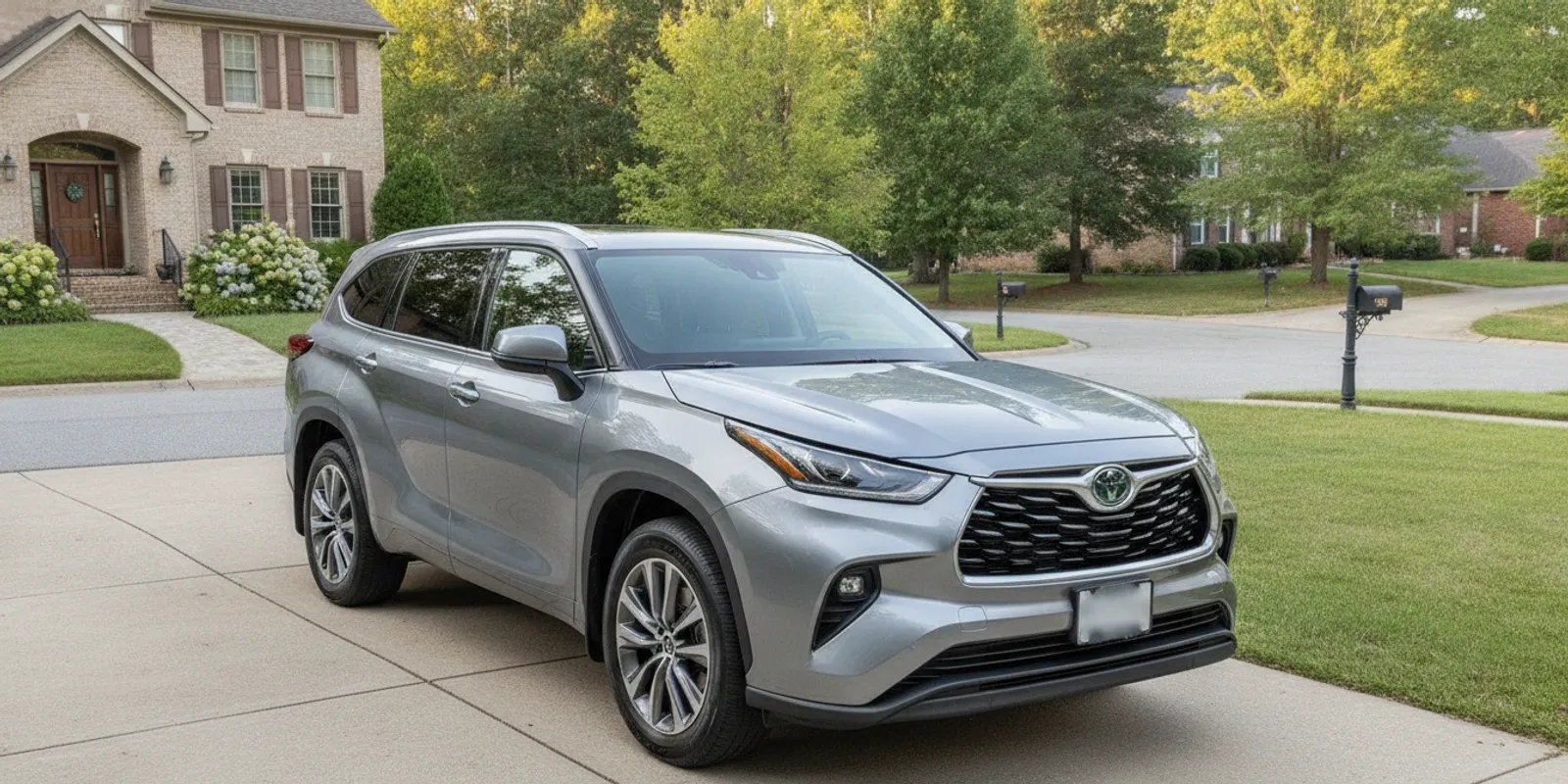
Compare a Toyota Highlander for sale by year, trim, drivetrain, condition, price, and total cost before you request help finding the right vehicle.
Searching for a Toyota Highlander for sale can feel simple until you compare model years, trims, powertrains, mileage, equipment, and the total price. Two Highlanders may look similar in photos while offering different seating, technology, drive systems, condition, and ownership costs. A structured comparison helps you decide which differences matter before you spend time contacting multiple sellers.
This guide is for shoppers who want a practical way to narrow the search without visiting every dealership. It explains how to define the right Highlander, compare listings fairly, evaluate new and used choices, review the written deal, and prepare a request for Automotive Car Brokers. When you are ready to describe what you want, you can use the vehicle request form.
What should a Toyota Highlander for sale include?
Start with the job the vehicle must perform. The right Highlander is not necessarily the newest listing, the lowest advertised price, or the most highly equipped trim. It is the one that fits your passengers, cargo, driving conditions, budget, and willingness to accept tradeoffs.
Write down your requirements before you open listings. Separate them into three groups:
- Must have: A requirement that rules out a vehicle if it is missing, such as a seating arrangement, drivetrain, or maximum total budget.
- Preferred: A feature that would improve the choice but is not essential, such as a particular trim, color, or convenience feature.
- Flexible: A detail you can exchange for a better price, condition, mileage, or delivery option.
Your list might include a specific number of seats, a preferred powertrain, all-wheel drive, a maximum mileage, a target model-year range, a color, or a monthly payment limit. A payment target is useful, but it should not replace a total-cost budget. Interest, taxes, registration, dealer charges, transportation, and your trade-in can change the final amount.
Also decide what you mean by “available.” You may want a vehicle physically at a nearby dealership, a vehicle sourced from another market, a new vehicle that must be located, or a used vehicle that can be inspected before purchase. Clarifying this at the beginning prevents an attractive but impractical listing from driving the entire search.
Which Highlander size and seating needs should you compare?
The Highlander is often considered by households that want more passenger and cargo flexibility than a smaller SUV. That broad description is not enough to make a buying decision. Ask how many people regularly ride in the vehicle, how often the third row will be used, and what must fit behind the seating area.
Third-row space should be judged in person or with careful measurements if adults will use it often. A third row that works for occasional passengers may not be comfortable for frequent long trips. If children use the rear seats, check access, child-seat placement, buckle reach, and the amount of cargo space left when the seats are occupied.
Make a short test plan before reviewing listings:
- Measure or note the largest items you regularly carry.
- Bring the people who will use the second and third rows most often.
- Test entry to every row, not only the driver’s seat.
- Check whether a stroller, sports equipment, luggage, or work gear fits in your usual arrangement.
- Confirm that the driver’s seating position remains comfortable when the rear seats are adjusted for passengers.
- Repeat the cargo check with the third row in use, folded, and partly occupied if that reflects your routine.
If you rarely need the third row, compare the Highlander with other SUV sizes as well. A smaller vehicle may be easier to park and less costly to operate, while a larger vehicle may offer more room for a growing household. The point is not to choose the biggest vehicle automatically; it is to match the vehicle to the tasks you actually perform.
How do model year and trim change the vehicle?
“Toyota Highlander” is a model name, not a complete description. Model year, trim, drivetrain, powertrain, packages, options, and region can all change the equipment on a listing. Even when two vehicles share a color and exterior shape, their interiors and included features may differ.
Build a comparison sheet with one row for each candidate. Record the vehicle identification number when available, model year, mileage, trim, drivetrain, powertrain, exterior and interior colors, ownership history, listed price, and seller location. Then add the equipment that matters to you rather than copying every marketing phrase.
Use the manufacturer’s window sticker, build sheet, listing details, or written seller confirmation to verify important features. Treat a photo as evidence of appearance, not proof that a feature is included. A vehicle may appear to have a certain wheel design, display, seat material, or safety feature because of a package, an accessory, or a similar model shown in a stock image.
When comparing trims, ask these questions:
- Which features are standard on this exact trim and year?
- Which equipment is part of an optional package?
- Is the advertised vehicle actually equipped as the headline suggests?
- Does the higher trim add features you will use, or mostly features you can live without?
- Would a lower trim with better condition or lower mileage be the stronger purchase?
- Are accessories included in the advertised price, or are they separate additions?
A trim name can help organize a search, but it should not end the comparison. Confirm the actual vehicle rather than assuming every example with the same badge has the same equipment. If a feature is essential, keep it on the written request and ask for confirmation before treating a listing as a match.
Which powertrain and drivetrain fit your driving?
Powertrain choice affects purchase price, fuel use, driving feel, maintenance considerations, and how the vehicle fits your routine. A gas model and a hybrid model may serve the same family but make sense for different annual mileage and driving patterns. Availability also varies by model year and market, so identify the exact configuration instead of relying on a general model description.
Think about normal driving, not only an occasional road trip. Estimate how many miles you drive in a typical month, how much is city traffic, how much is highway travel, and whether you regularly carry passengers or cargo. Consider weather and road conditions in the places where you actually drive. If you need all-wheel drive, include it as a firm filter rather than treating it as a last-minute preference.
Do not compare fuel economy claims without checking that the figures refer to the same model year, powertrain, drivetrain, and testing basis. Real-world results can vary with speed, temperature, traffic, tire pressure, payload, and driving habits. A lower advertised price may not be a better value if the configuration fails your everyday requirements.
For a used Highlander, ask whether the maintenance history supports the type of use the vehicle received. Highway miles, family use, towing, short trips, and severe weather can create different inspection questions. A history report is useful, but it does not replace an independent inspection or a careful review of the vehicle’s current condition.
How can a simple use case clarify the choice?
Imagine two shoppers. One drives mostly in town, carries two children, and uses the third row only for occasional guests. That shopper may value an efficient configuration, easy rear-seat access, and a clean service history more than the highest trim. Another shopper drives long distances, carries several passengers weekly, and needs a specific drivetrain for local conditions. That shopper may place more weight on configuration, highway comfort, seating access, and documented maintenance.
Neither use case identifies one universally correct Highlander. It shows why the same listing can be a strong match for one household and a poor match for another. Write down your most common trip, your most demanding regular task, and the rare task you still need to handle. Compare each candidate against all three.
How should you compare prices for a Toyota Highlander?
Compare prices only after you have made the vehicles comparable. A lower price for a higher-mileage vehicle with fewer features is not automatically a better deal than a higher price for a newer, better-equipped vehicle with documented maintenance. Begin with listings that are reasonably close in year, trim, mileage, drivetrain, condition, and location.
Use a written worksheet with these columns:
| Comparison area | What to record | Why it matters |
|---|---|---|
| Vehicle identity | Year, VIN, trim, drivetrain, powertrain | Confirms that you are comparing the same type of Highlander |
| Condition | Mileage, history, inspection findings, tires, brakes | Shows whether the asking price reflects the vehicle’s current state |
| Equipment | Seating, safety features, technology, packages, accessories | Prevents a lower price from hiding missing must-have features |
| Advertised price | List price, incentives, restrictions, expiration | Separates a real offer from a conditional headline |
| Additional costs | Taxes, registration, fees, delivery, financing charges | Shows the amount required to complete the purchase |
| Timing and location | Vehicle location, availability, delivery estimate | Helps you judge whether the option is practical to obtain |
Ask the seller for an itemized buyer’s order before treating a price as final. The document should make clear which charges are required, which are optional, and which incentives depend on financing, trade-in, residency, or other qualifications. If a price is available only under conditions you cannot meet, it should not be used as your real comparison point.
Remember that taxes and registration vary by location. Delivery or transport can also change the economics of an out-of-area vehicle. If you are comparing a nearby Highlander with one farther away, add every cost of obtaining the vehicle before choosing the lower advertised number.
What is a useful price comparison example?
Suppose Listing A has a lower advertised price but more mileage, fewer of your required features, and a delivery charge. Listing B costs more at first glance but has the preferred drivetrain, newer tires, clearer records, and a shorter transport route. Listing A may still be the right choice, but the headline prices do not answer the question. Record the missing equipment, likely immediate work, delivery, taxes, fees, and financing terms before deciding.
This approach also helps when a seller presents a low monthly payment. A longer loan term can reduce the monthly amount while increasing the total paid. Compare the selling price, amount financed, annual percentage rate, term, total payments, and required products together.
Should you buy new, used, or certified pre-owned?
Each condition category solves a different problem. New inventory may offer the latest available equipment and a clear starting point for ownership, but the price and availability may be less flexible. Used inventory can offer more choices across years and prices, but condition and history require closer review. Certified pre-owned inventory may include a manufacturer-backed inspection or warranty structure, but the specific program terms must be read rather than assumed.
| Option | Potential advantage | Questions to answer |
|---|---|---|
| New | Current model-year equipment and no prior owner | What is the actual out-the-door price, availability, and included coverage? |
| Used | More model years and price points to compare | What is the history, condition, maintenance record, and inspection result? |
| Certified pre-owned | A defined program may add inspection and coverage | What does the certification require, and what exclusions or limits apply? |
Do not assume that “used” means poor value or that “certified” means every risk has disappeared. A well-maintained used vehicle can be a strong option, while a certified vehicle still deserves a review of its history, tires, brakes, bodywork, and written terms. The best choice depends on your budget, time horizon, risk tolerance, and the actual vehicle in front of you.
For more background on the purchasing process, review how vehicle brokerage works. If you are considering a pre-owned vehicle, the pre-owned vehicle page can help you identify the type of inventory path you want to discuss.
What should you inspect on a used Highlander?
Photos and a clean-looking listing are only the beginning. Ask for a vehicle history report, service records, current mileage, and a description of known damage or repairs. If the seller cannot answer a basic question, mark the item as unverified rather than filling in the gap with an assumption.
An independent inspection should cover more than a quick look at the paint. Ask the inspector to assess the engine compartment, fluid leaks, suspension, steering, brakes, tires, underbody, lights, glass, climate controls, electronics, warning indicators, and evidence of collision repair. A road test can reveal noises, vibration, pulling, shifting behavior, braking feel, and other issues that photographs cannot show.
Inspect the interior with your actual use in mind. Operate the seats and seat belts, test the rear climate controls if equipped, check cargo-area access, and confirm that the technology you care about works. Look for odors, water intrusion, unusual wear, stains, damaged trim, and signs that the vehicle had heavier use than its mileage suggests.
For an out-of-area purchase, make the inspection plan part of the offer process. Ask who will perform it, what happens if the report identifies a significant problem, whether the vehicle can be returned or renegotiated, and who pays for transport if the deal does not proceed. Put important agreements in writing before sending money.
How should you handle a history report?
Use a history report as one part of the evidence, not as a substitute for looking at the vehicle. Compare the report’s mileage entries with the current odometer and service records. Note ownership changes, reported damage, title information, service events, and gaps that require questions. A report may not contain every repair or maintenance visit, so an absence of information is not proof that no event occurred.
Ask for clarification when records conflict. A seller who can provide consistent documents gives you more useful information than a listing that simply repeats a clean-sounding description. Keep copies of the records you relied on and confirm that the vehicle identification number matches across the listing, history report, inspection, and final paperwork.
How can you compare listings without visiting multiple dealerships?
Remote comparison works best when you create a consistent request for each seller. Instead of asking only, “What is your best price?” ask for the same information from every candidate. A consistent request makes the answers easier to compare and reduces the chance that an attractive headline omits a required cost or condition.
Your request should include:
- The model-year range and acceptable mileage.
- Your required trim, drivetrain, powertrain, seating, and equipment.
- Acceptable exterior and interior colors, if those details matter.
- Your location and whether delivery or pickup is preferred.
- Whether you have a trade-in and whether financing is part of the discussion.
- Your target purchase budget, stated as a total budget when possible.
- Your timeline and how flexible you are on year, color, or equipment.
- The documents you want to review before making a decision.
Automotive Car Brokers can receive that information as the starting point for a focused vehicle search. The company information page provides another way to learn about the business before you submit details. You can also review the available Toyota vehicle path when you want to keep the search centered on this brand.
A broker-assisted search does not remove the need for your approval. You still need to confirm that the proposed vehicle meets your requirements, review the numbers, understand the terms, and decide whether the condition and price make sense. The value of a clear request is that it gives the search a defined target and makes it easier to compare a small set of relevant options.
What should you ask before making a Toyota Highlander request?
A good request is specific enough to guide the search but flexible enough to produce realistic options. If you insist on a single year, trim, color, mileage, drivetrain, and price with no alternatives, the search may become unnecessarily narrow. If you provide no limits at all, you may receive choices that do not fit your priorities.
Use a primary choice and one or two acceptable alternatives. For example, you might prefer a certain recent model-year range and trim, accept a nearby trim if the equipment is right, and accept a different exterior color if the price or condition is substantially better. State what cannot change, such as seating or drivetrain, and what can change, such as color or wheel design.
Before submitting the request, answer these questions:
- How many passengers must the vehicle carry regularly?
- What is the maximum total budget, including expected purchase costs?
- Which model years are acceptable?
- What mileage range feels comfortable?
- Do you require a particular drivetrain or powertrain?
- Which safety, convenience, and technology features are essential?
- Will you trade in a vehicle or need financing?
- Where should the vehicle be delivered or picked up?
- How quickly do you need to make a decision?
Those answers let the search focus on fit rather than on a generic list of every Highlander currently advertised. If your priorities change after reviewing the first options, update the request rather than quietly comparing vehicles against an outdated wish list.
How can you rank your shortlist?
Give each candidate a simple status: match, possible, or reject. Mark a vehicle as match when it satisfies every must-have requirement and has enough verified information for the next step. Mark it as possible when one flexible detail is unresolved but the vehicle deserves a question or inspection. Mark it as reject when it fails a non-negotiable requirement, has unexplained problems, or cannot be compared fairly.
You can also score the remaining candidates across fit, condition, equipment, total cost, and convenience. Do not let a score hide a deal-breaking issue. A vehicle that fails your seating requirement should not remain competitive because it has an appealing color or a lower monthly payment.
How do you review the final written deal?
Do not rely on a verbal summary when you are close to buying. Review the written buyer’s order, purchase agreement, financing documents, warranty terms, trade-in allowance, and any delivery agreement. The names and amounts should be consistent across the documents, and any promised repair or accessory should be written down.
Check the following before signing:
- Vehicle identification number and exact vehicle description.
- Agreed selling price and any discount or incentive.
- Taxes, registration, documentation charges, and other required fees.
- Optional products or services and whether they can be declined.
- Trade-in value, payoff amount, and how negative equity is handled, if applicable.
- Financing amount, annual percentage rate, term, total payments, and lender conditions.
- Delivery, transport, inspection, return, cancellation, or deposit terms.
- Warranty coverage and any exclusions that affect your decision.
Ask for time to read anything you do not understand. A low monthly payment can result from a longer term rather than a lower total cost. Likewise, a large trade-in allowance can be paired with a higher vehicle price. Compare the complete transaction, not one favorable number in isolation.
When might another vehicle be a better fit?
A useful Highlander search should be willing to reject a Highlander when it does not fit. You may need more cargo room, a different fuel strategy, a smaller footprint, a lower purchase price, or a different driving experience. The goal is not to force a particular model into your budget; it is to find a vehicle that meets the needs that led you to search.
Reconsider the model if the third row is used often but does not provide the space your passengers need, if the cargo area is too limited for your regular equipment, or if the available configurations do not match your required drivetrain. Also reconsider if the total cost leaves too little room for insurance, maintenance, fuel, registration, and unexpected expenses.
It is reasonable to compare adjacent options before committing. The SUV comparison guide can help you think about size and vehicle type, while the used hybrid guide may be useful if your search includes a hybrid configuration or a different model. These comparisons are most useful when they are tied to your actual passenger, cargo, and budget requirements.
Frequently asked questions
What is the first thing to compare when looking for a Toyota Highlander for sale?
Start with fit. Confirm passenger capacity, cargo needs, model-year range, drivetrain, powertrain, and total budget before comparing colors or convenience features. A vehicle that fails a must-have requirement should not remain on your shortlist just because its advertised price is attractive.
Is a lower-mileage Highlander always the better choice?
No. Mileage is important, but it must be evaluated with model year, maintenance history, use, condition, equipment, and price. A higher-mileage vehicle with complete records and a sound inspection may be more sensible than a lower-mileage vehicle with an unclear history or deferred maintenance.
How do I compare a new and used Highlander fairly?
Compare the complete cost and the features you actually need. Include taxes, fees, financing, delivery, maintenance expectations, warranty terms, mileage, condition, and ownership considerations. A new vehicle and a used vehicle are not identical products, so the right question is which tradeoff best fits your priorities.
Can Automotive Car Brokers help find a Highlander outside my local area?
You can describe your preferred vehicle, budget, location, timing, and flexibility through the vehicle request path. Any proposed vehicle should still be reviewed for identity, condition, pricing, inspection, paperwork, and delivery terms before you commit.
What information should I include in a vehicle request?
Include the acceptable model years, trim or equipment, mileage limit, drivetrain or powertrain needs, colors, budget, trade-in details, financing needs, location, delivery preference, and timeline. Identify which items are mandatory and which are flexible so the search can focus on realistic alternatives.
Submit your Highlander request
The best Toyota Highlander for sale is the one whose configuration, condition, full cost, and ownership terms match the way you plan to use it, so compare those details before you make a final decision.